La porte est fermée: a state or an action in French?
Compare a closed door with a closing event. Explore a museum entrance, read two short scenes and check how French context separates state from action.
In short
La porte est fermée usually describes the door’s closed state. La porte a été fermée à dix-huit heures reports a closing event at six. A present passive can also describe a routine action: Chaque soir, la porte est fermée par la gardienne.
Yellow the idea to rememberBlue French to learnRed watch out
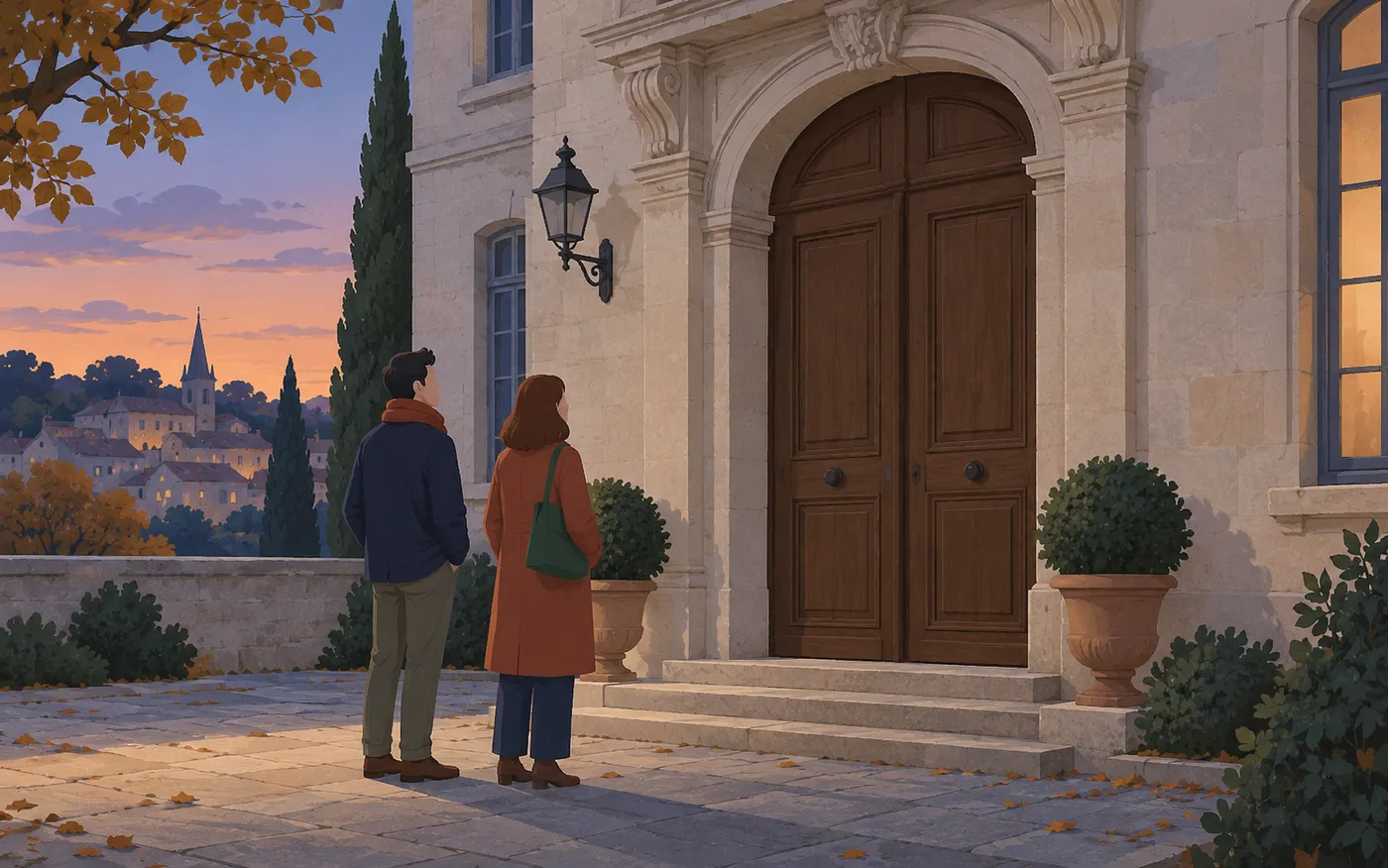
What condition do you find? What happens?
À notre arrivée, la porte était fermée.When we arrived, the door was closed.
Focus: The condition on arrival
Nous avons attendu dehors.
We waited outside.
La porte a été fermée à dix-huit heures.The door was closed at six.
Focus: The time of the closing event
La gardienne l’a fermée après la dernière visite.
The caretaker closed it after the last visit.
In the first version, the door was already closed when the visitors found it. The sentence leaves the earlier closing time open. In the second, the speaker places the action at six. English uses “was closed” in both translations, so the wider scene makes the distinction clearer.
Explore the entrance: what condition is each object in?
À l’entrée du musée
Find:
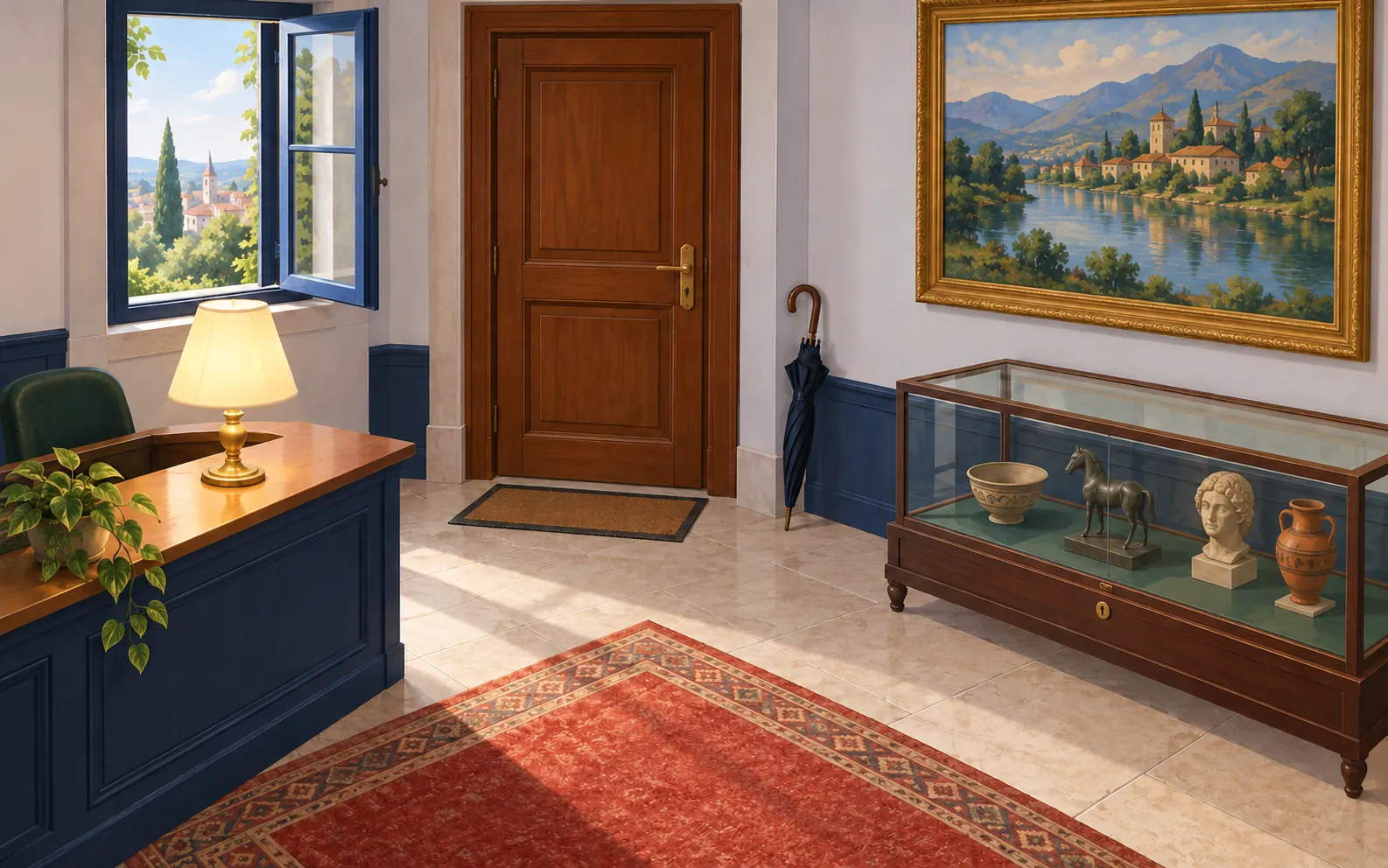
These captions describe what you see in the hall. Allumée, ouverte and plié give conditions. They leave the earlier actions in the background: the captions tell a visitor how things are arranged now.
Is la porte est fermée a state or an action?
- Responsable
Chaque soir, la porte est fermée par la gardienne après la dernière visite.
Every evening, the door is closed by the caretaker after the last visit.
- Nouveau collègue
Et les lumières ?
And the lights?
- Responsable
Elles sont éteintes à dix-huit heures trente.
They are switched off at half past six.
This scene gives a procedure. The present passive reports what the staff do each evening. Chaque soir, the caretaker and the scheduled time make the actions central. The present tense here describes a habit rather than an action happening as the speaker talks.
The same forms in an arrival scene
- Lina
On peut entrer ?
Can we go in?
- Sam
Non, la porte est fermée et les lumières sont éteintes.
No, the door is closed and the lights are off.
- Lina
Alors, revenons demain.
Then let’s come back tomorrow.
| French | Main focus in this context |
|---|---|
| À notre arrivée, la porte était fermée. | A state already holding at arrival |
| Hier, la porte a été fermée à dix-huit heures. | One completed closing event |
| Chaque soir, la porte est fermée par la gardienne. | A repeated closing procedure |