Gap-fill
French futur simple gap-fill: a letter about next summer
Complete 12 futur simple gaps in a summer-holiday letter. Practise regular and irregular stems, then check the English translation and explanations.
- A2
- 12 gaps
- Translation included
- Learn this in the A2 notebook →
In short
Fill every gap with the futur simple. Start with the stem, then add -ai, -as, -a, -ons, -ez or -ont to match the subject. Watch the irregular stems in être, avoir, aller, faire, venir and pouvoir.
Yellow the idea to rememberBlue French to learnRed watch out
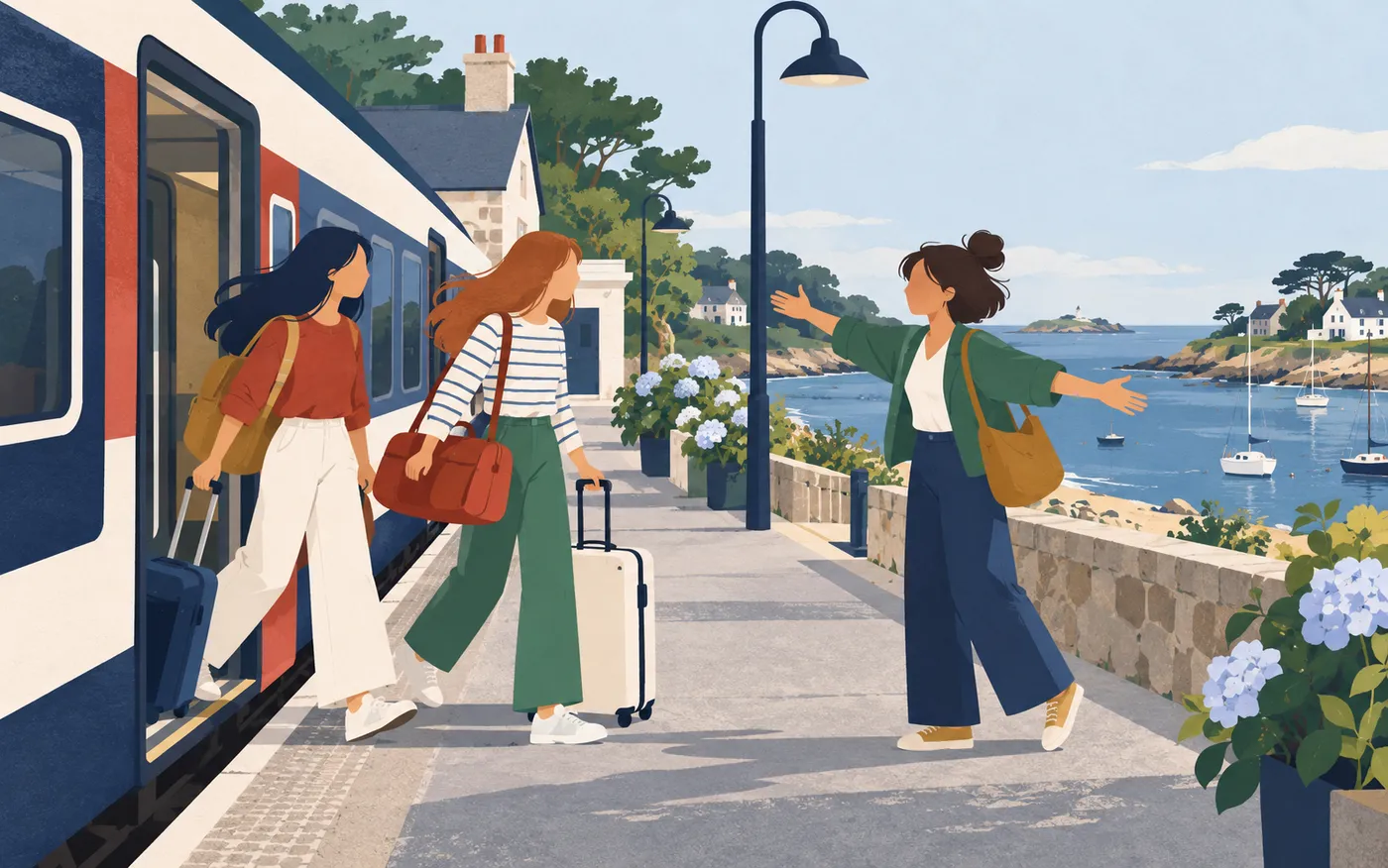
L’été prochain, en Bretagne
Chère Amélie,
L’été prochain, nous (passer) deux semaines en Bretagne. Je (partir) avec ma sœur le 6 juillet et nous (prendre) le train jusqu’à Rennes. Notre cousin (venir) nous chercher à la gare. La maison est près de la mer, dans un village très calme.
Tu (être) libre à cette période ? Si tu es disponible, tu (pouvoir) nous rejoindre pour quelques jours avec Lucie. Ma sœur (avoir) une chambre pour elle et un grand canapé pour vous deux. Vous (dormir) dans le salon, avec une vue sur le jardin. Les draps sont déjà sur place : inutile de charger vos valises !
Chaque matin, nous (aller) au marché à pied. Les enfants de mon cousin (faire) des châteaux de sable sur la plage. Moi, je (préparer) le déjeuner pendant que vous profiterez de la mer. Quand tu (arriver), nous organiserons ensemble une promenade sur la côte. Apporte de bonnes chaussures et un pull pour le soir.
Dis-moi ce que tu en penses. J’espère que ce programme te plaît ! À bientôt, Camille.
Read it in English
Dear Amélie,
Next summer, we’ll spend two weeks in Brittany. I’ll leave with my sister on 6 July and we’ll take the train to Rennes. Our cousin will come and pick us up at the station. The house is near the sea, in a very quiet village.
Will you be free then? If you’re available, you’ll be able to join us for a few days with Lucie. My sister will have a bedroom for herself and a big sofa for the two of you. You’ll sleep in the living room, with a view of the garden. The sheets are already there: no need to weigh down your suitcases!
Every morning, we’ll walk to the market. My cousin’s children will make sandcastles on the beach. I’ll prepare lunch while you enjoy the sea. When you arrive, we’ll organise a walk along the coast together. Bring some good shoes and a jumper for the evening.
Tell me what you think. I hope you like the plan! See you soon, Camille.
What are the futur simple endings?
| Infinitive | Future stem | Example with a subject |
|---|---|---|
| passer | passer- | nous passerons |
| partir | partir- | je partirai |
| prendre | prendr- | nous prendrons |
| venir | viendr- | il viendra |
| être | ser- | tu seras |
| pouvoir | pourr- | tu pourras |
| avoir | aur- | elle aura |
| aller | ir- | nous irons |
| faire | fer- | ils feront |
Regular -er and -ir verbs keep the infinitive as their future stem. With prendre, remove the final e before adding the ending. The letter’s vous refers to Amélie and Lucie together: that is why dormir takes -ez. The children take a plural verb: ils feront.
Which tense follows quand and si in the future?
Si tu es disponible, tu pourras nous rejoindre.
If you’re available, you’ll be able to join us.
For this open condition, use the present after si, then the future in the result.
Quand tu arriveras, nous organiserons une promenade.
When you arrive, we’ll organise a walk.
French uses the future after quand here, where English uses the present.