Write a French flashback: anchor, earlier action, return
Add a short flashback with the plus-que-parfait. Follow a library scene, compare event order with sentence order and practise returning to the main story.
In short
Start at a clear past moment, step back with the plus-que-parfait, then return to the main events with the passé composé. A short phrase such as la veille helps the reader place the earlier action.
Yellow the idea to rememberBlue French to learn

Explore the library before writing the visit
Find:
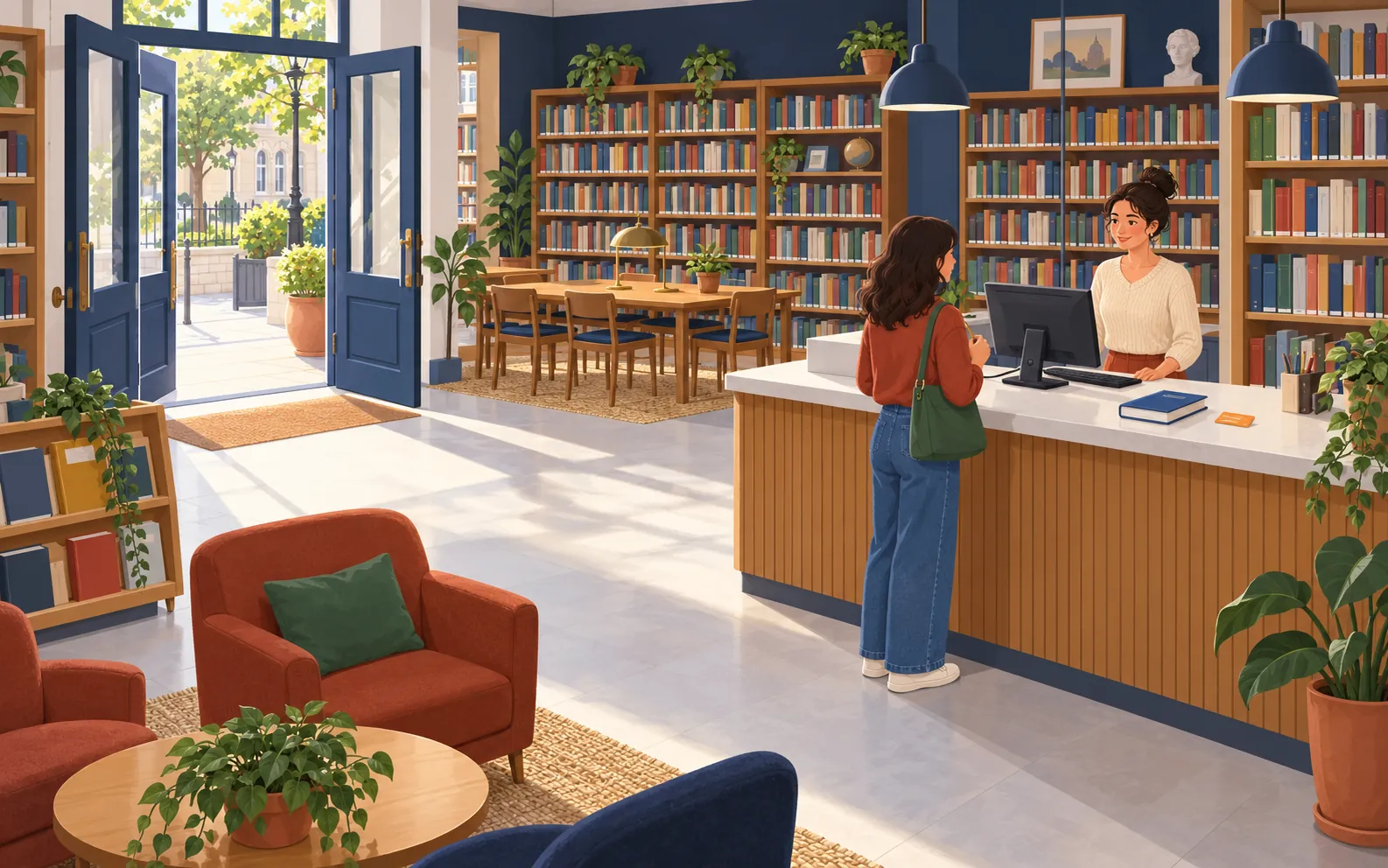
How do you write a flashback in French?
| Order | Event | When? |
|---|---|---|
| 1 | J’ai réservé le livre. | The previous day |
| 2 | Je suis arrivé à la bibliothèque. | The day of the visit, at ten |
| 3 | La bibliothécaire m’a remis le livre. | During the visit |
| 4 | Je suis reparti. | After receiving the book |
Now begin the account with event 2, the arrival. From that past viewpoint, the reservation is already completed. Change it to j’avais réservé. The written account can therefore begin 2 → 1 → 3 → 4 while the real events keep their original order.
2. Read the flashback inside the visit
Je suis arrivé à la bibliothèque à dix heures. J’avais réservé un roman la veille. La bibliothécaire m’attendait près du bureau. Elle m’a remis le livre, puis je suis reparti.
I arrived at the library at ten. I had reserved a novel the previous day. The librarian was waiting for me near the desk. She handed me the book, then I left.
The narrator is a man: arrivé and reparti are masculine singular. The reservation is earlier; the waiting is background during the visit.
| Job | Verb group | Construction |
|---|---|---|
| Main past event | je suis arrivé | Passé composé |
| Earlier completed action | j’avais réservé | Imparfait of avoir + participle |
| Background during the visit | elle m’attendait | Imparfait |
| Return to main events | elle m’a remis | Passé composé |
The plus-que-parfait keeps the same auxiliary choice as the passé composé: elle est partie becomes elle était partie. For an earlier state, use the form that fits your meaning: à cette époque, j’habitais près de la bibliothèque describes where you lived during that period.