Phrasebook
Sugar, salt, sweet or savoury? French phrases at the table
Ask for du sucre or du sel, describe a dish as sucré or salé, and choose a sweet or savoury tart. Includes pictures, table phrases and a short quiz.
- A1
- 9 phrases
- 3 situations
- Learn this in the A1 notebook →
In short
Le sucre is sugar; le sel is salt. Sucré describes sweet or sugary food. Salé means salty, or savoury when you are choosing a type of dish: une tarte salée.
Yellow the idea to rememberBlue French to learnRed watch out
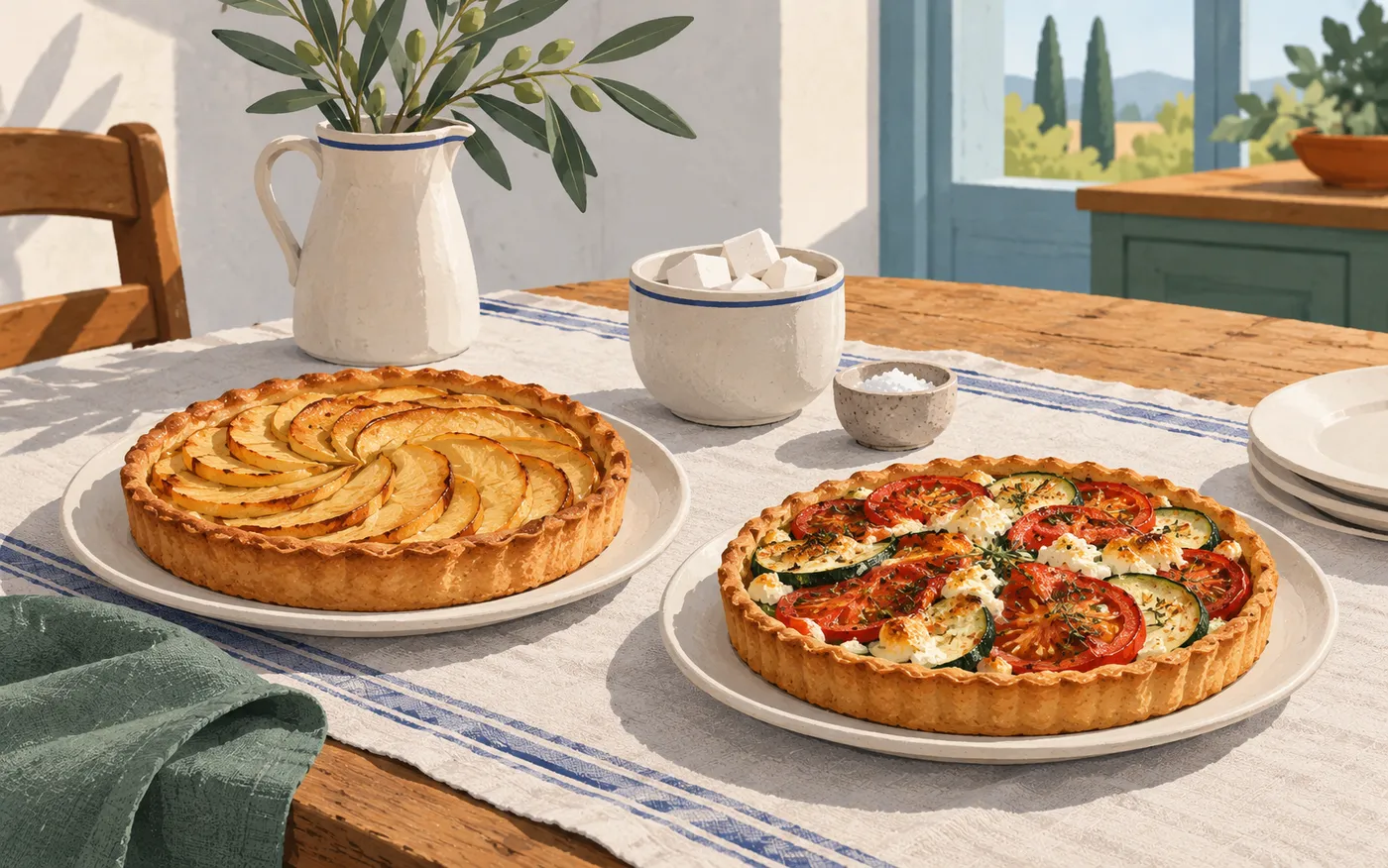
Ingredients and dishes
Find:
| You mean | French | Example |
|---|---|---|
| some sugar | du sucre | Ajoute un peu de sucre. |
| some salt | du sel | Il y a trop de sel. |
| sweet, masculine | sucré | un dessert sucré |
| sweet, feminine | sucrée | une boisson sucrée |
| salty, masculine plural | salés | des biscuits salés |
| savoury, feminine plural | salées | des tartes salées |
With your coffee
Choosing lunch
Around the table
What is the difference between sucre, sel, sucré and salé?
Je voudrais une compote sans sucre ajouté.
I’d like a compote with no added sugar.
Cette compote est peu sucrée.
This compote is not very sweet.
Ce jus est trop sucré pour moi.
This juice is too sweet for me.
Sans sucre ajouté refers to added sugar; peu sucré describes a low degree of sweetness; trop sucré says there is more sweetness than you want. Keep the accent in the adjective: sucre is the ingredient, sucré is the description. Add -e with a feminine noun and -s for the plural.