The Seine on foot, from Notre-Dame to the Eiffel Tower, without a step
A level walk through the centre of Paris for pushchairs, wheelchairs and tired legs: Notre-Dame, the Louvre, the Tuileries, Concorde, the Invalides and the Eiffel Tower, with distances, surfaces.
The route
Right bank to the Concorde, then across to the left
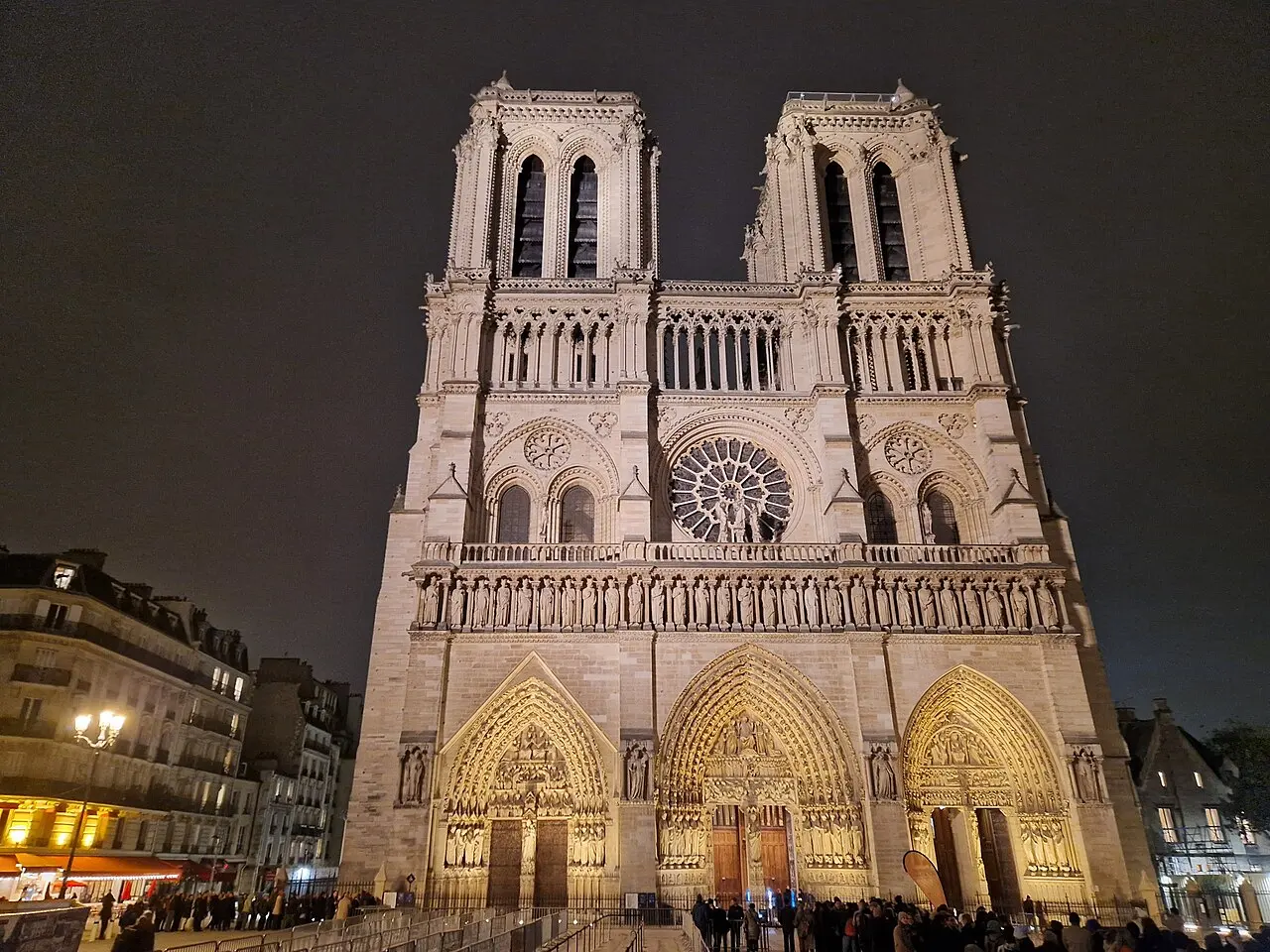
- Notre-Dame km 0
The forecourt is level. Accessible toilets on the square.
830 m, 11 min on foot to the next stop
- Pont Neuf km 0,8
The oldest bridge in Paris, with stone benches in its bays. Wide pavements.
750 m, 10 min on foot to the next stop
- Louvre pyramid km 1,6
Through the Cour Carrée, flat and paved. Free to walk through; lifts inside the pyramid.
830 m, 11 min on foot to the next stop
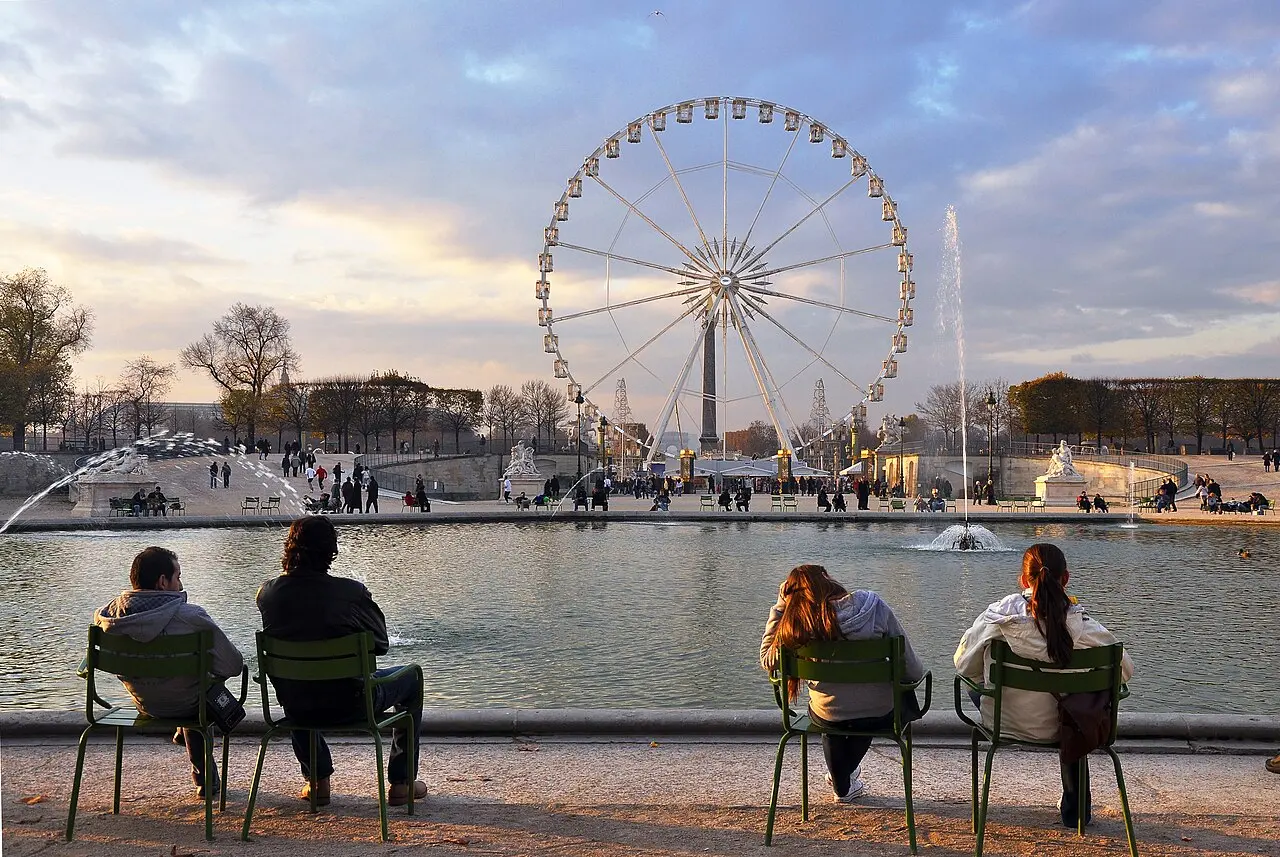
- Jardin des Tuileries km 2,4
Compacted gravel, firm when dry. Green chairs to move wherever you like.
600 m, 8 min on foot to the next stop
- Place de la Concorde km 3,0
Leave the garden by the ramp at the far end. Use the signalled crossings: traffic is heavy.
830 m, 11 min on foot to the next stop
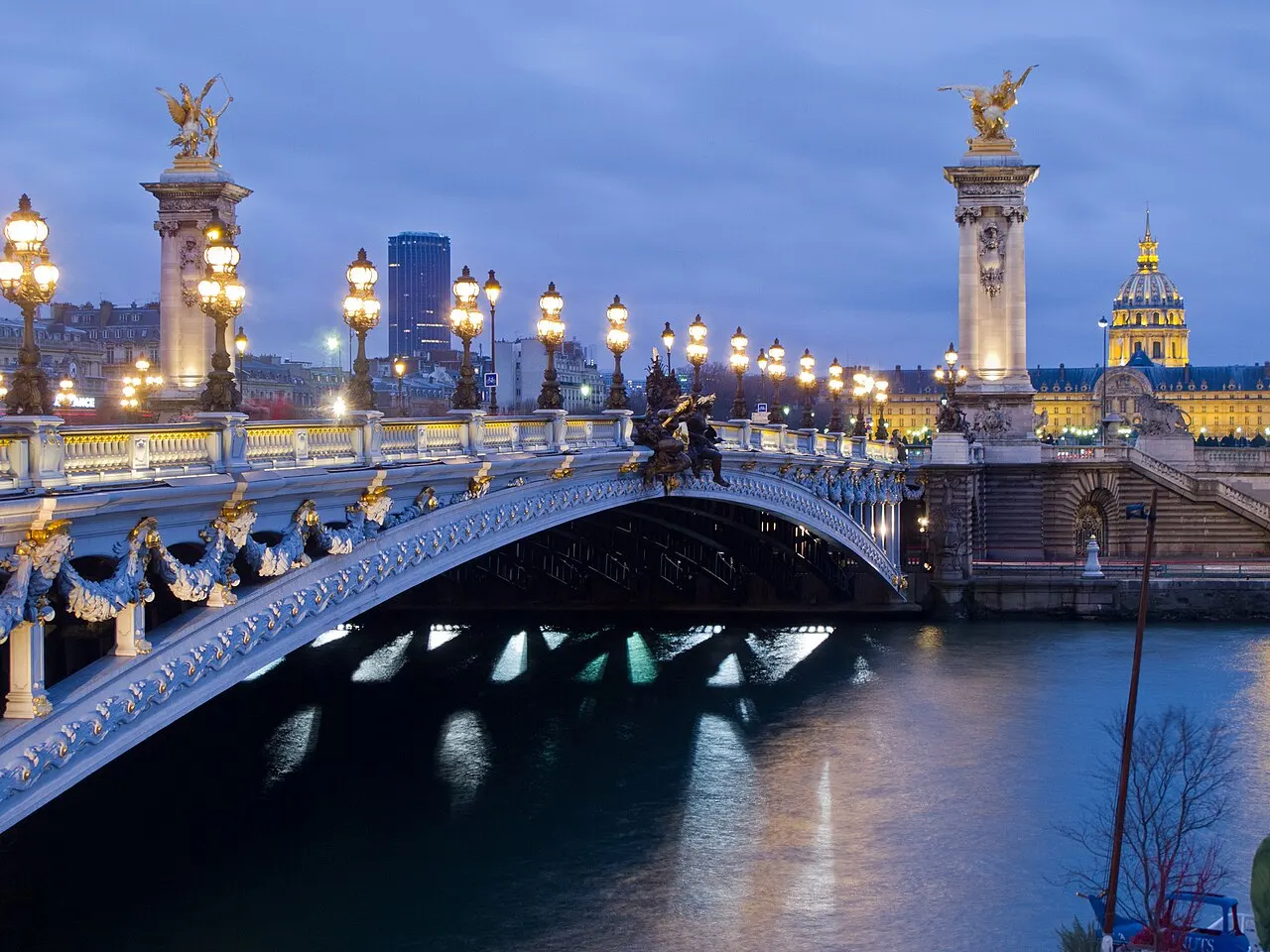
- Pont Alexandre III km 3,8
The most ornate bridge. Cross here to the left bank.
510 m, 7 min on foot to the next stop
- Les Invalides km 4,3
A wide lawn and a level path up to the gilded dome.
1,5 km, 19 min on foot to the next stop
- Musée du quai Branly km 5,8
A garden open to all behind a glass wall. Benches, shade, toilets in the museum.
490 m, 7 min on foot to the next stop
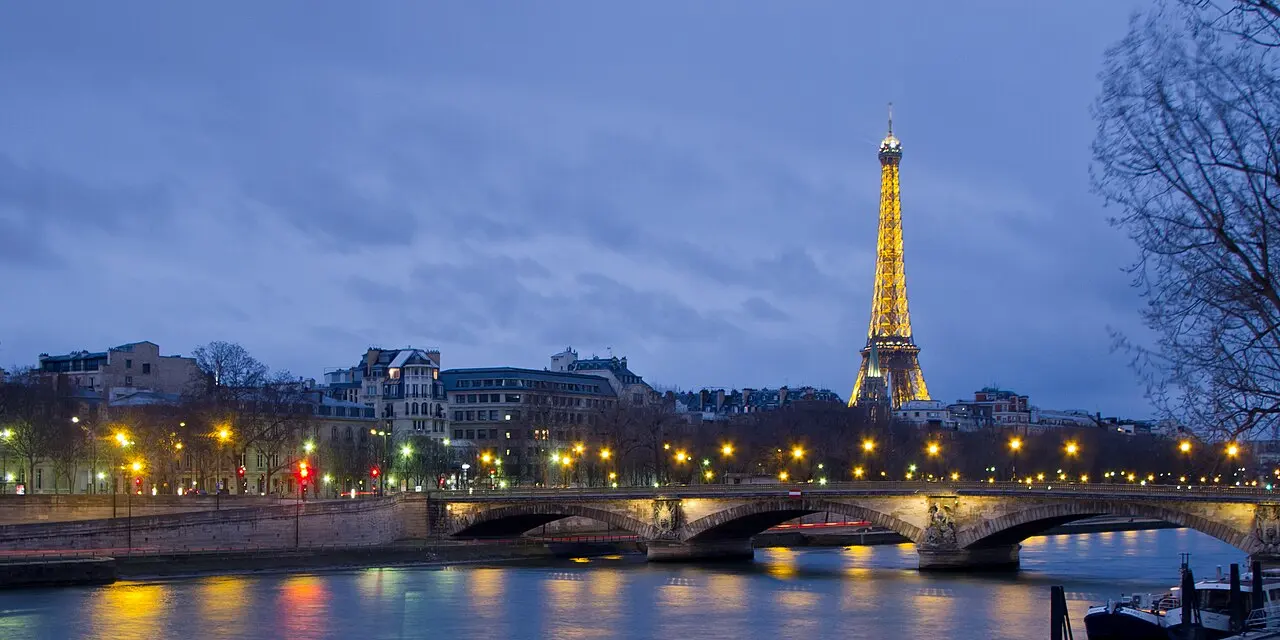
- Tour Eiffel km 6,3
The esplanade is entered through free security gates. Lifts go to every level.
Distances are from Notre-Dame. Map data © OpenStreetMap contributors.
Yes: stay at street level and in the gardens and the whole way from Notre-Dame to the Eiffel Tower is flat, about 6,3 km, with dropped kerbs at every crossing. Avoid the lower quays at the water’s edge: they are reached by stairs or steep cobbled ramps.
How long
1 h 356.3 km
strolling, 3 km/hsteady, 4 km/hbrisk, 5 km/h
Underfoot, for wheels
- Paved pavement le trottoir4600 m · 73 %
- Compacted gravel le stabilisé1200 m · 19 %
- Cobbles, short stretches les pavés500 m · 8 %
- Steps les escaliers0 m · 0 %
Our estimate. The cobbles are at the Cour Carrée of the Louvre and round the Concorde; both can be skirted on smooth paving.
Toilets, water and rest
Every kilometre or so
- km 0Parvis Notre-Dame
toiletswaterbenches
Free public toilets, accessible.
- km 1,6Under the Louvre pyramid
toiletscafésshade
The shopping gallery is open without a ticket.
- km 2,4Jardin des Tuileries
toiletscafésbenchesshade
Toilets at the Concorde end.
- km 4,3Esplanade des Invalides
bencheswater
- km 5,8Quai Branly garden
toiletsbenchesshade
- km 6,3Champ-de-Mars
toiletswatercafés
Shorter versions
Three ways to cut it
- 1,6 kmde Notre-Dame au Louvre
The medieval end. Finish at the pyramid; métro lines 1 and 7.
25 min - 2,8 kmdu Louvre aux Invalides
Gardens and the grandest bridge.
45 min - By boatle Batobus
A hop-on river shuttle, Batobus, with stops at Notre-Dame, the Louvre, the Invalides and the Eiffel Tower. Boarding is by gangway: ask the crew about wheelchair access at each stop.
sit down
Getting there and back, step-free
- Buses
Every Paris bus has a ramp and a wheelchair space. Line 72 follows the right bank of the river; line 69 links the Eiffel Tower, the Louvre and the Marais.
- Métro
Only line 14 is fully step-free. Most stations on this route have stairs.
- RER C
Runs under the left bank: Saint-Michel, Musée d’Orsay, Invalides, Champ-de-Mars. Lifts at some stations; ask staff for the ramp to the train.
- Taxis
G7 runs adapted vehicles, booked ahead.
- Pushchairs
The Tuileries and the Champ-de-Mars have playgrounds. Museums lend pushchairs and wheelchairs free.
What you pass
| Place | Step-free? | Note |
|---|---|---|
| Notre-Dame | yes | Free. A reservation shortens the queue but is not required. |
| Sainte-Chapelle | ground floor only | The upper chapel is up a spiral stair; ask staff about the lift. Free for a disabled visitor and one companion, with priority at the door. |
| The Louvre | yes | Lifts everywhere; free for disabled visitors and one companion, who also skip the queue. |
| Musée de l’Orangerie | yes | Monet’s water lilies, at the corner of the Tuileries. |
| Musée d’Orsay | yes | Across the footbridge from the Tuileries; the bridge has steps, use Pont Royal. |
| The Invalides | mostly | Napoleon’s tomb is seen from a gallery above. |
| The Eiffel Tower | to the second floor | Lifts serve the first and second floors. Check the tower’s own rules before booking the summit: we could not confirm that a wheelchair may go up. |
| French | English |
|---|---|
| accessible aux personnes à mobilité réduite (PMR) | accessible to people with reduced mobility |
| un ascenseur | a lift |
| une rampe | a ramp |
| de plain-pied | level, without steps |
| une poussette | a pushchair |
| un fauteuil roulant | a wheelchair |
| des toilettes adaptées | accessible toilets |
Checked 20 November 2026. Free entry for a disabled visitor and one companion was read on the sites of the Louvre and the Sainte-Chapelle. The distance, 6.3 km, is added up from the map. The Eiffel Tower, RATP and Paris tourist office sites refuse automated reading, so lifts, buses and the métro are described as generally found, not confirmed. Surfaces and “step-free” are our own description of the street-level route: works can close a pavement or a garden gate, so check lifts with each site before relying on them.