Acheter, payer or dépenser: buying, paying and spending in French
Acheter is what you buy, payer is what or who you pay, dépenser is how much you spend. Compare them with shopping examples and common mistakes.
In short
Acheter names the thing you get, payer names the bill or the person you pay, and dépenser names the money you use up. One trip to the shops can need all three.
Yellow the idea to rememberBlue French to learnRed watch out
What is the difference between acheter, payer and dépenser?
acheterto buy
Focus: the thing you get
acheter + something
J’ai acheté une lampe pour mon bureau.
I bought a lamp for my desk.
Nous achetons les légumes au marché.
We buy our vegetables at the market.
payerto pay
Focus: the bill, the amount or the person
payer + bill / person
Je paie l’addition par carte.
I’m paying the bill by card.
Tu peux payer le plombier demain ?
Can you pay the plumber tomorrow?
dépenserto spend
Focus: the money (or energy) used up
dépenser + amount
J’ai dépensé trente euros au restaurant.
I spent thirty euros at the restaurant.
Elle dépense beaucoup d’énergie pour ce projet.
She puts a lot of energy into this project.
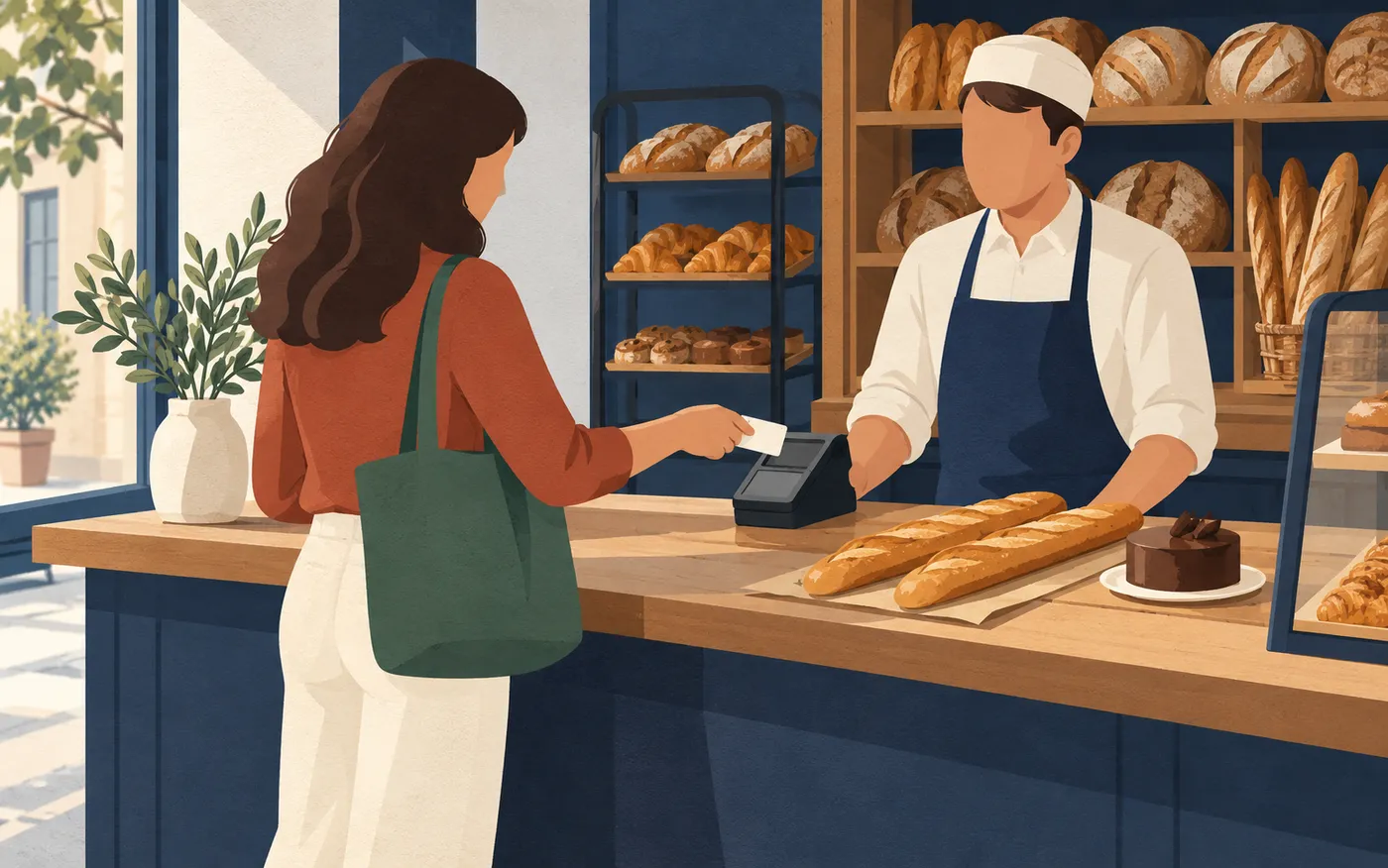
One trip to the bakery, three verbs
- Vendeuse
Bonjour ! Qu’est-ce que je vous sers ?
Hello! What can I get you?
- Client
Je voudrais deux baguettes et un gâteau au chocolat.
I’d like two baguettes and a chocolate cake.
- Vendeuse
Ça fait quatorze euros cinquante.
That’s fourteen euros fifty.
- Client
Je peux payer par carte ?
Can I pay by card?
- Vendeuse
Bien sûr.
Of course.
Back home, the customer can tell the story three ways: j’ai acheté un gâteau (the thing), j’ai payé par carte (the payment) and j’ai dépensé quatorze euros (the money).
What can you pay with payer?
Payer takes the bill (payer la facture), the person (payer le vendeur) or the item itself (payer ses courses), with no pour. To give the price, add it after the item: J’ai payé ce livre vingt euros. In the present, je paie and je paye are both correct.
What mistakes do English speakers make with payer?
- J’ai dépensé un nouveau téléphone.J’ai acheté un nouveau téléphone.
Dépenser takes the money, not the item.
- Je vais payer pour le dîner.Je vais payer le dîner.
Payer takes the thing directly. Payer pour quelqu’un means paying on someone’s behalf.
- J’ai passé beaucoup d’argent.J’ai dépensé beaucoup d’argent.
Passer is for time (passer une heure). Money is dépensé.