Picture scene
Chercher or trouver: find the missing things in a French room
Look for keys, glasses and a notebook in a picture scene. Learn chercher for the search, trouver for finding, and je trouve for an opinion, with four questions.
- A1
- 6 things to find
- Tap to explore
- Find-it game
- Learn this in the A1 notebook →
In short
Chercher means to look for: Je cherche mes clés. Trouver means to find: J’ai trouvé mes clés. Both take the thing directly. Trouver also expresses an opinion: Je trouve ce salon agréable means “I find this living room pleasant”.
Yellow the idea to rememberBlue French to learnRed watch out
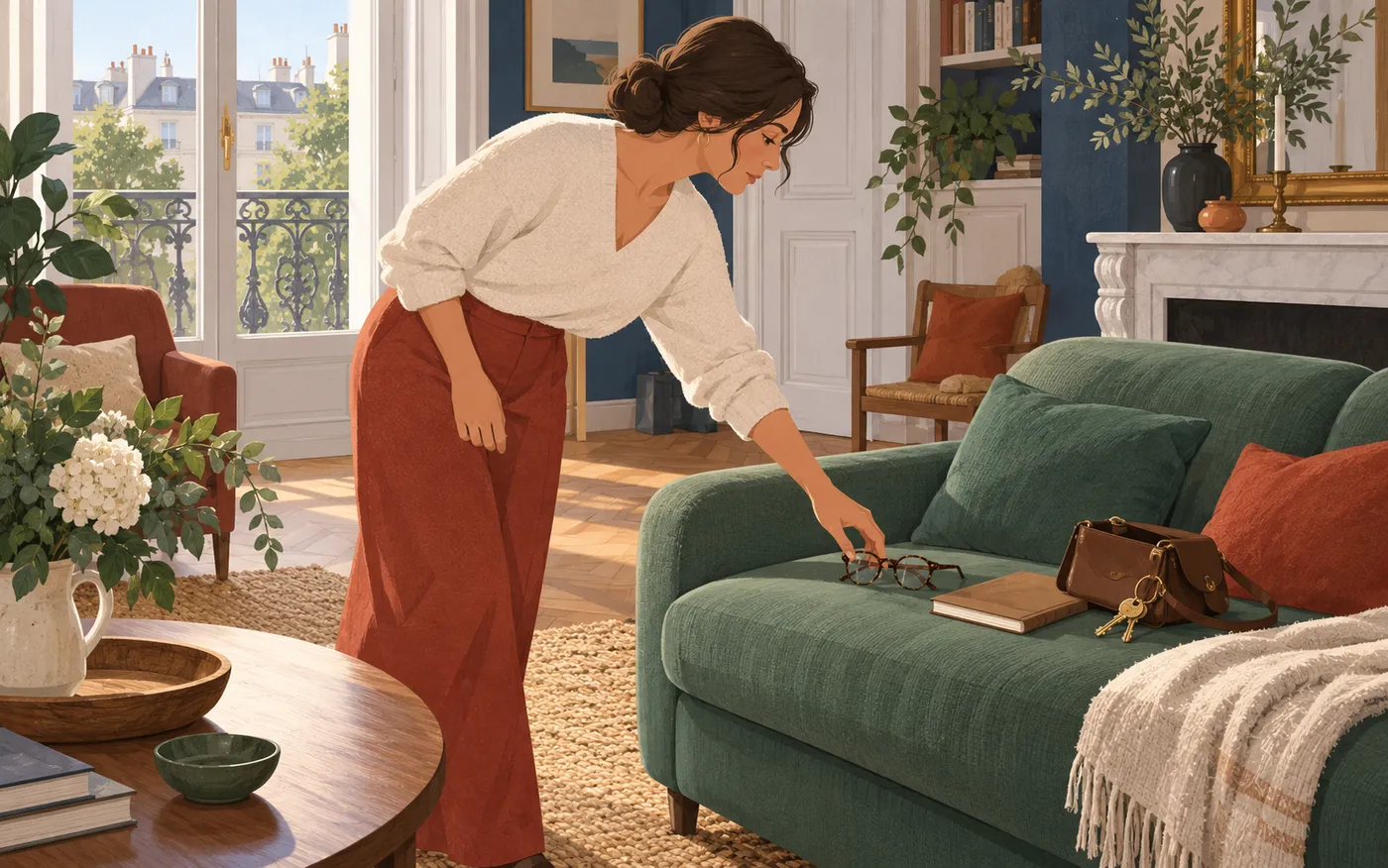
Explore the room, then find the missing things
Find:
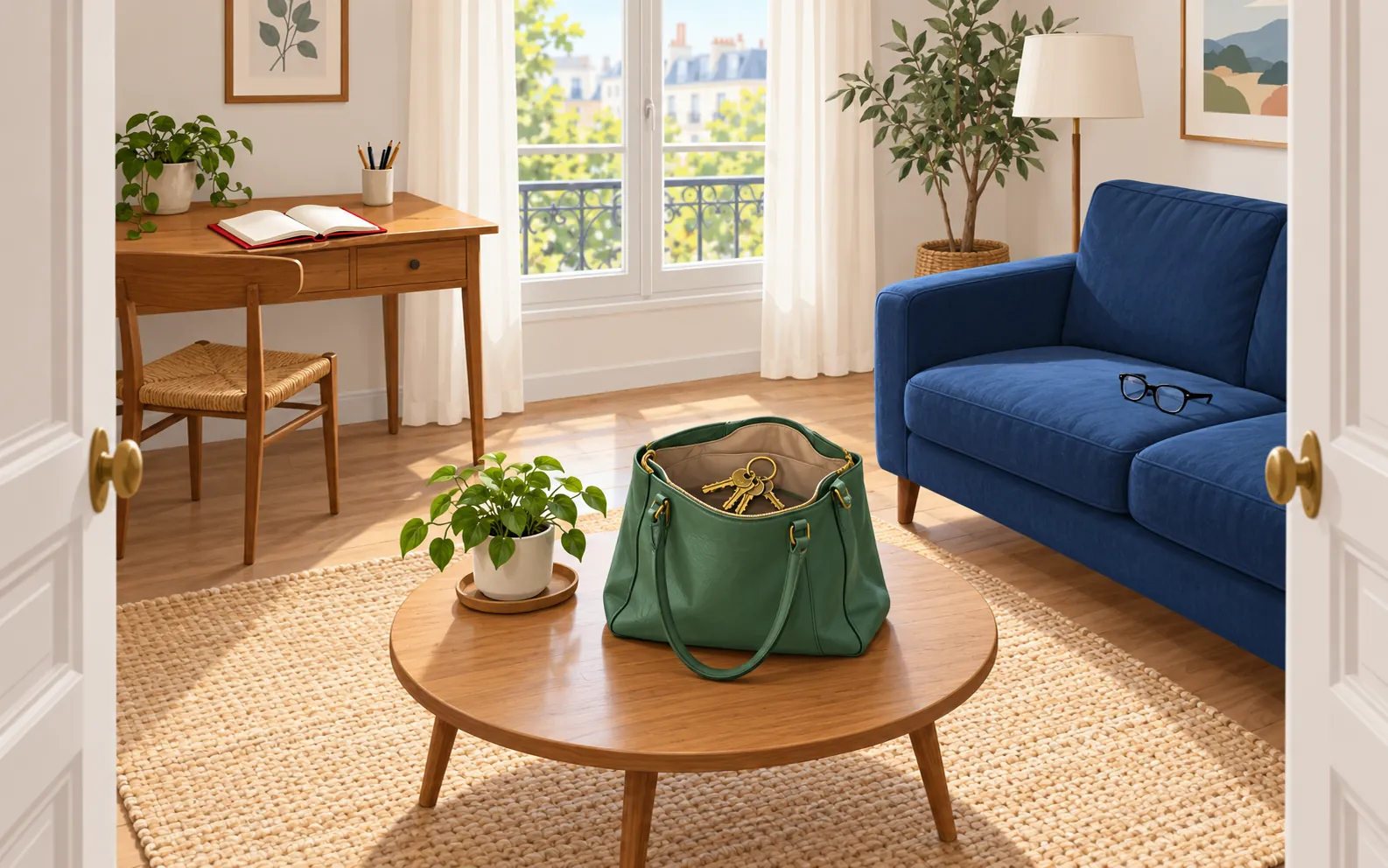
- Emma
Je cherche mes lunettes. Tu sais où elles sont ?
I’m looking for my glasses. Do you know where they are?
- Noé
Regarde sur le canapé.
Look on the sofa.
- Emma
Ah oui ! J’ai trouvé mes lunettes. Merci !
Oh yes! I’ve found my glasses. Thank you!
- Noé
Et tes clés ?
And your keys?
- Emma
Elles sont dans mon sac. On peut partir.
They’re in my bag. We can go.
| French | English | Meaning |
|---|---|---|
| Je cherche un appartement. | I’m looking for a flat. | the search |
| J’ai trouvé un appartement. | I’ve found a flat. | the result |
| Je trouve cet appartement lumineux. | I find this flat bright. | an opinion |
Is it chercher or chercher pour?
- Je cherche pour mes clés.Je cherche mes clés.
English “look for” becomes the single verb chercher before the thing you want to find.
Je ne trouve pas mon carnet.
I can’t find my notebook.
The negative describes an unsuccessful search. Trouver can be in the present too.
Je trouve cette pièce agréable.
I find this room pleasant.
Here, trouver gives an opinion about the room. The adjective says what you think of it.