Driving in France: speed limits, priority from the right and what to carry
The four French speed limits and how rain changes them, the priority rule that catches visitors, the alcohol limit, and the two things that must be in the car.
French limits depend on the kind of road, not on signs: 130 on motorways, 110 on dual carriageways, 80 on other roads, 50 in town. In rain the two highest drop by 20 and 10.
Yellow the idea to rememberBlue French to learn
The limits, in km/h
- 130motorway, autoroute110 in rain. 110 at all times for drivers in their first three years.
- 110dual carriageway with a central barrier100 in rain.
- 80other roads outside townsSome départements have put certain roads back to 90: follow the sign.
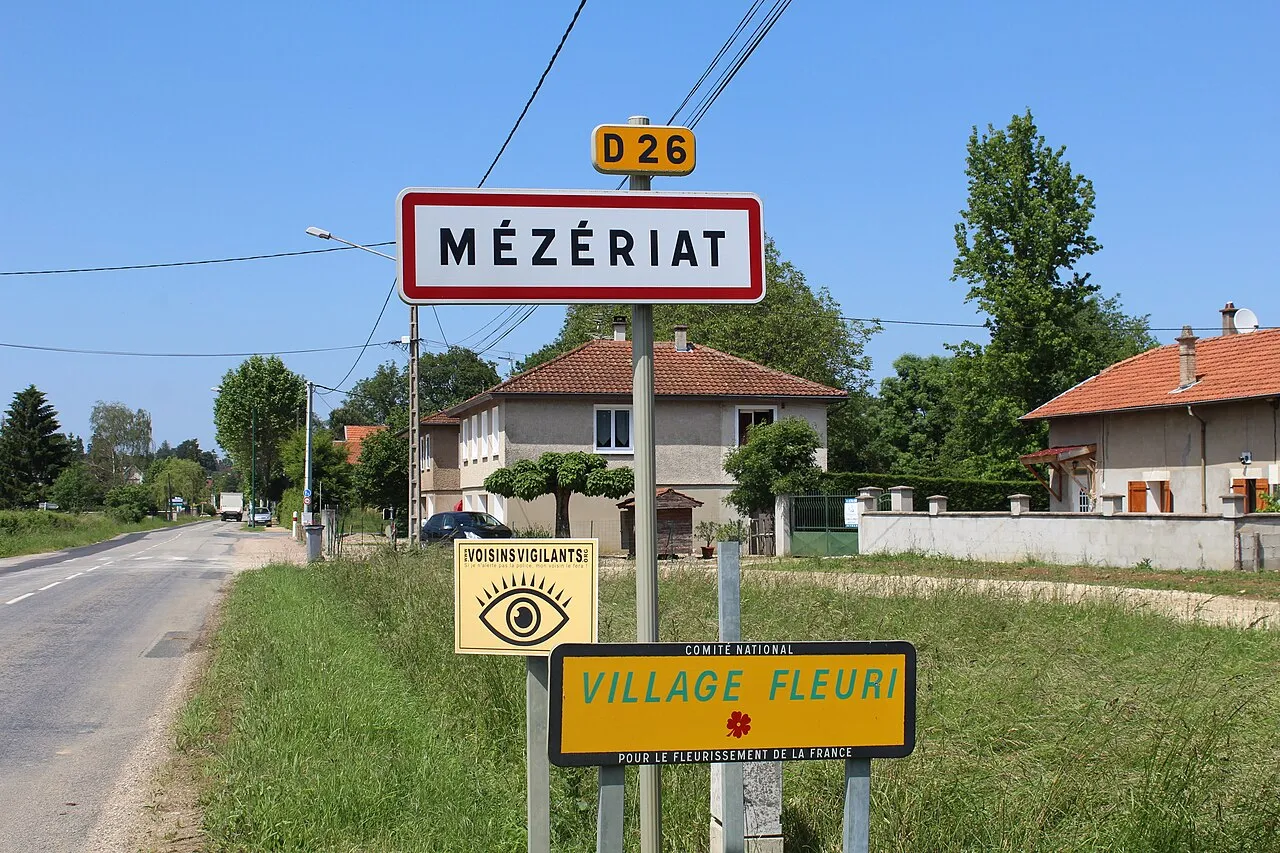
- 50in townFrom the town’s name sign to the same sign crossed out. Many centres are 30.
The limits, dry and wet
In km/h, unless a sign says otherwise
| Dry | Rain | |
|---|---|---|
| Motorwayautoroute | 130 | 110 |
| Dual carriagewayroute à chaussées séparées | 110 | 100 |
| Other roadsroute | 80 | 80 |
| In townen agglomération | 50 | 50 |
Some départements have put their main roads back to 90; those drop to 80 in rain. In fog with less than 50 m of visibility, the limit is 50 everywhere.
Tap a sign
What does this sign mean?
130
Motorway limit
limitation de vitesse
The maximum in dry weather. In rain it drops to 110 without any sign telling you; with under 50 metres of visibility, to 50.
- Rain
- 130 → 110. 110 → 100. 90 → 80 where a road is still at 90. 80 and 50 stay.
- New drivers
- 110 on motorways for the first three years (two after conduite accompagnée).
💬« Tu roules trop vite. » You are driving too fast.
80
The ordinary road limit
quatre-vingts
Two-way roads without a central barrier, outside towns. Since 2020 a département may set some of its roads back to 90: the sign decides.
- Rappel
- A small panel marked Rappel under a sign means: reminder, this limit still applies.
💬« C’est limité à quatre-vingts. » The limit is eighty.
Town
You are entering a town: 50
panneau d’entrée d’agglomération
The name sign is the speed sign. From here the limit is 50 unless a lower one is shown; many centres are now zone 30.
- Also means
- No horn except in danger.
- End
- The same sign with a red bar means the town limit is over.
💬« On entre en agglomération. » We are entering a built-up area.
Leaving
End of the town: back to 80
panneau de sortie d’agglomération
The red bar cancels the town’s 50. You may accelerate from the sign, not before.
- Cameras
- Often placed just before this sign.
💬« On sort de la ville. » We are leaving the town.
Give way
Give way
cédez le passage
Slow down and let traffic on the other road pass. You need not stop if the way is clear.
- At roundabouts
- This sign faces you at every entry: cars on the ring go first.
💬« Tu n’as pas la priorité. » You do not have priority.
Stop
Stop completely
stop
Wheels must stop turning at the white line, even on an empty road at three in the morning. Rolling through costs four points.
- Fine
- A fixed fine and four of your twelve points.
💬« Tu as grillé le stop ! » You went through the stop sign!
You have priority
Priority road
route prioritaire
A yellow diamond: at every junction ahead, the others give way to you. It is repeated after each crossing.
- Ends with
- The same sign crossed by a black bar. After it, priority from the right is back.
💬« On est sur une route prioritaire. » We are on a priority road.
Priority ends
End of priority
fin de route prioritaire
From here, at a junction with no sign, give way to anything coming from your right.
- Where
- Typically on entering a village.
💬« Attention, la priorité à droite. » Careful, priority from the right.
Priority from the right
Junction: the car on your right goes first
priorité à droite
A cross in a red triangle warns of a junction where the default rule applies. The car from the right has priority, even from a small side street.
- The surprise
- Locals pull out without looking left. They are in the right.
- Paris
- The Arc de Triomphe roundabout works this way: cars entering have priority.
💬« Il avait la priorité. » He had priority.
Roundabout
Roundabout: turn anticlockwise
sens giratoire
Give way to traffic already on the ring, coming from your left. Indicate right as you pass the exit before yours.
- Fact
- France has more roundabouts than any other country.
💬« Au rond-point, prenez la deuxième sortie. » At the roundabout, take the second exit.
No entry
No entry
sens interdit
A one-way street, from the wrong end. Satnavs sometimes miss it; the sign wins.
- Exception
- A panel sauf vélos lets bicycles through.
💬« C’est un sens interdit. » It is a no-entry street.
Toll
Toll motorway
autoroute à péage
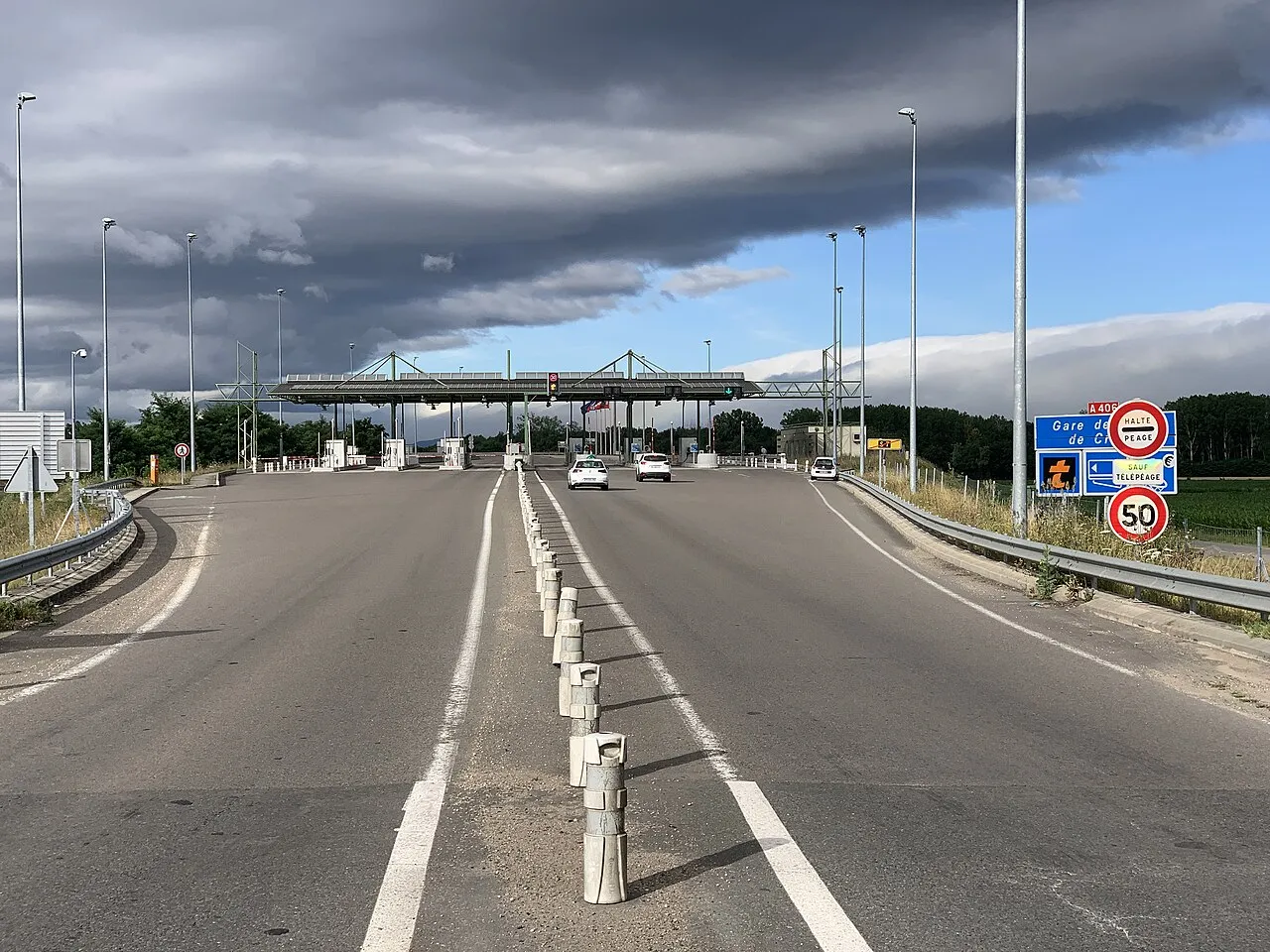
Take a ticket on entry and pay on exit, or pay a flat fee at a barrier. More and more stretches are barrier-free: you pay online within 72 hours.
- Lanes
- Green arrow: all payments. Card symbol: cards only. Orange t: tag holders only.
- Free-flow
- Look for péage en flux libre and note the motorway number.
💬« Vous avez la monnaie pour le péage ? » Do you have change for the toll?
The rules that catch visitors
- Priorité à droite
At a junction with no sign, the car coming from your right goes first, even from a small side street. A yellow diamond sign means you have priority.
- Roundabouts
Cars already on the roundabout have priority.
- Alcohol
0.5 g per litre of blood: about two small glasses. 0.2 for new drivers, which means none.
- Phone
Holding a phone is a fine and three points. So are earphones.
- In the car
A high-visibility vest within reach and a warning triangle are compulsory.
- Crit’Air
Many cities are low-emission zones. Order the windscreen sticker, a few euros, only from the official site.
- Cameras
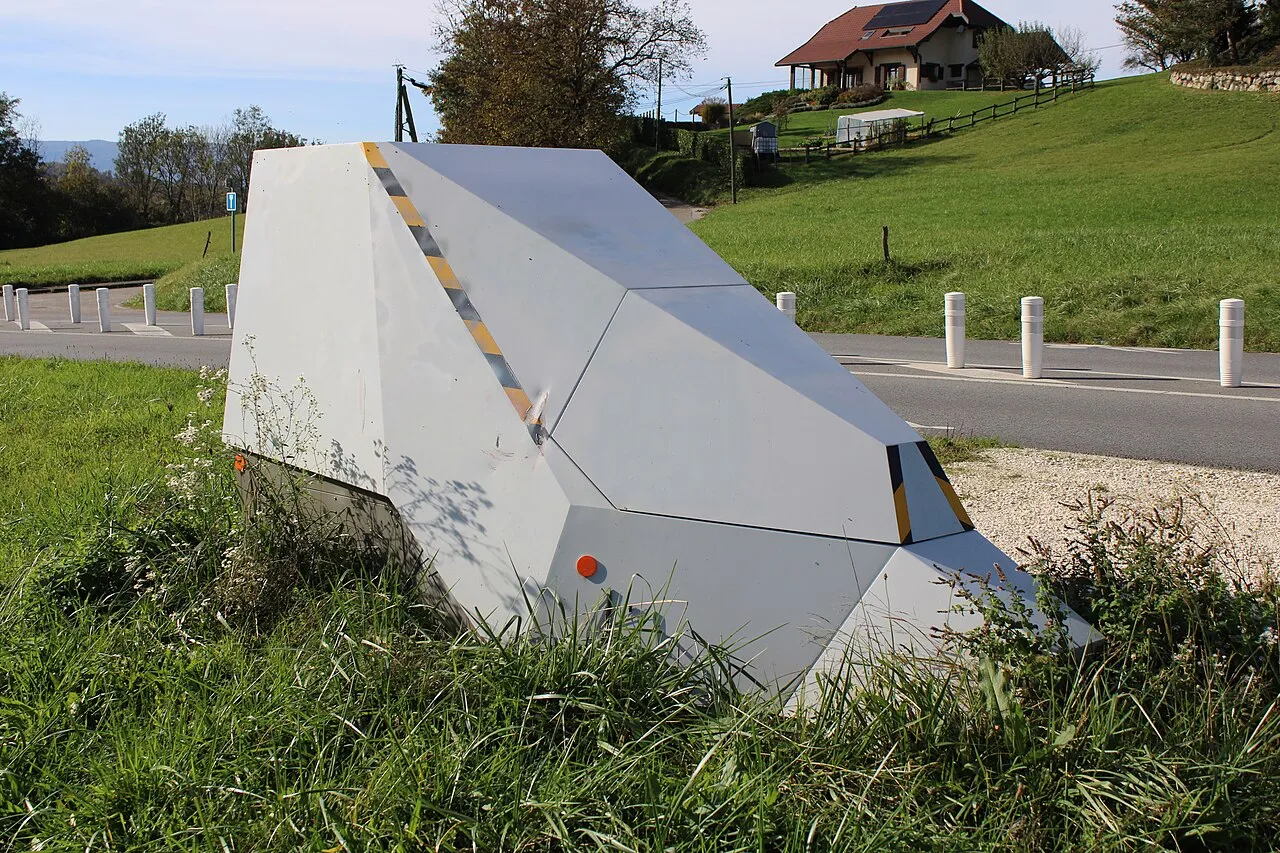
Fixed and mobile, and tolerant of very little. Foreign plates are followed up at home.
- Tolls
Motorways are mostly paid, à péage. Take the lane with a green arrow or a card symbol; t is for subscribers only.
At the pump
The commonest expensive mistake a visitor makes is at the filling station. Gazole is diesel. It is not petrol, whatever it sounds like.
| On the pump | What it is |
|---|---|
| SP95-E10 (E10 in a circle) | Unleaded petrol with up to 10% ethanol. The standard choice for petrol cars built since 2000. |
| SP98 (E5 in a circle) | Unleaded petrol with less ethanol. For older or high-performance engines; a few cents dearer. |
| Gazole (B7 in a square) | Diesel. |
| E85 | Bioethanol, for adapted cars only. Much cheaper, and it will damage an ordinary engine. |
| GPL | Liquefied gas, for converted cars. |
- Supermarkets are cheapest
Pumps at hypermarkets undercut everyone. Motorway stations charge the most: fill up before you join.
- Card-only pumps
Most pumps run unattended at night and on Sundays. They place a temporary hold of a hundred euros or more on your card, and some refuse foreign cards: fill up in the daytime if yours has been declined before.
On the motorway
- Take a ticket, pay at the exit
Most motorways are toll roads. Keep the ticket: losing it means paying for the longest possible journey.
- Which lane at the toll
An orange t means electronic tags only. A green arrow takes everything. A card symbol is for bank cards.
- Free-flow sections
On some motorways, including the A13 and A14 from Paris to Normandy, there are no barriers: cameras read your number plate and you pay online or in a tabac within 72 hours.
- Les aires
A rest area, aire de repos, every 15 kilometres or so, with toilets and picnic tables. A service area, aire de service, with fuel and food, about every 40.
- If you break down
Hazard lights, vest on, everyone out and behind the barrier. Use the orange roadside telephone or call 112: only approved recovery trucks may work on a motorway.
Parking, winter and accidents
- Zone bleue
Free parking for a limited time, shown by blue lines. Set your arrival time on a cardboard disc, un disque de stationnement, and leave it on the dashboard. Tobacconists sell them.
- Payant
Pay at the machine or in the town’s app, entering your number plate. There is no ticket to display in many towns: the wardens scan plates.
- Winter equipment
From 1 November to 31 March, cars in mountain areas must have winter tyres fitted or carry chains. Signs at the edge of each zone show a tyre and a mountain.
- Le constat amiable
After a collision without injuries, both drivers fill in and sign one accident form together, on paper or in the e-constat app. It records facts, not blame, and goes to both insurers.
What the common offences cost
Four habits that cost drivers the most
| The rule | Fine | Points |
|---|---|---|
| Phone in your handtéléphone tenu en main | 135 € | ●●●3 of 12 |
| No seat beltceinture non attachée | 135 € | ●●●3 of 12 |
| Running a red lightfeu rouge grillé | 135 € | ●●●●4 of 12 |
| 5 to 19 km/h over, outside townsexcès de vitesse de 5 à 19 km/h | 68 € | ●1 of 12 |
Standard amounts; they fall if you pay within 15 days (30 online) and rise after 45 (60 online). Since 2024, less than 5 km/h over costs the fine but no point. A full licence has 12 points.
Points on a French licence
The French licence holds up to 12 points
A new driverStarts with six. Two more each year without an offence, twelve after three years (three a year and two years if you learned through conduite accompagnée).
6 / 12
An established driverThe full stock.
12 / 12
After running a red lightFour gone. A minor one-point loss comes back after six months without offence.
8 / 12
Who goes first
No signs at all: priorité à droite
- The car on your right Nobody is on its right.
- You You give way to your right, then go.
- The car on your left You are on its right, so it waits for you.
You are the red car, coming from the bottom.
How far to stop
In km/h, with good tyres
- 50
28 m
35 m
- 80
57 m
75 m
- 110
97 m
130 m
- 130
129 m
176 m
one second before you brakebraking, drybraking, wet
Orders of magnitude from the usual driving-school rule (braking distance grows with the square of speed, and by about half as much again in the wet), not measured figures.
The colour of the sign
Following signs out of a town
A6 LYON
A motorway, usually with tolls.une autorouteDIJON
A main route between large towns, free.un itinéraire principalBeaune
A local destination.une direction localeDéviation
Temporary: roadworks or a diversion. It overrides the others.un panneau temporaire