Gap-fill
French A2 gap-fill: questions and times in a dinner invitation
Arrange dinner on one of two evenings in this French A2 gap-fill. Twelve cues practise question words, dates, clock times and time expressions.
- A2
- 12 gaps
- Translation included
- Learn this in the A2 notebook →
In short
Ask quel soir for an evening, à quelle heure for a clock time and combien de temps for a duration. Complete twelve gaps in a dinner exchange; the English cue gives the exact expression, including any preposition.
| Information wanted | French question | Possible answer |
|---|---|---|
| A day | Quel jour es-tu libre ? | Mercredi. |
| A clock time | À quelle heure commence le film ? | À vingt heures. |
| A duration | Combien de temps dure le film ? | Deux heures. |
| A place | Où est le cinéma ? | Près de la gare. |
Jeudi ou vendredi ?
Lundi, Clara écrit à son ami Paul : « Salut ! Tu veux venir dîner chez moi jeudi (or) vendredi ? (which, before masculine soir) soir préfères-tu ? » Paul regarde son agenda avant de répondre. Il travaille tard jeudi, mais il est libre le lendemain.
« Vendredi me va bien. À (which, before feminine heure) heure est-ce que je peux venir ? » Clara répond : « (around, at the start of a sentence) dix-neuf heures trente, si ça te convient. » Paul demande : « (how much, before de temps) de temps faut-il pour venir depuis la gare ? » Clara précise : « Dix minutes à pied. »
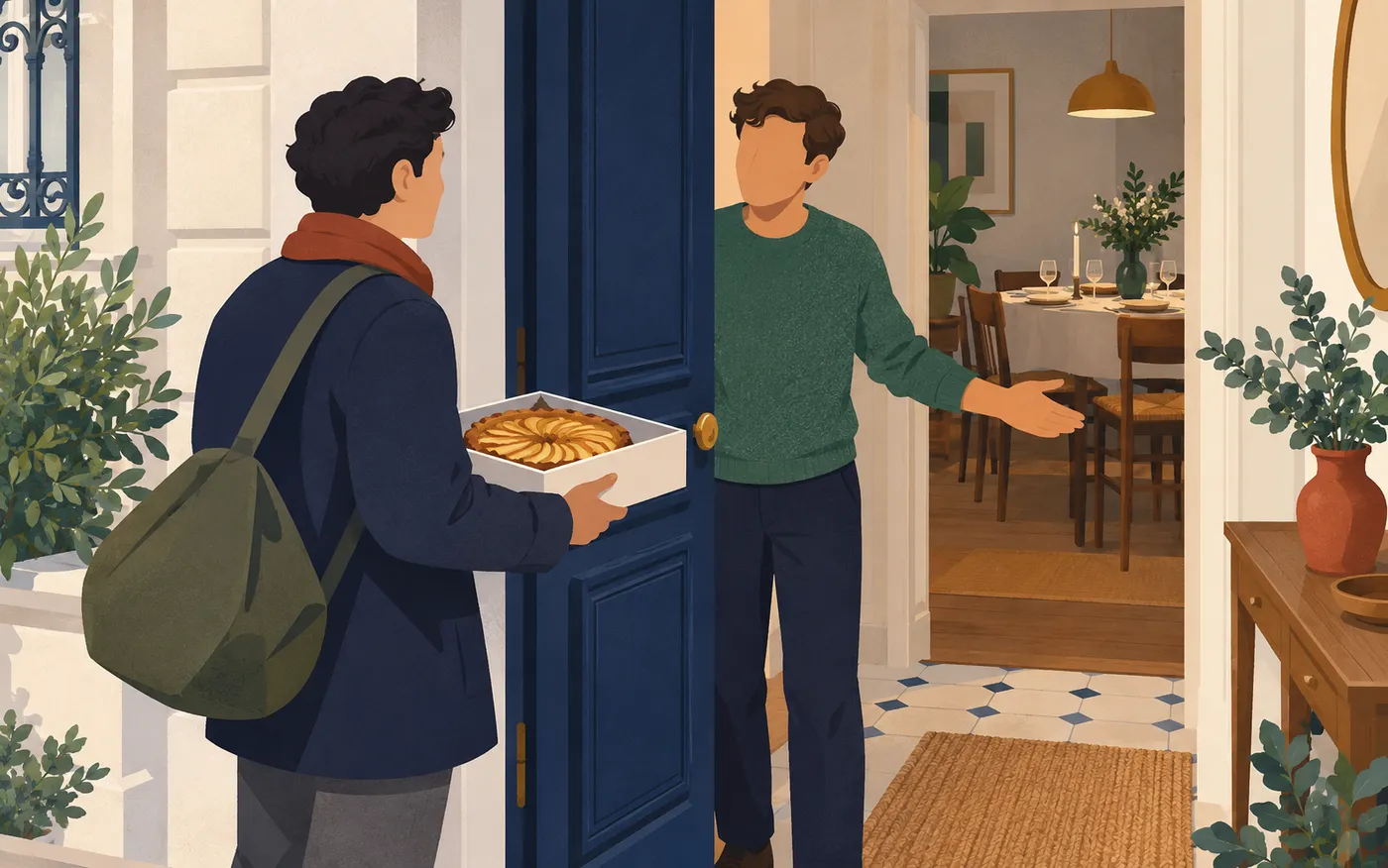
Paul écrit : « (where, at the start of a sentence) habites-tu maintenant ? » Clara envoie son adresse. « Je t’attendrai (in front of) l’immeuble. Le dîner commencera (at, before a clock time) vingt heures. » Paul propose d’apporter quelque chose. « (what, before tu veux) tu veux comme dessert ? » demande-t-il. Clara choisit une tarte aux pommes.
Paul confirme : « Très bien, on se voit (Friday) soir, (after) mon travail. Je passerai à la boulangerie avant de venir. » Clara répond : « Parfait ! À (soon, in a farewell) ! » Elle note l’heure dans son agenda et commence sa liste de courses.
Read it in English
On Monday, Clara writes to her friend Paul: “Hi! Would you like to come to my place for dinner on Thursday or Friday? Which evening do you prefer?” Paul checks his diary before replying. He works late on Thursday, but is free the next day.
“Friday suits me. What time can I come?” Clara replies: “Around half past seven, if that suits you.” Paul asks: “How long does it take to get there from the station?” Clara explains: “Ten minutes on foot.”
Paul writes: “Where do you live now?” Clara sends her address. “I’ll wait for you in front of the building. Dinner will start at eight.” Paul offers to bring something. “What would you like for dessert?” he asks. Clara chooses an apple tart.
Paul confirms: “Very good, see you on Friday evening, after work. I’ll stop at the bakery before coming.” Clara replies: “Perfect! See you soon!” She notes the time in her diary and starts her shopping list.