Gap-fill
French A2 gap-fill: venir de and aller in guest-room preparations
Complete twelve recent-past and near-future forms while preparing a guest room. Separate jobs just finished from the next steps, with translation.
- A2
- 12 gaps
- Translation included
- Learn this in the A2 notebook →
In short
Venir de + infinitive means “have just done”; aller + infinitive means “be going to do”. Complete twelve gaps with the whole expression. Each cue tells you whether the job is just finished or still ahead.
| Time | French example | Meaning |
|---|---|---|
| Just finished | Tu viens de fermer la porte. | You have just closed the door. |
| Next action | Tu vas ouvrir la fenêtre. | You are going to open the window. |
| Before a vowel | Il vient d’appeler. | He has just called. |
Ready for a guest
Find:
La chambre de Lucie
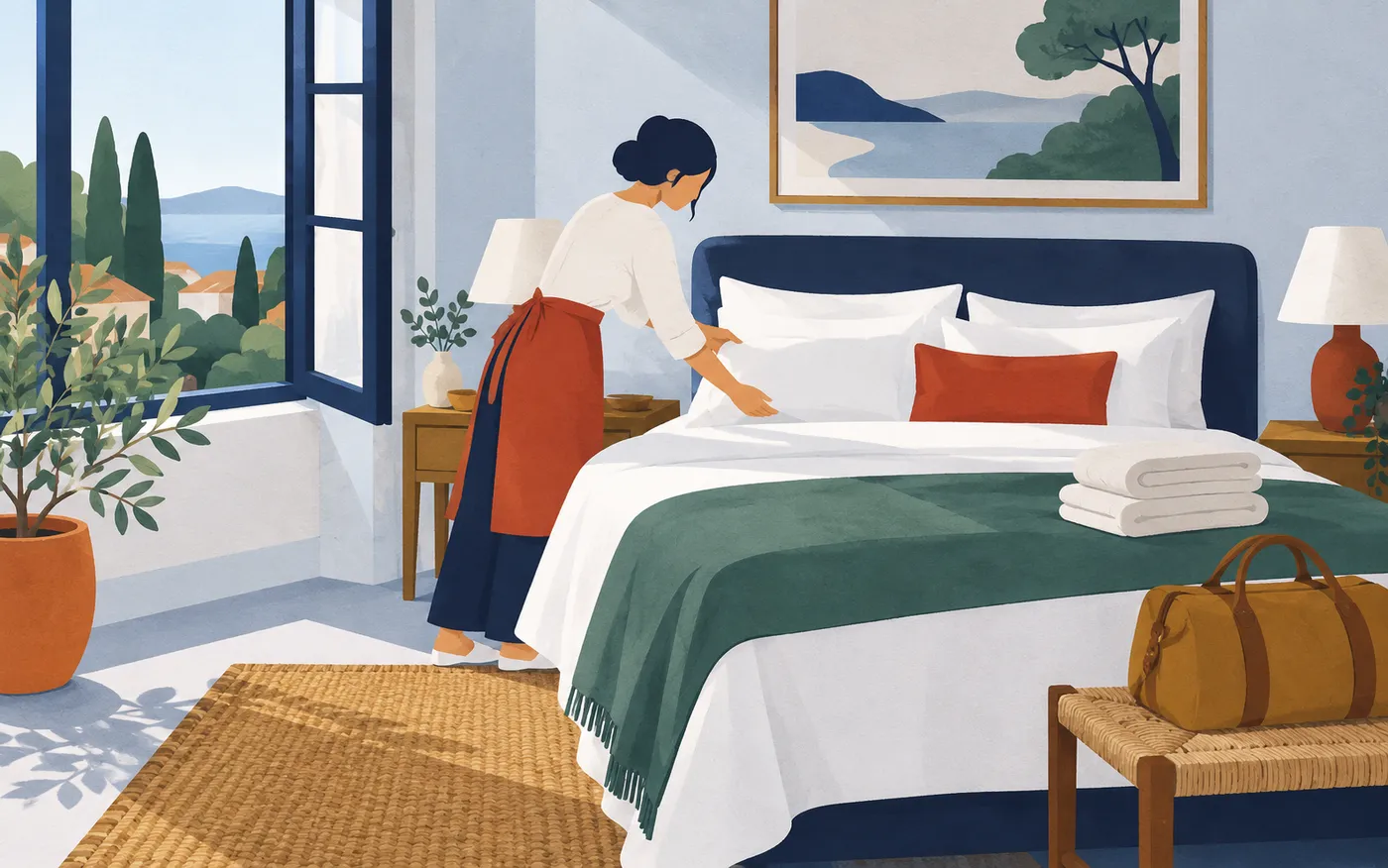
Lucie arrive ce soir. Nora regarde la chambre d’amis et dit à son frère : « Je (ranger · just finished) les livres. Maintenant, je (nettoyer · next) le bureau. » Son frère répond : « Nous (sécher · just finished) les draps. Ils sont encore chauds ; nous (faire · next) le lit. »
Nora prend un oreiller propre. « Tu (sortir · just finished) cet oreiller du placard ? » demande son frère. « Oui, et je (mettre · next) une couverture au pied du lit. » La pièce commence à être accueillante.
Leur mère passe devant la porte. « Vous (changer · just finished) l’ampoule ? » « Oui, la lampe fonctionne. Nous (poser · next) une bouteille d’eau sur la table de nuit. » Leur mère sourit : « Lucie sera bien ici. »
Le téléphone sonne. C’est Lucie : « Je (arriver · just finished) à la gare. » Nora répond : « Mon frère (venir · next) te chercher. Il (prendre · just finished) ses clés. Et moi, je (préparer · next) du thé pendant votre trajet. À tout à l’heure ! »
Read it in English
Lucie arrives this evening. Nora looks at the spare room and says to her brother, “I have just put the books away. Now I’m going to clean the desk.” Her brother replies, “We have just dried the sheets. They are still warm; we’re going to make the bed.”
Nora takes a clean pillow. “Have you just taken that pillow out of the cupboard?” her brother asks. “Yes, and I’m going to put a blanket at the foot of the bed.” The room is starting to look welcoming.
Their mother walks past the door. “Have you just changed the bulb?” “Yes, the lamp works. We’re going to put a bottle of water on the bedside table.” Their mother smiles: “Lucie will be comfortable here.”
The phone rings. It is Lucie: “I have just arrived at the station.” Nora replies, “My brother is going to come and get you. He has just taken his keys. And I’m going to make some tea during your journey. See you shortly!”