Verb drill

French past-tense drill: turn a present-day account into a memory

Retell Clara’s day in the past. Choose imparfait for background and habits, passé composé for completed events, and keep the account’s sequence.

In short

When you retell this account as a memory, put background states and repeated habits in the imparfait. Use the passé composé for the completed events of that particular day. Keep each time phrase attached to its action: a routine and a one-off visit can appear in the same memory.

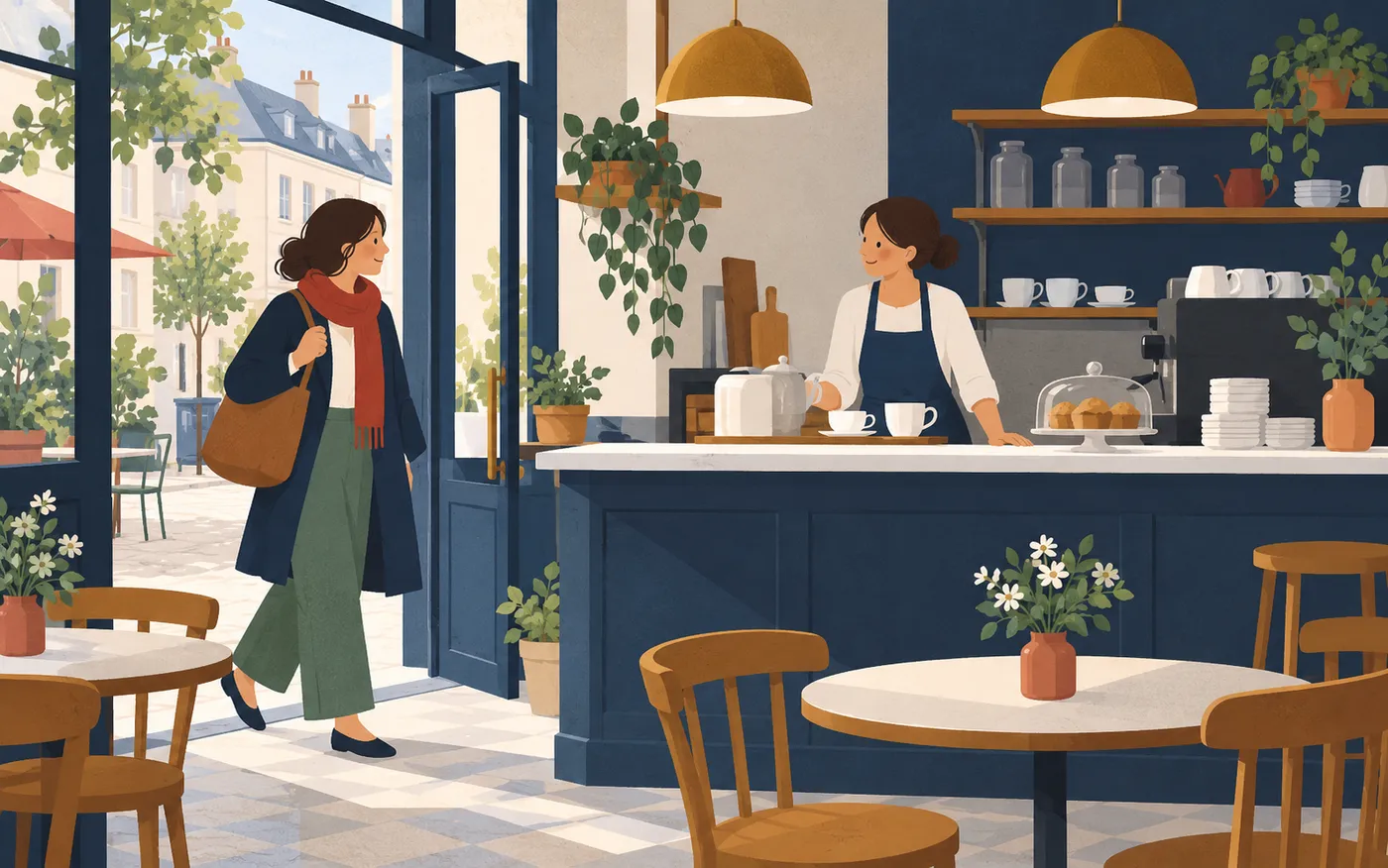
A young woman working behind a quiet French café counter and greeting a friend arriving for tea, no signage clocks or menus.
Nora est arrivée à l’improviste at the café. Illustration: Atelier
Study first: three jobs in a past account
JobExampleWhat it tells you
BackgroundLa salle était calme.What the setting was like.
Repeated habitChaque soir, je lisais.What happened regularly.
Bounded eventCe soir-là, j’ai terminé un roman.What happened on one occasion.

Clara is the narrator. Her opening lines describe her current summer routine; the rest follows one particular day. Retell the whole account ten years later. Use the given past-time starters. Keep chaque matin and d’habitude for the habits, then follow the single day from the unexpected arrival to Clara’s return.

Clara raconte sa journée

Cet été, je travaille dans un café. J’habite tout près1. Chaque matin, je me lève à sept heures. D’habitude2, je prends un café avant le travail. Aujourd’hui, la salle est calme et je suis de bonne humeur3. À neuf heures, mon amie Nora arrive à l’improviste4. Elle commande un thé. Nous discutons pendant dix minutes. Puis elle reçoit5 un appel et part. À midi, je ferme le café et je rentre6 chez moi.

Read it in English

This summer, I work in a café. I live very close by. Every morning, I get up at seven. Usually, I have a coffee before work. Today, the room is quiet and I am in a good mood. At nine, my friend Nora arrives unexpectedly. She orders a tea. We talk for ten minutes. Then she gets a call and leaves. At midday, I close the café and go home.

Four details from Clara’s day

1 · Set the remembered summer: write the complete verb group

  1. Cet été-là, je dans un café. (travailler; background situation)
  2. J’ tout près. (habiter; background situation)
  3. Chaque matin, je à sept heures. (se lever; repeated habit)
  4. D’habitude, je un café avant le travail. (prendre; repeated habit)

2 · Retell that particular day, in order

  1. Ce jour-là, la salle calme. (être; background state)
  2. J’ de bonne humeur. (être; background state)
  3. À neuf heures, mon amie Nora à l’improviste. (arriver; completed event)
  4. Elle un thé. (commander; completed event)
  5. Nous pendant dix minutes. (discuter; complete ten-minute conversation)
  6. Puis elle un appel. (recevoir; event)
  7. Elle . (partir; event; Nora is a woman)
  8. À midi, j’ le café. (fermer; event)
  9. Je chez moi. (rentrer; event; Clara is a woman)

Question 1No account needed
Why is the conversation in the passé composé?

Choose one answer.

Answer and explanation

It is presented as one completed ten-minute exchange.. The account presents the exchange as a bounded whole. Duration alone does not choose the tense.

Question 2No account needed
Choose the background form.À son arrivée, la salle ___ calme.

Choose one answer.

Answer and explanation

était. Here the sentence describes the room as Nora arrives, so the memory uses était.

Question 3No account needed
Which form agrees with Clara?

Choose one answer.

Answer and explanation

Je suis rentrée.. Rentrer takes être here, and Clara’s participle has feminine singular agreement.