How to read a French wine label, line by line
French wine labels name a place, not a grape. What each line means, which grape hides behind which appellation, and the six words that tell you most in a supermarket aisle.
A French label tells you where the wine comes from, and expects you to know the grape. Find the appellation line first: the smaller the place it names, the stricter the rules. Then the bottler, then the year.
Yellow the idea to rememberBlue French to learnRed watch out
The label, line by line
- Grand vin de…a flourish with no legal meaning: ignore it
- Domaine…the estate. Château in Bordeaux, Domaine in Burgundy, Mas in the south
- Appellation … contrôléethe protected place name: the line that matters
- 2023le millésime, the year the grapes were picked
- Mis en bouteille au domainebottled by the grower: a good sign
A typical label, drawn for this page.
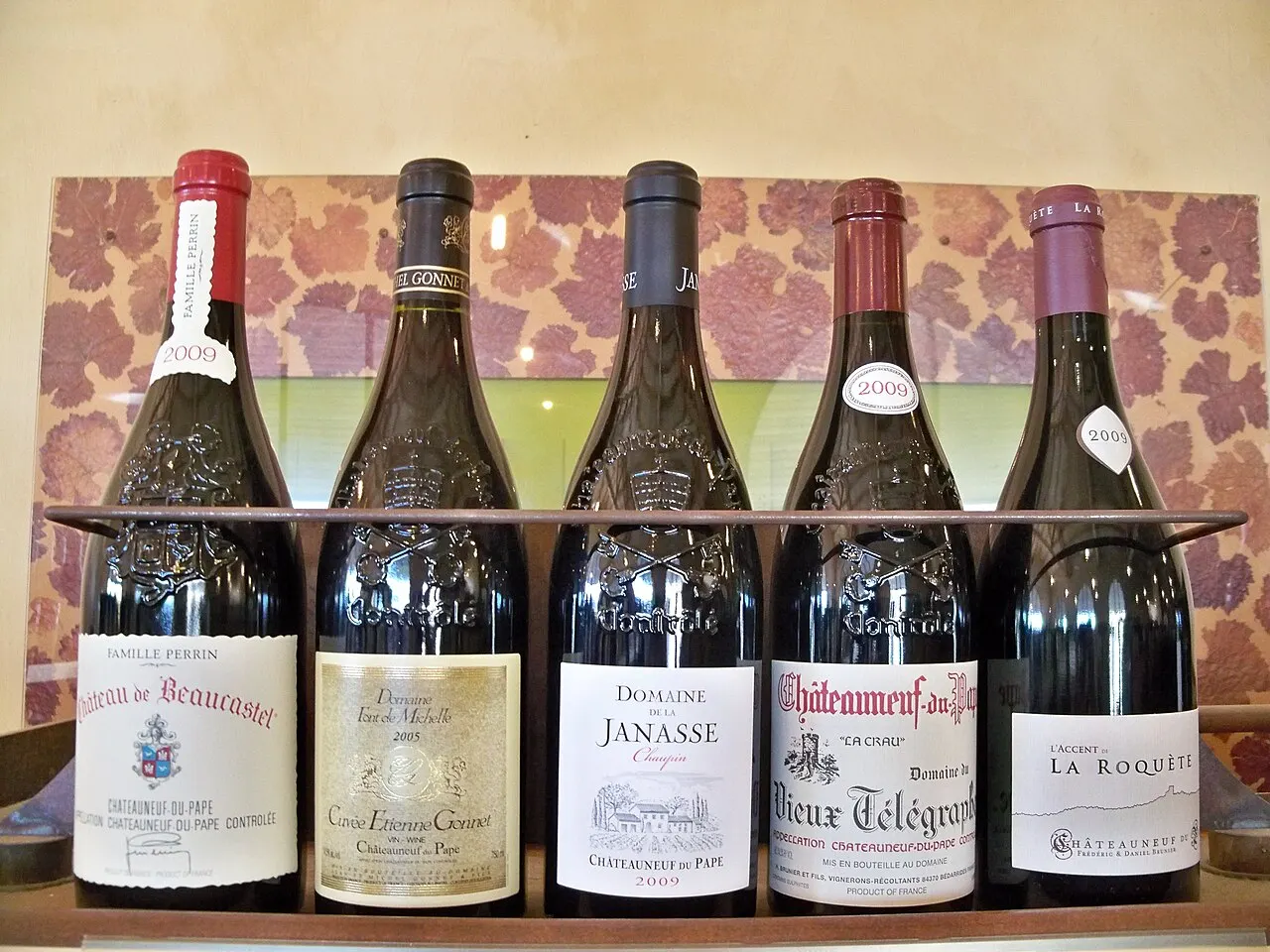
Three levels, printed on every bottle
From the strictest rules to the loosest
- AOC / AOP appellation d’origine contrôlée / protégéeplace
A defined place, permitted grapes, a maximum yield. Most French wine you will meet. AOC and AOP are the same thing: the French and the European name.
- IGP indication géographique protégéeregion
A wider region and freer rules. Often names the grape: IGP Pays d’Oc, chardonnay. Formerly vin de pays.
- Vin de France wine of Francecountry
Grapes from anywhere in the country. Cheap blends, and also some ambitious growers who want no rules.
A higher level is a promise about origin, not about taste. A good IGP beats a dull AOC.
Which grape is in the bottle
| On the label | Colour | The grape |
|---|---|---|
| Bourgogne, Chablis, Mâcon | white | chardonnay |
| Bourgogne, Côte de Nuits, Beaune | red | pinot noir |
| Beaujolais, Morgon, Fleurie | red | gamay |
| Sancerre, Pouilly-Fumé | white | sauvignon blanc |
| Vouvray, Savennières | white | chenin |
| Chinon, Bourgueil | red | cabernet franc |
| Bordeaux, Médoc | red | cabernet sauvignon and merlot |
| Saint-Émilion, Pomerol | red | mostly merlot |
| Côtes-du-Rhône, Gigondas | red | grenache and syrah |
| Crozes-Hermitage, Saint-Joseph | red | syrah |
| Muscadet | white | melon de Bourgogne |
| Alsace | white | printed on the label: riesling, gewurztraminer, pinot gris |
Alsace is the exception: its bottles name the grape in large letters, as wines from outside Europe do. Everywhere else, the back label often gives the grapes, under cépages.
Six words that help, and three that do not
Printed on the label
- Means somethingmis en bouteille au château
Grown, made and bottled in one place.
good sign - Means somethingpremier cru, grand cru
A ranked vineyard. The ranking differs by region: in Saint-Émilion and Alsace, grand cru is far more common than in Burgundy.
a rank - Means somethingrécoltant
The bottler grew the grapes. Négociant means he bought them.
who made it - Means somethingsec, demi-sec, moelleux
Dry, off-dry, sweet. On whites from the Loire and Alsace it matters.
sweetness - No legal meaningvieilles vignes
Old vines. No minimum age is defined.
marketing - No legal meaningcuvée prestige, réserve
The producer’s own names for a bottling.
marketing
The small print
- 12,5 % vol.
Alcohol. Northern whites are around 12, southern reds 14 and more.
- 75 cl
A standard bottle. Un magnum is 150 cl, une demi-bouteille 37,5 cl.
- Contient des sulfites
On almost every bottle: a legal mention, not a warning about this wine in particular.
- The pregnant-woman logo
Compulsory on all alcohol sold in France.
- A QR code
Since late 2023, new vintages must give ingredients and nutrition, usually through a code.
In a supermarket aisle
French supermarkets shelve wine by region, then by colour. Medals on the neck come from paid competitions: a gold from the Concours général agricole in Paris carries the most weight. For a bottle to take to dinner, avoid the very cheapest shelf at the bottom and look at eye level in the region you know. Each September, the foire aux vins brings two weeks of real reductions.
| French | English |
|---|---|
| un cépage | a grape variety |
| un millésime | a vintage |
| un caviste | a wine merchant |
| une cuvée | a particular bottling |
| un vin de garde | a wine to keep for years |
| à boire | ready to drink now |
| bouchonné | corked |
| un vin bio, nature | organic, natural wine |
Checked 20 November 2026. What an appellation is (a product whose every stage is carried out in one named area, by a recognised method) was read on INAO’s page, the body that grants them. How to read the rest of a label is convention, not law: regions order the lines differently, and the example label is ours, drawn to show where each line usually sits.