French cheeses by region: a map, and what to ask for
Fourteen French cheeses pinned where they are made, from camembert in Normandy to roquefort in the Aveyron: what each tastes like, the milk, and the sentence to use at the counter.
Almost every French cheese is named after the place it comes from. Cow’s milk in the north and the mountains, goat along the Loire, sheep in the south-west and Corsica. Travelling, ask for un fromage du coin: the local one.
Yellow the idea to rememberBlue French to learnRed watch out
Fourteen cheeses on the map
Normandie · cow
Camembert
Soft, white rind, creamy when ripe. The real thing says camembert de Normandie and au lait cru on the box.
- Tastes of
- Mushroom and butter, stronger with age.
- With
- Dry cider or a light red.
📍 Take me thereGoogle Maps ↗Apple Maps ↗
Île-de-France · cow
Brie de Meaux
A wide flat wheel sold in wedges. Milder than camembert, with a taste of hazelnut.
- Tastes of
- Cream and nuts.
- Note
- Brie de Melun is the saltier, stronger brother.
📍 Take me thereGoogle Maps ↗Apple Maps ↗
Hauts-de-France · cow
Maroilles
A square, orange washed rind with a famous smell and a much gentler taste.
- Tastes of
- Strong and meaty.
- Eaten
- Baked in a tart: la flamiche au maroilles.
📍 Take me thereGoogle Maps ↗Apple Maps ↗
Alsace · cow
Munster
Soft and orange-rinded, from the Vosges mountains.
- Tastes of
- Pungent, rich.
- With
- Cumin seeds and a gewurztraminer.
📍 Take me thereGoogle Maps ↗Apple Maps ↗
Jura · cow
Comté
A huge hard wheel aged from 4 to 36 months. The cheese the French buy most by value among protected names.
- Tastes of
- Young: milky. Old: nuts and caramel, with crunchy crystals.
- Ask
- Un comté de dix-huit mois.
📍 Take me thereGoogle Maps ↗Apple Maps ↗
Bourgogne · cow
Époisses
Washed in marc de Bourgogne, sold in a wooden box, eaten with a spoon when ripe.
- Tastes of
- Powerful, salty, creamy.
- With
- A white Burgundy.
📍 Take me thereGoogle Maps ↗Apple Maps ↗
Savoie · cow
Reblochon
A soft mountain cheese, the one that goes into tartiflette.
- Tastes of
- Nutty and mild.
- Season
- Best from summer milk.
📍 Take me thereGoogle Maps ↗Apple Maps ↗
Savoie · cow
Beaufort
A hard Alpine cheese with a concave edge, made in high chalets in summer.
- Tastes of
- Fruity, firm, long.
- Ask for
- Beaufort d’alpage.
📍 Take me thereGoogle Maps ↗Apple Maps ↗
Auvergne · cow
Saint-Nectaire
A grey-rinded, supple cheese ripened on rye straw.
- Tastes of
- Earth, mushroom, hazelnut.
- Look for
- fermier: farm-made, with an oval green label.
📍 Take me thereGoogle Maps ↗Apple Maps ↗
Auvergne · cow
Cantal
One of the oldest cheeses in France. Jeune, entre-deux or vieux, by age.
- Tastes of
- Young: butter. Old: sharp and crumbly.
- Cousin
- Salers, made only from summer pasture.
📍 Take me thereGoogle Maps ↗Apple Maps ↗
Loire · goat
Crottin de Chavignol
A small drum of goat’s cheese from the Sancerre hills.
- Tastes of
- Fresh: tangy. Dry: nutty and hard.
- Eaten
- Warm on toast over a salad: salade de chèvre chaud.
📍 Take me thereGoogle Maps ↗Apple Maps ↗
Touraine · goat
Sainte-Maure
A log rolled in ash with a straw through the middle.
- Tastes of
- Lemony when young.
- Cut
- In rounds, from the wide end.
📍 Take me thereGoogle Maps ↗Apple Maps ↗
Aveyron · sheep
Roquefort
Blue, from raw sheep’s milk, ripened in the caves of one village.
- Tastes of
- Salt, cream, a sharp blue.
- With
- Sauternes, or walnuts and pear.
📍 Take me thereGoogle Maps ↗Apple Maps ↗
Pays basque · Béarn · sheep
Ossau-Iraty
A firm sheep’s cheese from the western Pyrenees.
- Tastes of
- Sweet and nutty.
- With
- Black cherry jam: confiture de cerises noires.
📍 Take me thereGoogle Maps ↗Apple Maps ↗
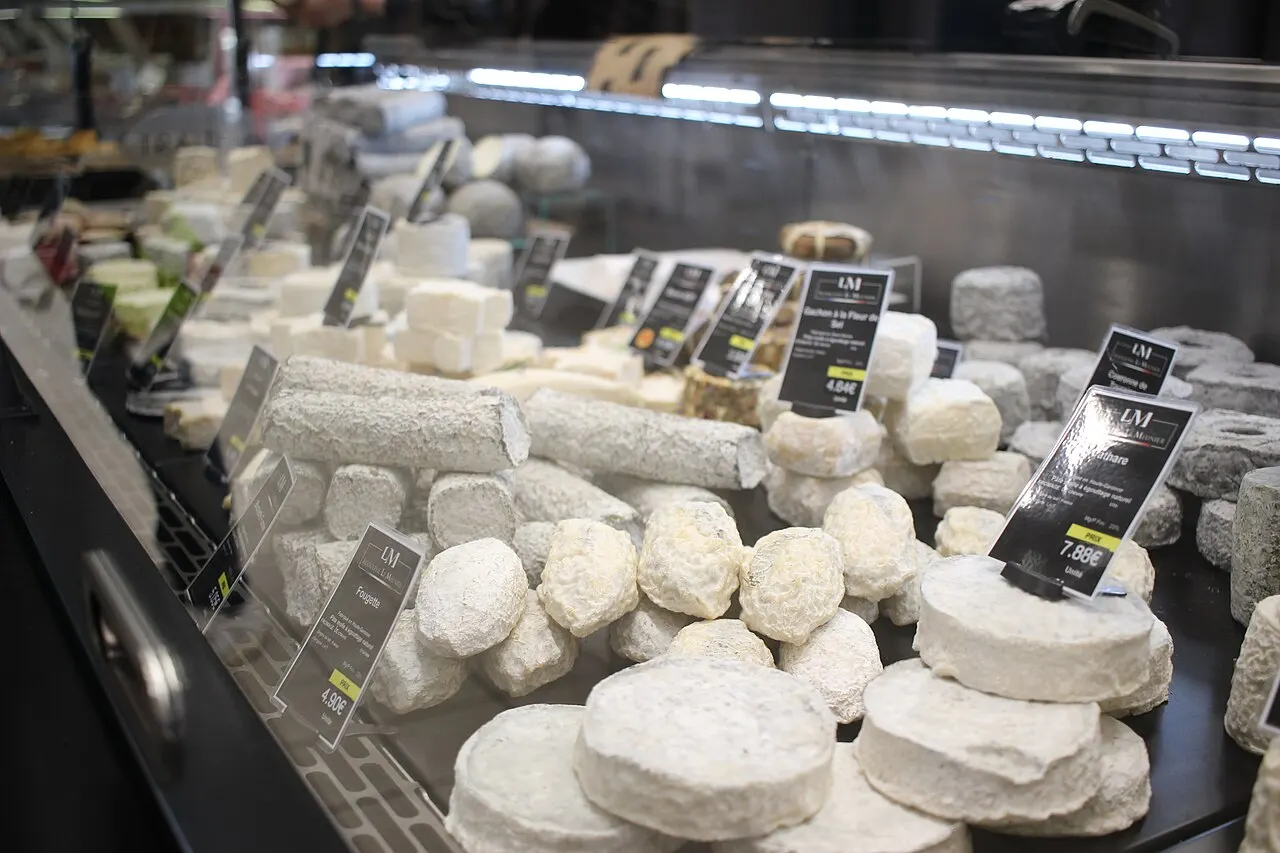
Three milks, three parts of France
Read it on the label
- North, east, mountainslait de vache
Normandy, the Jura, the Alps, the Auvergne. Most French cheese.
cow - The Loire, Poitou, Provencelait de chèvre
Small shapes: logs, pyramids, drums. Best from spring to autumn.
goat - South-west, Corsicalait de brebis
Roquefort, ossau-iraty, Corsican brocciu.
sheep
The eight families at the counter
How a cheesemonger sorts the counter
- pâtes fraîches freshmild
Fromage blanc, faisselle, fresh goat.
- croûte fleurie white bloomy rindsoft
Camembert, brie, chaource.
- croûte lavée washed rindstrong smell
Munster, époisses, maroilles, livarot.
- pâtes pressées non cuites pressedsupple
Cantal, saint-nectaire, reblochon, tomme.
- pâtes pressées cuites cooked and pressedhard
Comté, beaufort, emmental, abondance.
- pâtes persillées blueblue
Roquefort, bleu d’Auvergne, fourme d’Ambert.
- chèvres goatgoat
Crottin, sainte-maure, valençay, picodon.
- pâtes fondues processedspread
Spreads and cancoillotte.
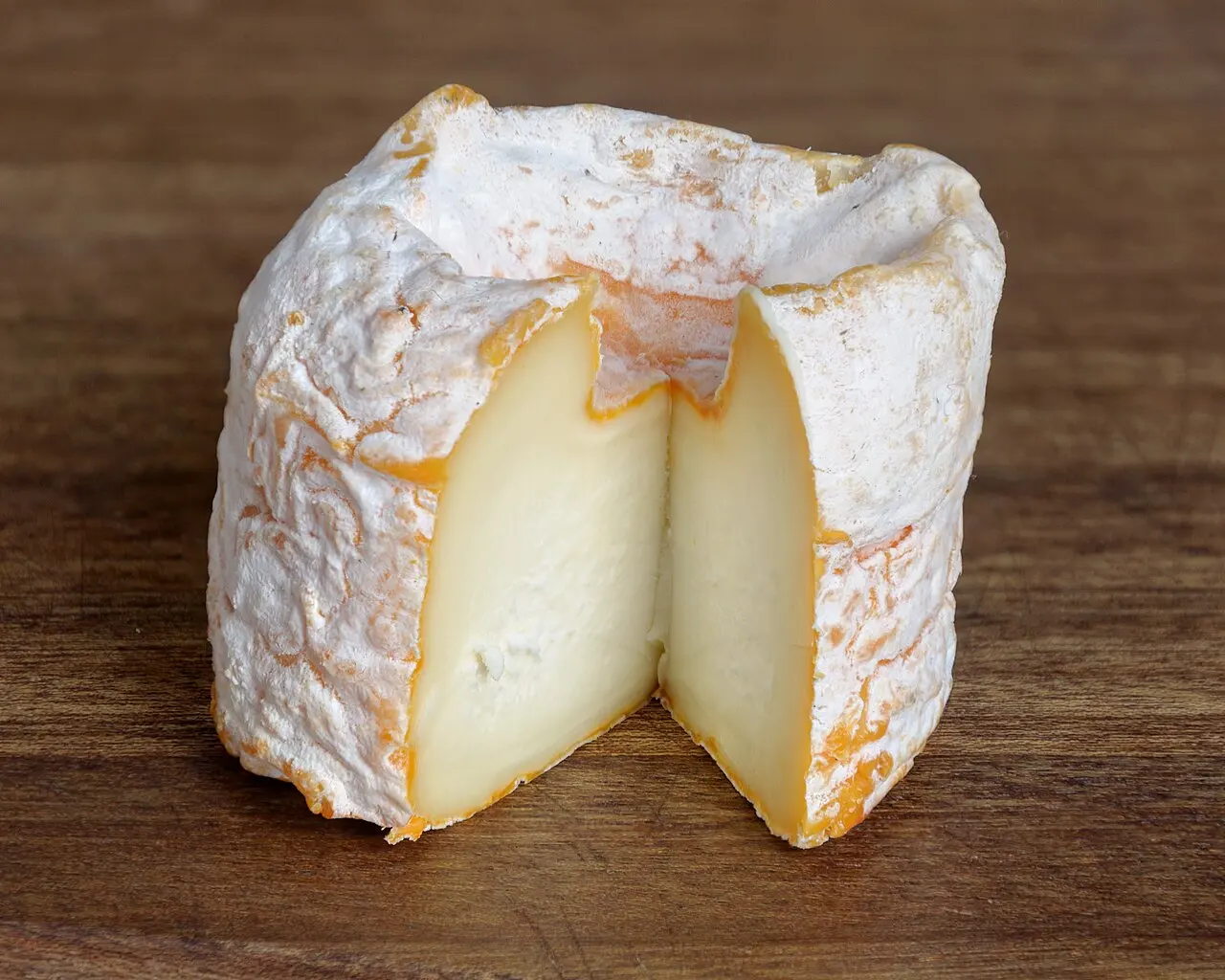
At the counter
- Asking for the local one
« Bonjour, vous désirez ? »
Hello, what would you like?
« Qu’est-ce que vous avez comme fromage de la région ? »
What do you have from this region?
- Saying how ripe
« Pour quand ? »
For when?
« Pour ce soir. Bien fait, s’il vous plaît. »
For tonight. Nicely ripe, please.
- Saying how much
« Comme ça ? »
Like this? (the knife on the cheese)
« Un peu moins, s’il vous plaît. »
A little less, please.
- Tasting first
« Vous voulez goûter ? »
Would you like to taste?
« Volontiers. »
Gladly.
“Pour quand ?” is the question to expect. A cheesemonger chooses a different camembert for tonight than for Sunday. Au lait cru means raw milk: stronger, and advised against in pregnancy.
Buying for a board
- How much
Count 60 to 80 g a head for a board after a meal, about 150 g if cheese is the meal.
- The order
Eat from mildest to strongest: goat, soft, pressed, washed rind, blue last.
- Keeping it
Not in cling film. In its paper, in the vegetable drawer; out of the fridge an hour before eating.
- Cutting
So that everyone gets some rind and some centre: a round like a cake, a wedge along its length, never the point off a brie.
| French | English |
|---|---|
| au lait cru | made from raw milk |
| fermier | made on the farm from its own milk |
| laitier | made in a dairy |
| affiné | ripened |
| la croûte | the rind |
| bien fait | fully ripe |
| un plateau de fromages | a cheese board |
| une part, un morceau | a portion, a piece |