Gap-fill
Voyage, trajet or séjour? Complete a weekend travel story
Separate a whole trip, travel between places and time at a destination. Complete a French weekend story with voyage, trajet and séjour, with translation.
- A2
- 7 gaps
- Translation included
- Learn this in the A2 notebook →
In short
Un voyage is a trip or journey, often viewed as a whole. Un trajet focuses on travel between two places. Un séjour is the time spent staying somewhere: one voyage can include several trajets and a séjour at a hotel.
Yellow the idea to rememberBlue French to learn
un voyagea trip / journey
Focus: the overall trip or travel experience
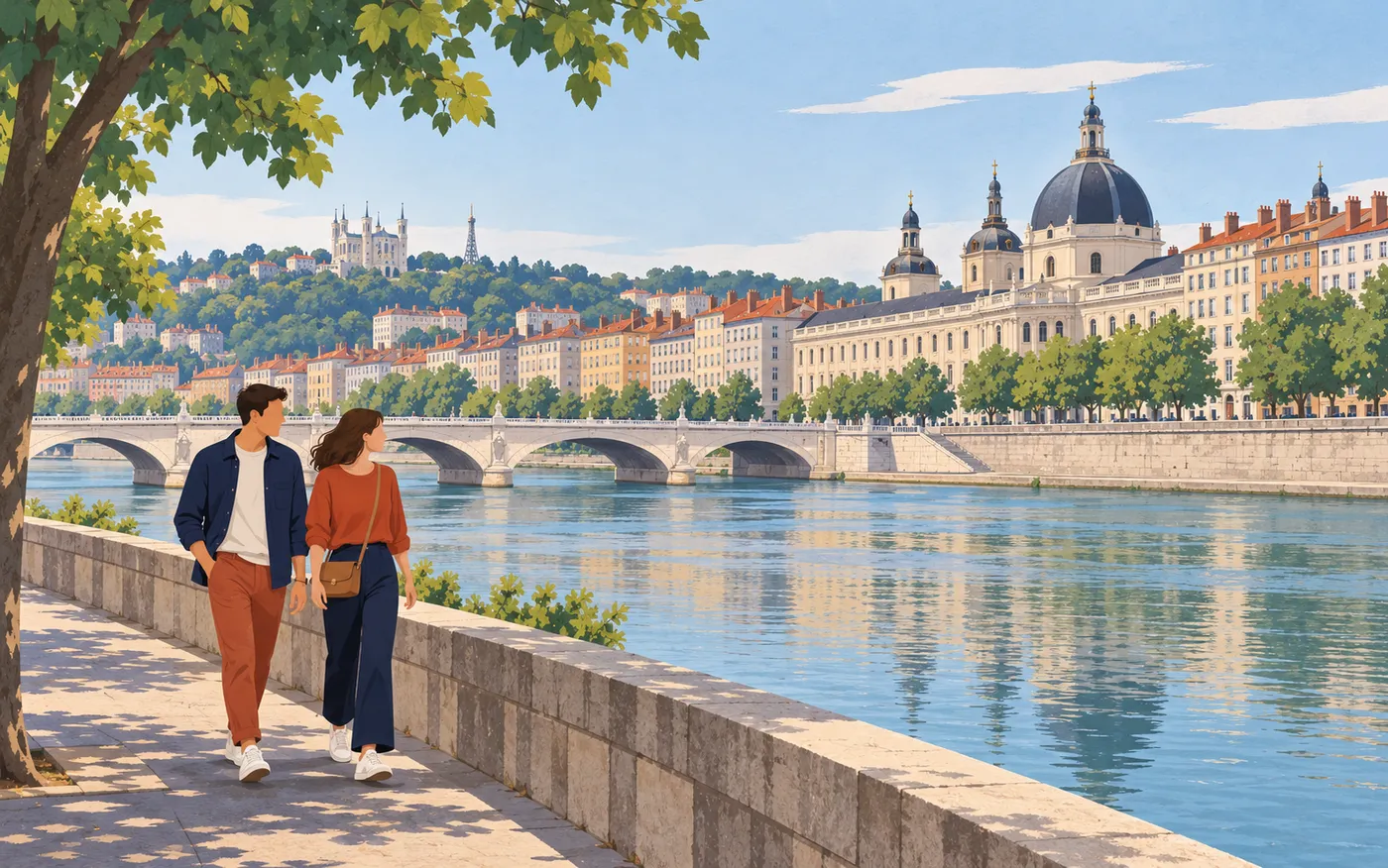
un voyage à Lyon / en Italie
Nous préparons un voyage en Italie.
We are planning a trip to Italy.
un trajeta journey between places
Focus: the movement and time in transit
le trajet de la gare à l’hôtel
Le trajet de la gare à l’hôtel prend dix minutes.
The journey from the station to the hotel takes ten minutes.
un séjoura stay
Focus: the period at your destination
un séjour de deux nuits à Lyon
Notre séjour à Lyon dure deux nuits.
Our stay in Lyon lasts two nights.
| Part of the plan | French phrase | Useful question |
|---|---|---|
| The whole weekend away | un voyage à Lyon | Comment s’est passé le voyage ? |
| Travel from A to B | le trajet de la gare à l’hôtel | Combien de temps dure le trajet ? |
| Time at the destination | un séjour de deux nuits | Combien de nuits restez-vous ? |
Pack for the journey and the stay
Find:
What is the difference between voyage, trajet and séjour?
Use voyage, trajet or séjour, following the English hint for each gap. For the train journeys, voyage and trajet both fit and both are accepted. The key difference is the focus: the experience of travelling or the movement between two points.
Deux nuits à Lyon
Vendredi matin, nous préparons notre (whole trip) à Lyon. Nous prenons le train après le travail. Pendant le (train journey), je lis et Samira écoute de la musique. Nous arrivons à vingt heures. Le (route from station to hotel) de la gare à l’hôtel est simple : nous traversons la place, puis nous tournons à droite.
À la réception, nous confirmons notre (stay) de deux nuits. Samedi, nous visitons un musée et nous déjeunons avec des amis. Le soir, nous écrivons des cartes postales. Notre (time spent in Lyon) est court, mais nous avons le temps de nous promener au bord du Rhône.
Dimanche, nous reprenons le train. Le (return train journey) du retour passe vite : nous regardons les photos du week-end. À la maison, Samira dit : « Quel beau (whole trip) ! »
Read it in English
On Friday morning, we prepare for our trip to Lyon. We take the train after work. During the journey, I read and Samira listens to music. We arrive at eight in the evening. The route from the station to the hotel is simple: we cross the square, then turn right.
At reception, we confirm our two-night stay. On Saturday, we visit a museum and have lunch with friends. In the evening, we write postcards. Our stay is short, but we have time to walk beside the Rhône.
On Sunday, we take the train again. The return journey goes quickly: we look at the weekend photos. At home, Samira says, “What a lovely trip!”