Picture scene
À côté de, près de, loin de: find your way around a French town
Explore a small French town, distinguish next to, near and far from, and practise du, de la, de l’ and des with places.
- A2
- 7 things to find
- Tap to explore
- Find-it game
- Learn this in the A2 notebook →
In short
À côté de means “next to”, près de means “near”, and loin de means “far from”. Keep de before the landmark: près de la gare, près du parc. Use the town below to see how the three relationships differ.
Yellow the idea to rememberBlue French to learnRed watch out
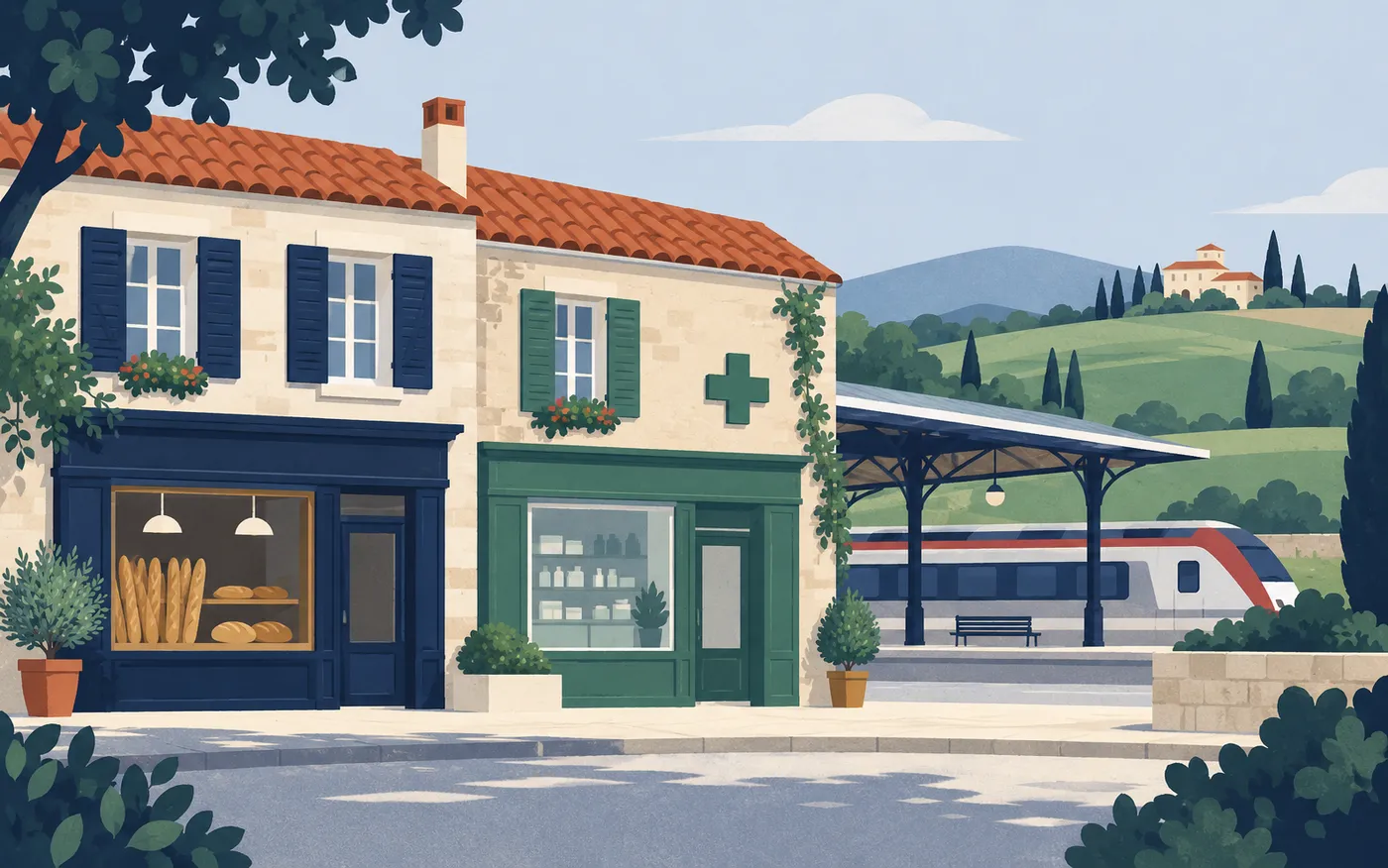
Find seven places in the town
Find:

Next door, nearby or a longer journey?
| Phrase | What it tells you | Example |
|---|---|---|
| à côté de | A position beside the landmark | La boulangerie est à côté de la pharmacie. |
| près de | A short distance in this setting | La pharmacie est près de la gare. |
| loin de | A substantial distance in this setting | Le cinéma est loin de la gare. |
The bakery and pharmacy are neighbours. The pharmacy is also near the station, but another building can stand between two places described as près de. For a visitor, add a walking time: C’est près de la gare, à cinq minutes à pied.
| Landmark | Joined phrase |
|---|---|
| le musée | à côté du musée |
| les commerces | loin des commerces |
| la pharmacie | près de la pharmacie |
| l’école | près de l’école |
How do you ask where something is in French?
- Visiteur
Excusez-moi, la boulangerie est loin d’ici ?
Excuse me, is the bakery far from here?
- Passante
Non, elle est près de la gare, à côté de la pharmacie.
No, it’s near the station, next to the pharmacy.
- Visiteur
Merci ! Et le cinéma ?
Thank you! And the cinema?
- Passante
Il est plus loin. Il faut traverser la ville.
It’s further away. You need to cross the town.
With a person, keep the same complete phrase and use a stressed pronoun: Assieds-toi à côté de moi. Before elle, write à côté d’elle. When the landmark is already clear, you can leave it out: La pharmacie ? C’est juste à côté.