B1 · Read, follow the clues, then answer
Un dîner à composer
Samedi matin, Salomé a envoyé son idée de menu aux quatre amis qu’elle attendait le soir. Les réponses sont arrivées aussitôt. Karim ne mangeait pas de viande. Léa trouvait les plats épicés1 trop forts. Paul ne supportait pas les champignons. Zoé voulait surtout éviter un dîner lourd, car elle devait se lever tôt.
Salomé a regardé sa liste de courses. Elle avait prévu un grand plat de poulet aux champignons. Elle a d’abord ressenti de la déception2, puis elle a téléphoné à ses amis. « Est-ce une question de goût ou avez-vous une allergie3 ? » a-t-elle demandé. Tous ont confirmé qu’il s’agissait de préférences ou de choix alimentaires.
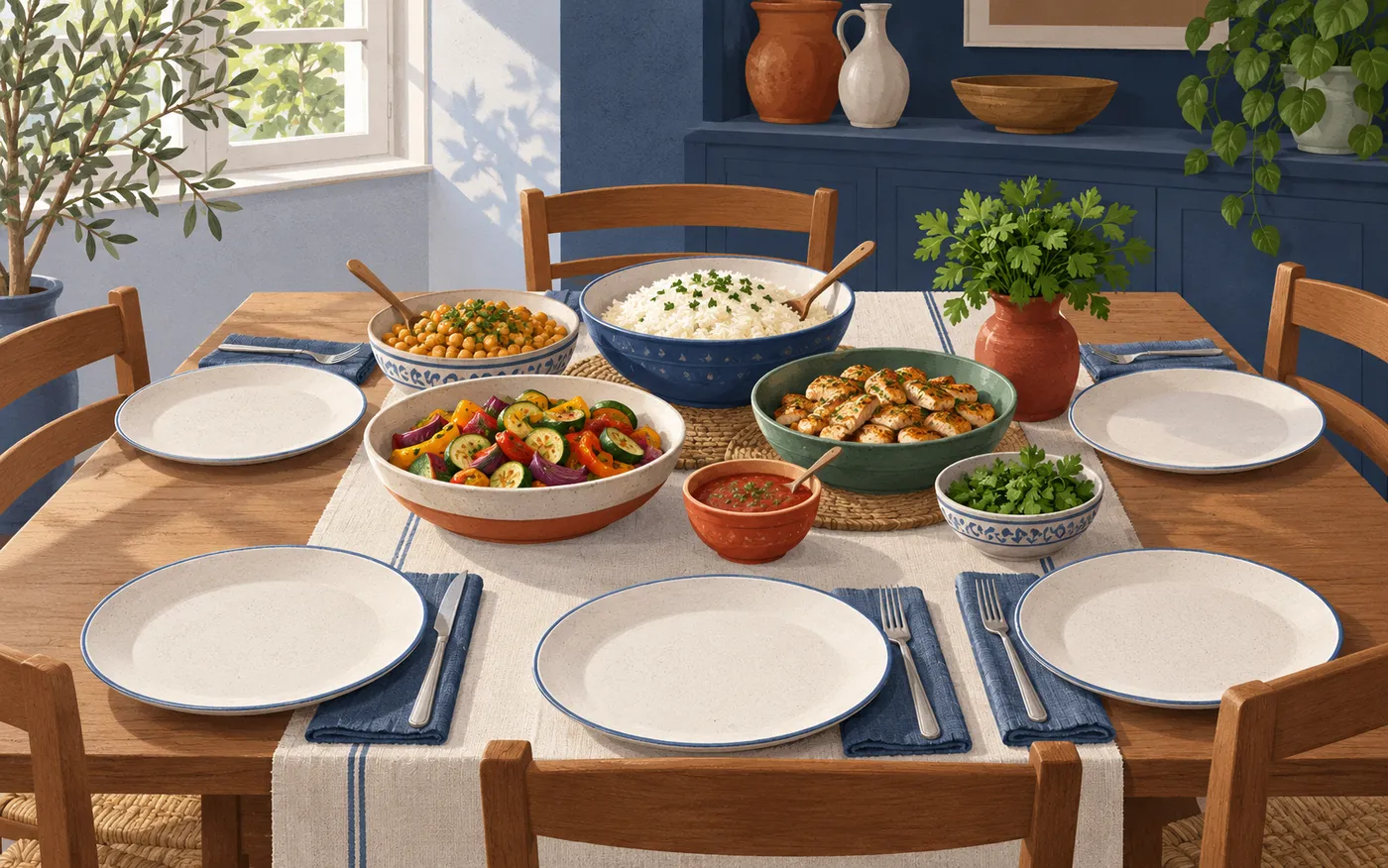
Au marché, elle a acheté des légumes, du riz et des pois chiches. À dix-neuf heures, plusieurs saladiers4 attendaient sur la table. Le poulet était servi à part, comme la sauce et les herbes5. Chacun pouvait composer son assiette. Les champignons étaient restés au magasin.
Paul a proposé de préparer une sauce très relevée. Léa a souri : « Dans un bol séparé, alors ! » Pendant que Karim coupait le pain, Zoé a mis la table. Salomé n’avait plus à faire des allers-retours6 entre la cuisine et ses invités.
Personne n’a mangé exactement la même chose, mais tout le monde a mangé ensemble. Zoé est partie à vingt et une heures, comme prévu. En rangeant, Salomé a compris que son compromis7 avait aussi changé son rôle : au lieu de deviner le plat parfait, elle avait créé un repas où chacun pouvait participer8.
Read it in English
On Saturday morning, Salomé sent her menu idea to the four friends she was expecting that evening. Replies arrived straight away. Karim did not eat meat. Léa found spicy dishes too strong. Paul could not stand mushrooms. Zoé mainly wanted to avoid a heavy dinner because she had to get up early.
Salomé looked at her shopping list. She had planned a large dish of chicken with mushrooms. First she felt disappointed, then she phoned her friends. “Is it a matter of taste, or do you have an allergy?” she asked. They all confirmed that it was about preferences or dietary choices.
At the market, she bought vegetables, rice and chickpeas. At seven, several serving bowls were waiting on the table. The chicken was served separately, as were the sauce and herbs. Everyone could put together their own plate. The mushrooms had stayed at the shop.
Paul offered to make a very spicy sauce. Léa smiled: “In a separate bowl, then!” While Karim cut the bread, Zoé laid the table. Salomé no longer had to keep going back and forth between the kitchen and her guests.
Nobody ate exactly the same thing, but everyone ate together. Zoé left at nine, as planned. While tidying up, Salomé realised that her compromise had also changed her role: instead of guessing the perfect dish, she had created a meal everyone could take part in.