Fleuve or rivière: follow the water to its destination
Learn fleuve and rivière with a coastal landscape, riverbank vocabulary and map questions. Follow the outlet rather than judging the waterway’s size.
In short
English “river” covers both un fleuve and une rivière. In the usual French distinction, a fleuve flows into the sea, while a rivière joins another watercourse. Follow where the water goes: width alone will not tell you which word to choose.
Yellow the idea to rememberBlue French to learnRed watch out
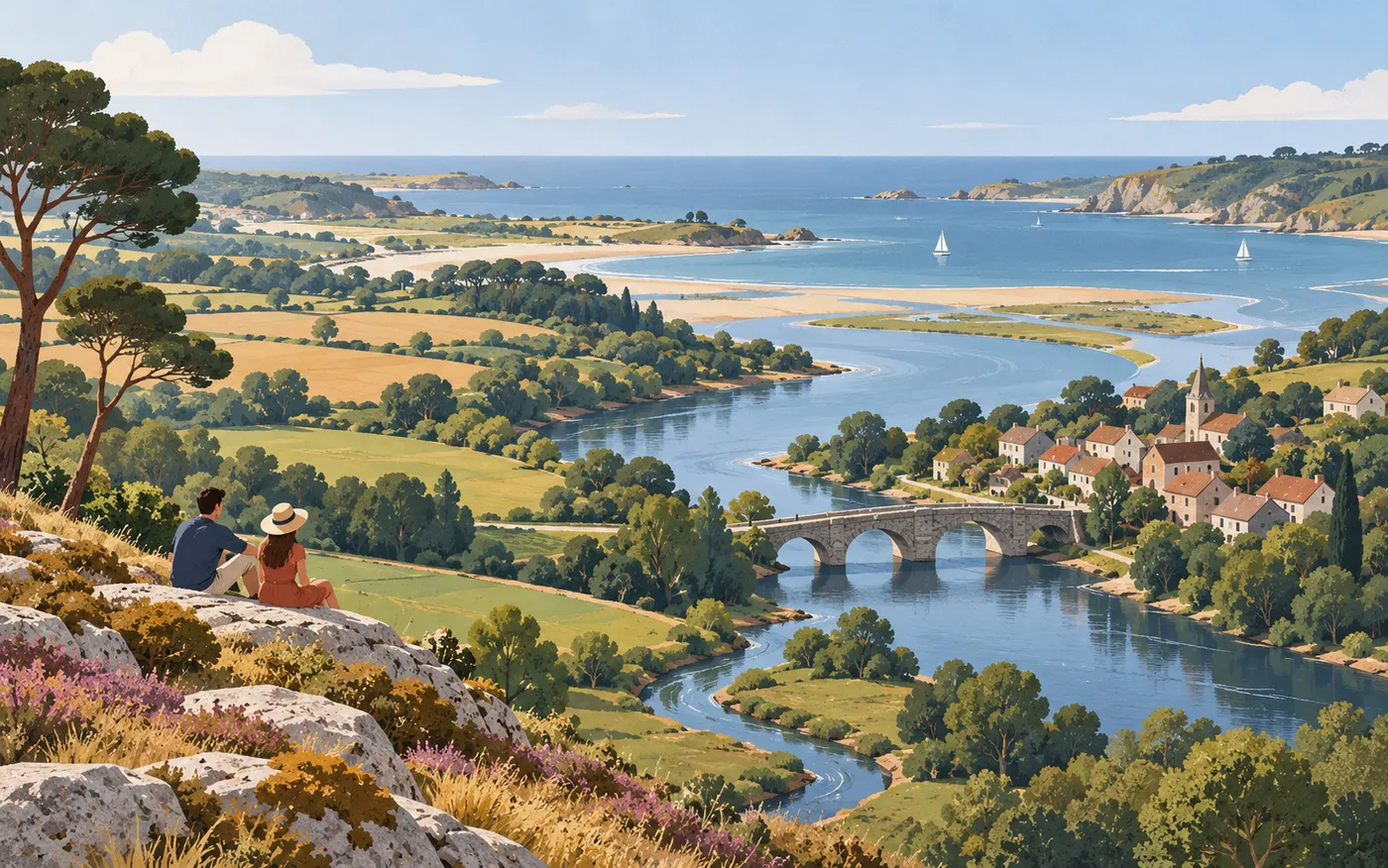
un fleuvea river flowing into the sea
Focus: its outlet at the sea
le fleuve se jette dans la mer
Le fleuve traverse la ville et se jette dans la mer.
The river crosses the town and flows into the sea.
une rivièrea river joining another watercourse
Focus: its connection to another river
la rivière rejoint le fleuve
La rivière rejoint le fleuve près du village.
The river joins the main river near the village.
What is the difference between fleuve and rivière?
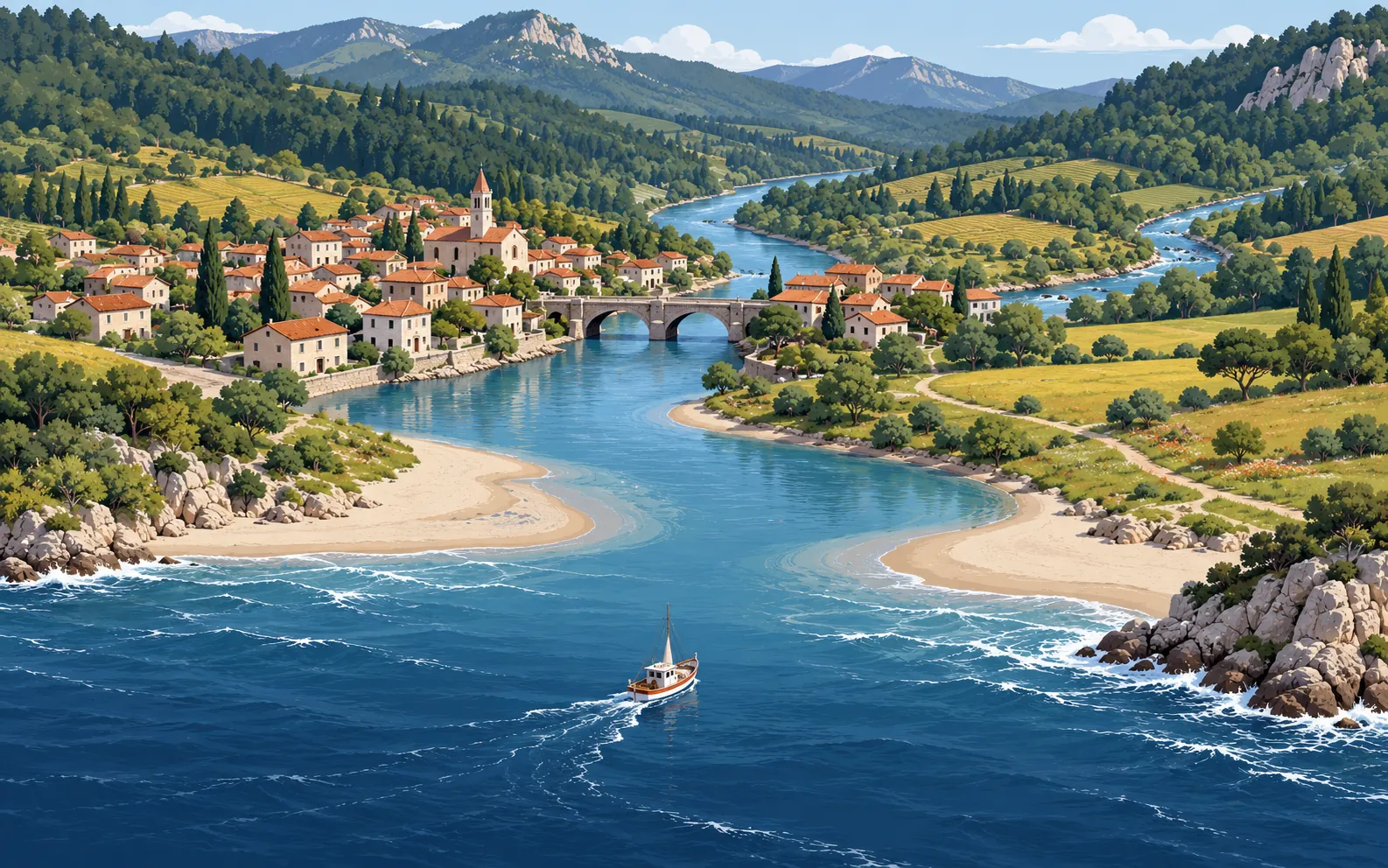
Two waterways, one coastline
Find:
| French | English |
|---|---|
| se jeter dans la mer | to flow into the sea |
| rejoindre un fleuve | to join a river |
| en amont du pont | upstream from the bridge |
| en aval du pont | downstream from the bridge |
| un cours d’eau | a watercourse |
En amont points towards the source; en aval follows the flow towards the outlet. In this landscape, the two waterways meet upstream of the bridge. Both can be called a river in English. When translating into French, keep the connection visible in the sentence.