Les fleurs attendront-elles ?
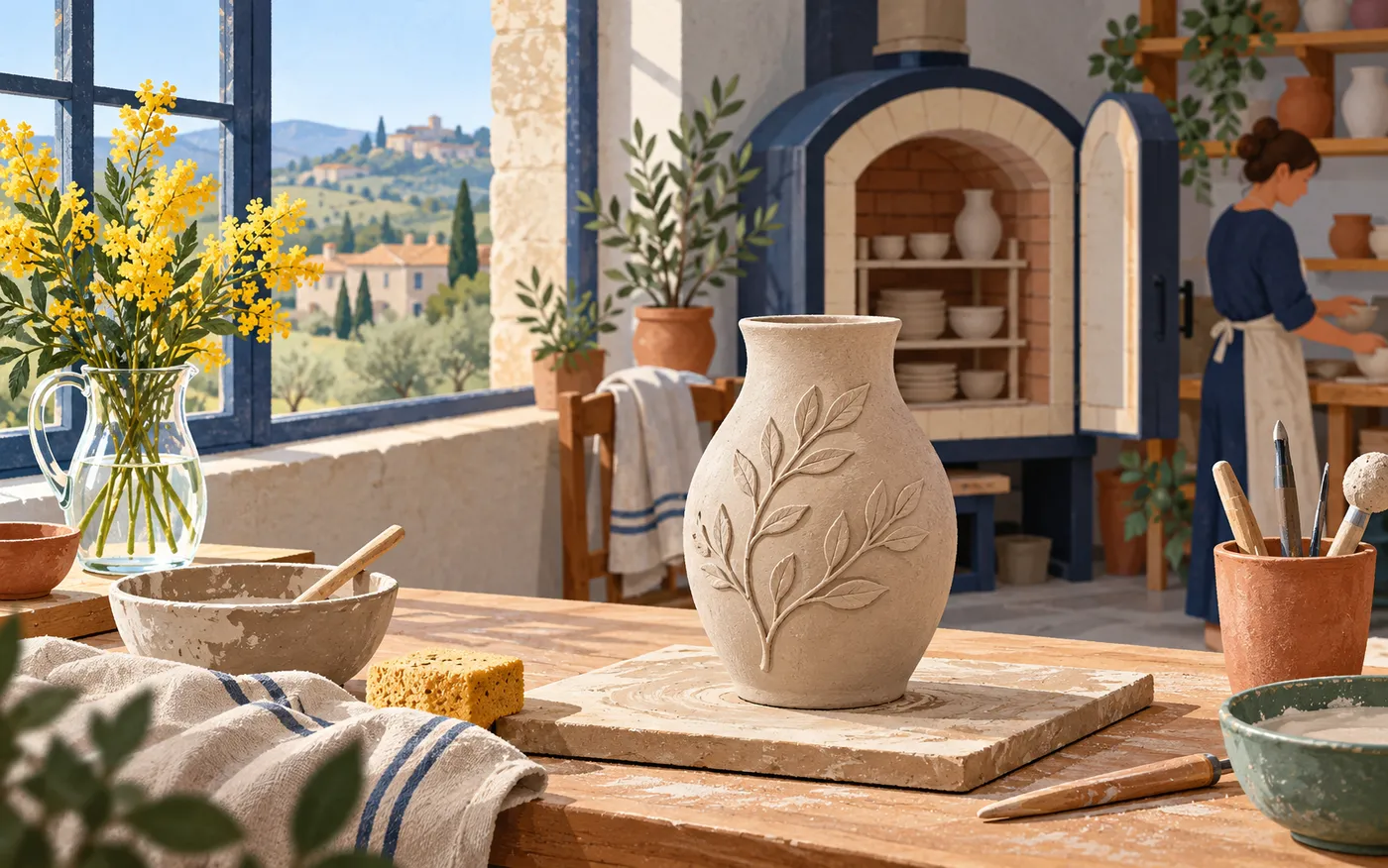
Quand son frère Sami est arrivé à l’atelier de poterie, Nour venait de terminer la forme de son vase. Elle avait travaillé l’argile1 toute la matinée. Sur le côté, elle avait dessiné un motif de feuilles avec un petit outil en bois. Le vase était posé sur une planche, au fond de la salle.
Sami tenait un bouquet de fleurs jaunes. « Elles iraient bien dans ton vase ! » a-t-il dit. Nour a secoué la tête. « Il faut encore attendre. Il doit sécher, puis passer au four2. » Elle lui a montré l’étagère réservée aux pièces en cours. À côté, une affiche indiquait la prochaine cuisson3, prévue pour la semaine suivante.
Nour a écrit son prénom sur une étiquette et l’a posée près de sa planche. Sami a regardé les autres pièces : une tasse sans anse, deux bols et une petite maison. « Tu as fait tout ça ? — Non, les bols sont ceux de ma voisine de table. Moi, j’ai seulement fait le vase. »
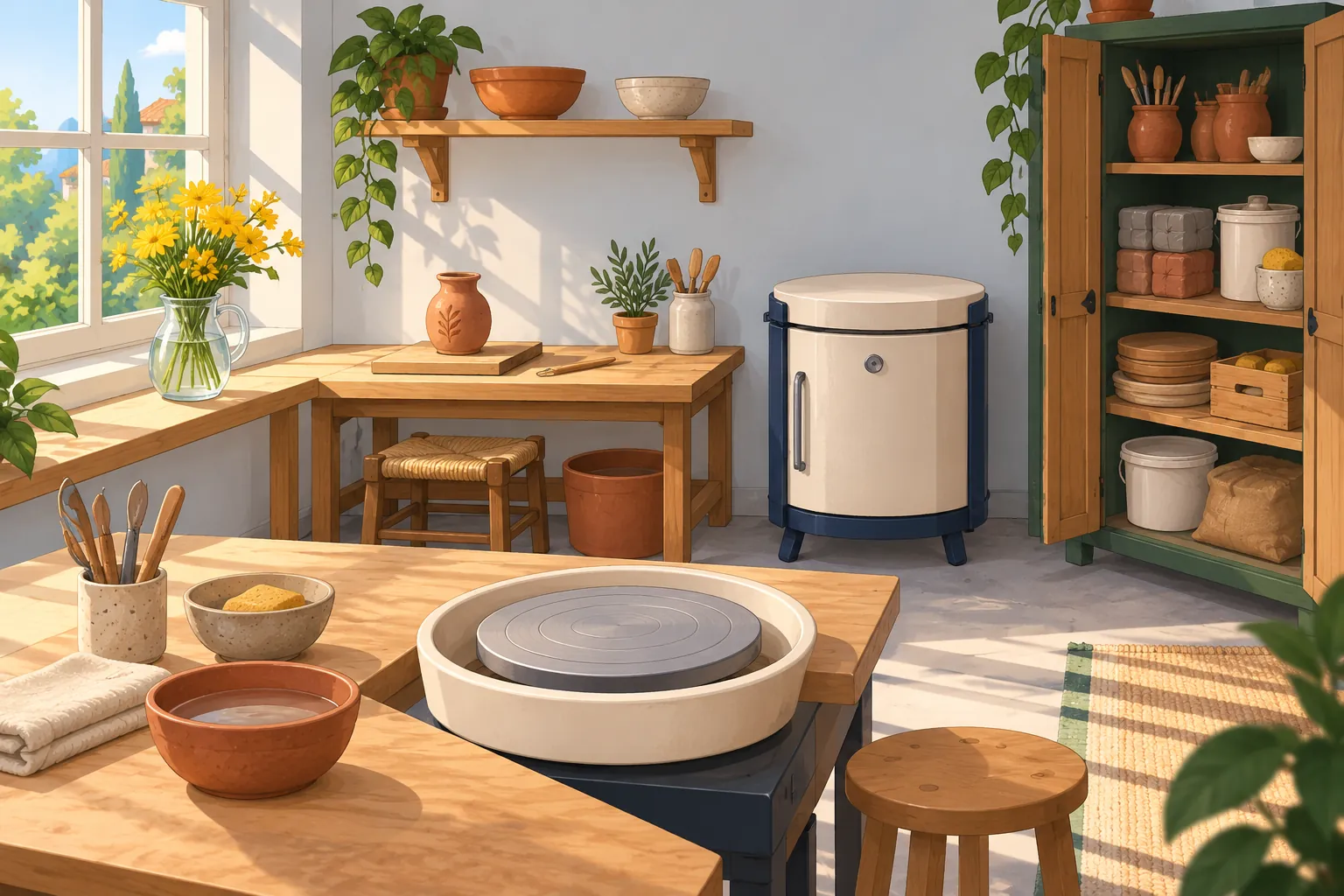
Pour les fleurs, Nour a trouvé un pichet en verre dans le placard. Elle l’a rempli d’eau et l’a posé près de la fenêtre. Avant de partir, elle a pris une photo de son vase. « Je veux garder une image de cette étape », a-t-elle expliqué.
Read it in English
When her brother Sami arrived at the pottery studio, Nour had just finished the shape of her vase. She had worked the clay all morning. On its side she had drawn a leaf pattern with a small wooden tool. The vase stood on a board at the back of the room.
Sami held a bunch of yellow flowers. “They would look good in your vase!” he said. Nour shook her head. “We still need to wait. It has to dry, then go into the kiln.” She showed him the shelf for pieces in progress. Beside it, a poster gave the next firing date, scheduled for the following week.
Nour wrote her first name on a label and placed it beside her board. Sami looked at the other pieces: a handleless cup, two bowls and a little house. “Did you make all that?” “No, the bowls belong to the person sitting next to me. I only made the vase.”
For the flowers, Nour found a glass jug in the cupboard. She filled it with water and put it near the window. Before leaving, she took a photograph of her vase. “I want to keep a picture of this stage,” she explained.