Quiz
Neuf pronunciation: /f/ in neuf livres, /v/ in neuf ans
Practise neuf in eight questions about books, ages, times and new objects. Learn the familiar /v/ in neuf ans and neuf heures while keeping /f/ elsewhere.
- A2
- 8 questions
- Every answer explained
- No account needed
- Learn this in the A2 notebook →
In short
Say the final /f/ in neuf /nœf/ and neuf livres. In the familiar phrases neuf ans and neuf heures, the number commonly ends in /v/: /nœvɑ̃/ and /nœvœʁ/. Learn those phrases together with their meanings: an age and a time.
Yellow the idea to rememberBlue French to learnRed watch out
| French | Pronunciation of the phrase | Meaning |
|---|---|---|
| Il en reste neuf. | neuf: /nœf/ | There are nine left. |
| neuf livres | /nœf livʁ/ | nine books |
| neuf ans | /nœvɑ̃/ | nine years; nine years old |
| neuf heures | /nœvœʁ/ | nine o’clock |
| neuf euros | /nœf øʁo/ | nine euros |
| un livre neuf | neuf: /nœf/ | a brand-new book |
| une lampe neuve | neuve: /nœv/ | a brand-new lamp |
In both /f/ and /v/, the lower lip meets the upper teeth. /f/ is voiceless; /v/ is voiced. In neuf ans, join the /v/ straight to the vowel of ans. Keep the written f: the pronunciation changes at the boundary, while the number’s spelling stays neuf.
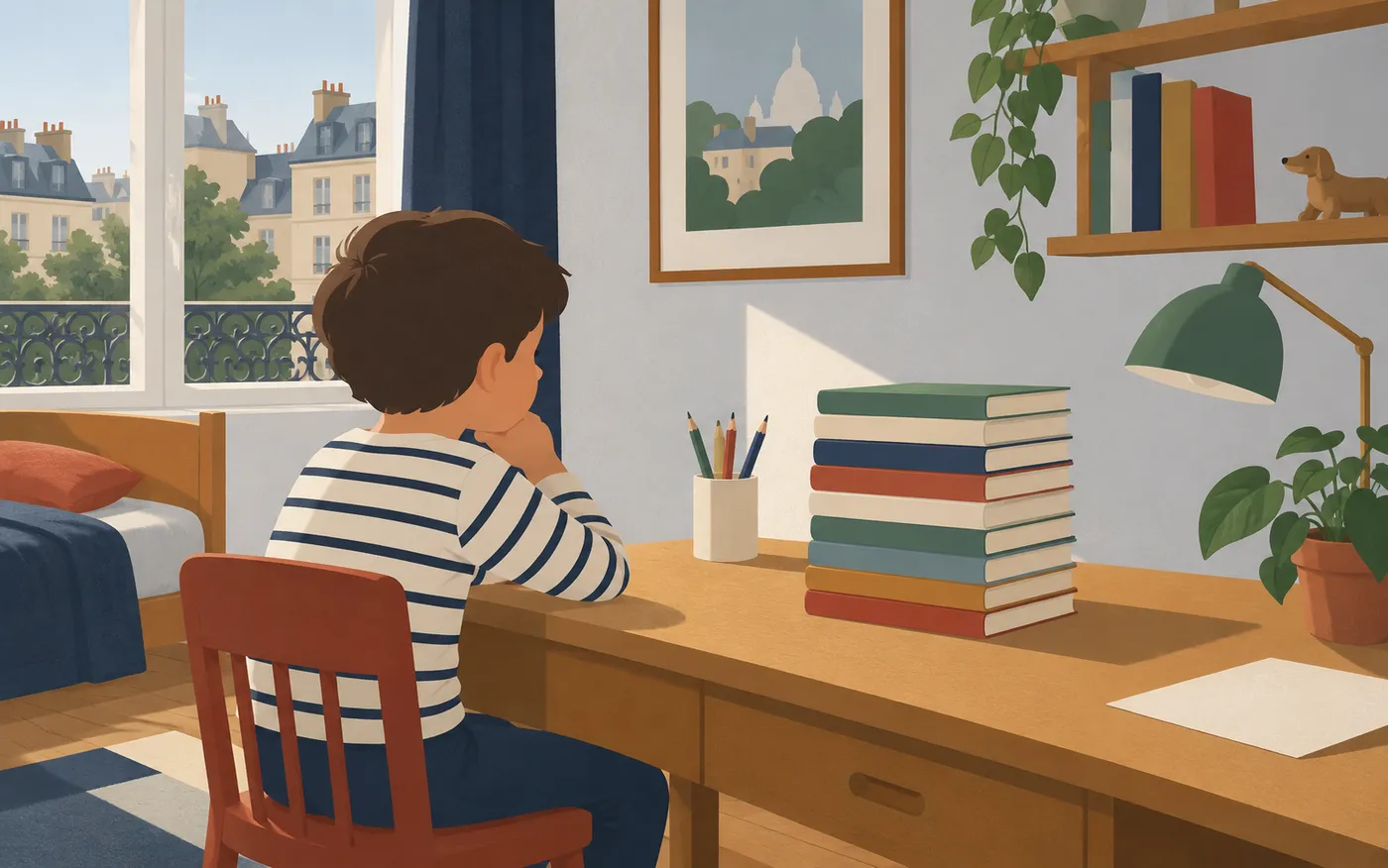
Mon fils a neuf ans. Son cours commence à neuf heures.
My son is nine. His class starts at nine o’clock.
Two common /v/ phrases in one small scene: age, then time.
Nine objects or a new object?
Find:
When is neuf pronounced with a v?
Neuf livres counts the books. Un livre neuf describes one book as new and unused. The adjective agrees: un livre neuf, une lampe neuve, des livres neufs. The /v/ in neuve belongs to that feminine adjective form; it is a separate pattern from the number in an age or a time.
A following vowel alone does not predict /v/: neuf euros keeps /f/. You may also hear /v/ in neuf autres and neuf hommes; the OQLF lists these alongside the age and time phrases. For the quiz, use the pronunciations shown in the table and keep each complete phrase in view.