ArticleB1
Why French feels harder on the phone: make the missing clues explicit
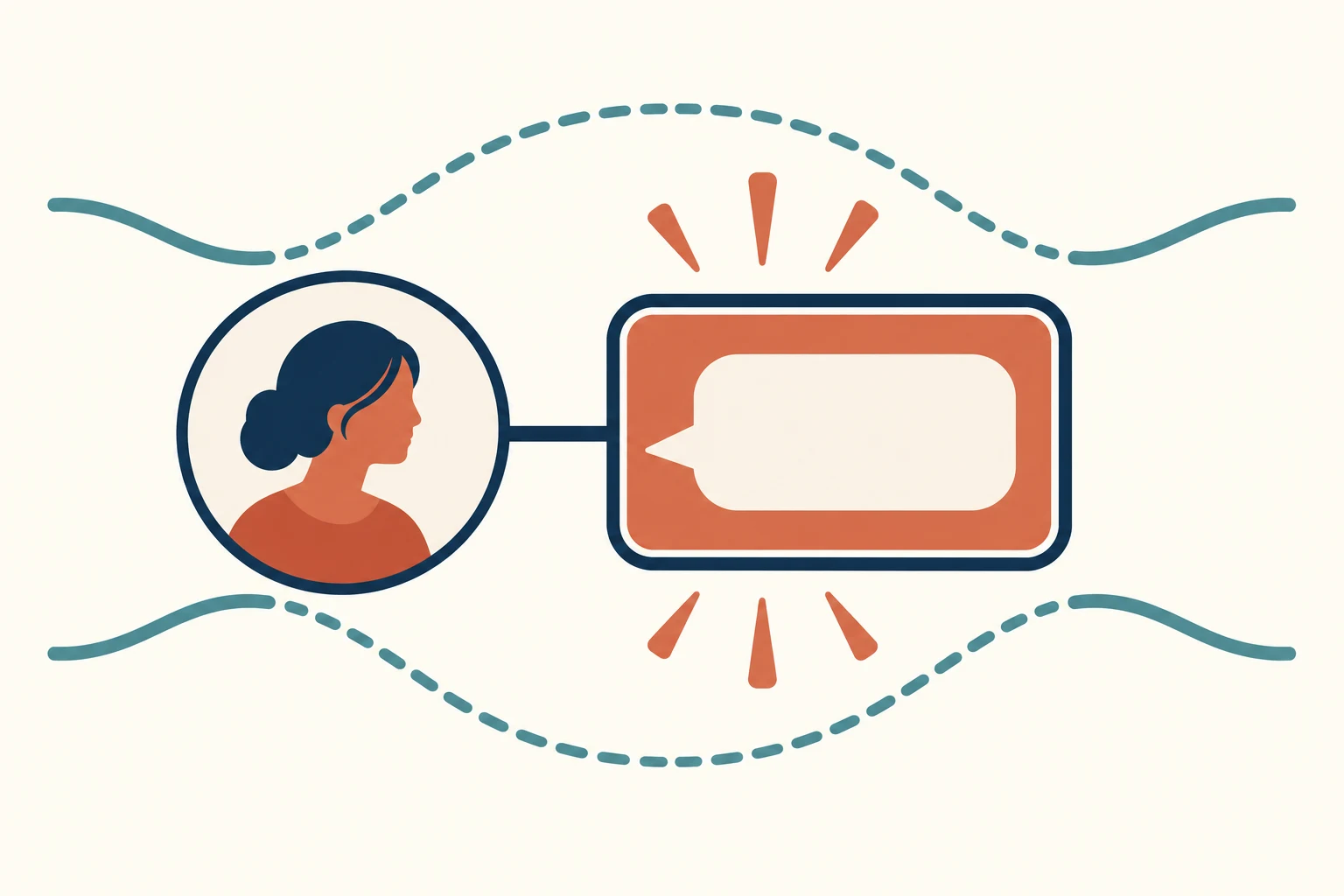
Compare French at a desk and on the phone. Practise clear document references, a repeat after the line cuts out and a final check of an appointment.
159 pages
French sounds, liaison and rhythm, and how to hear them.
ArticleB1
Compare French at a desk and on the phone. Practise clear document references, a repeat after the line cuts out and a final check of an appointment.
Cheat sheetA2
Check an, in, on and m before b or p with pain, pont and lampe. Compare fin/fine, spot bonbon, and test five spelling decisions.
QuizA2
Eight questions on French final s: silent endings, bus /bys/, fils /fis/, threads /fil/ and the /z/ in les amis. Includes a word-and-sound table.
DialogueB1
Practise a short French exchange, compare an information question with a surprised echo, and learn what to note when listening to question intonation.
Common mistakesA1
Keep the vowel steady in pain/bain and port/bord. Correct four common p/b pronunciation mistakes, use picture cards and check the lip closure and release.
Vocabulary listA1
Learn an and en through twelve useful French words, family examples and picture cards. Check the nasal vowel in enfant, dans, grand and pendant.
Gap-fillA1
Meet /ɛ̃/ in vin, pain and plein, compare fin with fine, then complete a French lunch story with eight gaps and picture clues.
ReadingB2
Work through a B2 discussion about autonomy. Track a definition, a distinction, an example and a qualification, then test your reading of the argument.
Sorting gameA2
L'hôtel but le héros: sort French h-words into h muet (elision and liaison) and h aspiré (no elision, no liaison), with the most common words you'll actually meet.
Spot the mistakeA2
ou or où, a or à, sur or sûr, du or dû, la or là: tap the word with the wrong (or missing) accent in eight sentences where the accent changes everything.
Graded storyB1
A B1 French anecdote with glosses, translation and questions. Follow the past routine, the forgotten bag, a flashback and the speaker’s reaction today.
Picture sceneA2
Explore a station and read four short French announcements. Check the updated platform, departure time, ticket-office hours and requested exit.
Odd one outA1
Chat, riz, prix… sac? In each row, three final letters are silent and one is pronounced. Find it, and learn the CaReFuL rule behind it.
ArticleA1
Shape French u /y/ from /i/, compare it with ou /u/, and practise tu, vu and lu in short phrases with picture prompts and a quick check.
Cheat sheetC1
Annotate six French headline structures for reading aloud by keeping meaning groups intact and highlighting the real contrast.
QuizA2
Compare /e/ in été with /ɛ/ in père, then try ten questions on vowel symbols, spelling clues and verb forms, with an explanation for every answer.
Practical guideB1
Make a small French pronunciation notebook with a filled entry, ch and ill comparisons, useful phrases, picture prompts and a sorting quiz.
Verb drillA1
Why livre and livres sound alike: compare whole phrases, keep written agreement and practise eight plural forms with picture cards and a short drill.
PhrasebookB1
Ask for a time slot, a repetition or an appointment change in French. Practise courteous phone phrases and see how delivery works with the words.
DialogueB1
Follow a booking call with three small repairs. Use je veux dire for a corrected fact, ou plutôt for a changed choice and a clear read-back to finish.
Common mistakesA2
Brun and brin can sound alike or differ by one nasal vowel. Sort the meanings, compare un with une, and fix three common pronunciation assumptions.
Vocabulary listA1
Read oi as /wa/ in moi, trois, noir and everyday words. Learn with examples and picture cards, compare noix with noir, and spot the exception oignon.
Gap-fillB1
Complete a French podcast extract about commuting. Practise d’abord, ensuite, à propos and revenons, and keep an example separate from the conclusion.
ReadingB1
Read a short French bulletin, separate its two stories and track council plans, residents’ concerns and confirmed events. B1 practice with a quiz.
Sorting gameA2
Most final consonants in French are silent, but c, r, f and l are often pronounced. Sort sixteen words by whether you hear the last letter.
ArticleA2
Find the French r sound with a back-of-tongue cue, compare it in short words and learn when a written r is pronounced or silent.
Cheat sheetB1
A compact pronunciation sheet for vingt, vingt ans, twenty-one to twenty-nine and quatre-vingts, with five checks on the consonants you say.
QuizB1
Read four French forecast extracts and answer ten questions about rain, wind, fog and changing conditions. Includes translations and weather picture cards.
Practical guideB1
Compare word forms, phrase context, accent and IPA detail with fin/fine, mon ami and brun/brin. Use a short checklist and three diagnostic questions.
Verb drillA2
Compare petit/petite, bon/bonne and joli/jolie, then complete eight descriptions. See when gender changes the sound and when grammar supplies the answer.
PhrasebookA2
Prepare for a French appointment call with phrases for a missed time, an unfamiliar word and a final confirmation, plus two practice questions.
DialogueA2
Read a conversation with t’as, compare it with tu as and ta, and practise replying. Learn where the contraction fits and which form to keep in writing.
Common mistakesB1
Double French letters usually do not mean a longer consonant. Compare pomme, tasse, coussin and ville, with picture examples and four checks.