French open and closed o: paume /pom/ and pomme /pɔm/
Compare the French vowels /o/ and /ɔ/ with paume and pomme. Use mouth-position cues, picture cards and a short scene, then check the sound patterns.
In short
French /o/ is the more closed vowel in paume /pom/, the palm of the hand. /ɔ/ is the more open vowel in pomme /pɔm/, an apple. Both use rounded lips; for /ɔ/, lower the tongue and let the jaw open a little more. The pair is a clear contrast in many northern French accents; many southern accents pronounce the two words alike.
Yellow the idea to rememberBlue French to learn
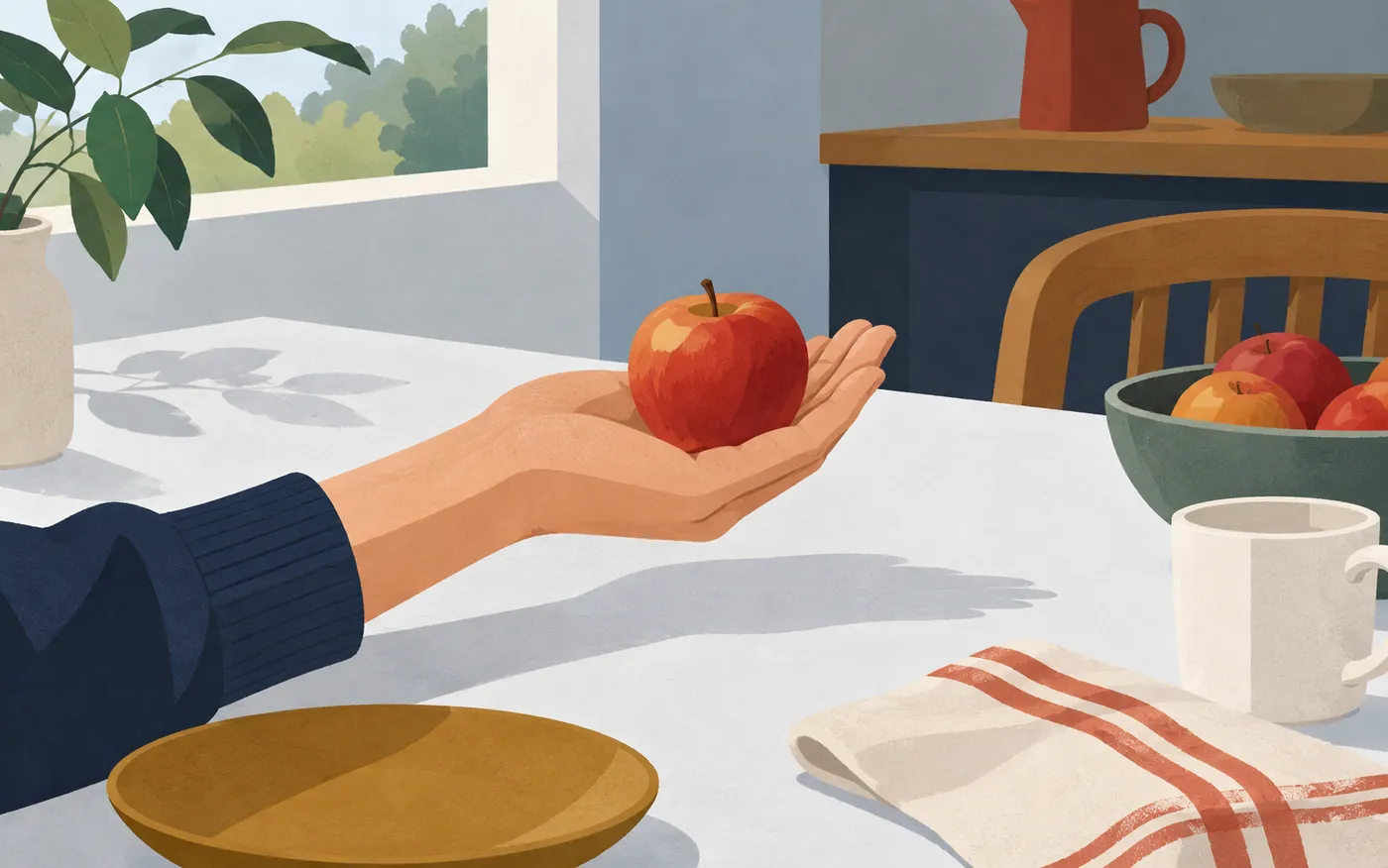
How do you pronounce the open and closed o in French?
la paume /pom/the palm of the hand
Focus: More closed /o/, with rounded lips.
Ouvre la paume de ta main.
Open the palm of your hand.
la pomme /pɔm/the apple
Focus: More open /ɔ/, still with rounded lips.
Pose la pomme dans ta main.
Put the apple in your hand.
Say the two words with the same gentle /p/ at the start and the same lip closure for /m/ at the end. Only the vowel changes in this comparison. For /o/, hold a steady vowel rather than finishing with the glide many English speakers use in “go”. For /ɔ/, keep the lips rounded as the jaw opens.
Give each vowel a concrete word
Find:
| /o/: more closed | /ɔ/: more open |
|---|---|
| eau /o/ | bol /bɔl/ |
| dos /do/ | porte /pɔʁt/ |
| rose /ʁoz/ | note /nɔt/ |
| paume /pom/ | pomme /pɔm/ |
The columns group words by their vowel in this pronunciation model. Only the last row is a minimal pair: paume and pomme keep the surrounding consonants identical. Eau and bol illustrate the two categories, but they also have different consonants. Use them as individual word models.
- Camille
Tu veux une pomme ?
Would you like an apple?
- Alex
Oui, merci. Elle est petite !
Yes, thanks. It’s small!
- Camille
Regarde, elle tient dans la paume de ma main.
Look, it fits in the palm of my hand.
Which spellings give the closed o in French?
Au and eau often give /o/: chaud, eau, bateau. A plain o can give /o/ or /ɔ/: compare dos and bol. A consonant at the end often goes with /ɔ/, but paume and rose show why that clue is a tendency rather than a complete rule.
When a speaker says paume and pomme alike, the surrounding sentence supplies the meaning. The distinction between /o/ and /ɔ/ still helps you recognise many other speakers. Keep a clear word model for each sound and notice which pairs your teacher or conversation partner actually distinguishes.