Gap-fill
French imparfait gap-fill: a childhood memory with 12 answers
Complete a childhood memory with 12 imparfait forms, including avais, était, commençaient and mangions. Translation and quiz included.
- A2
- 12 gaps
- Translation included
- Learn this in the A2 notebook →
In short
All twelve gaps take the imparfait because the narrator describes a past setting and repeated childhood routines. Use the subject to choose the ending: je prenais, nous prenions, ils prenaient. The infinitive beside each gap tells you which verb to conjugate.
Yellow the idea to rememberBlue French to learn
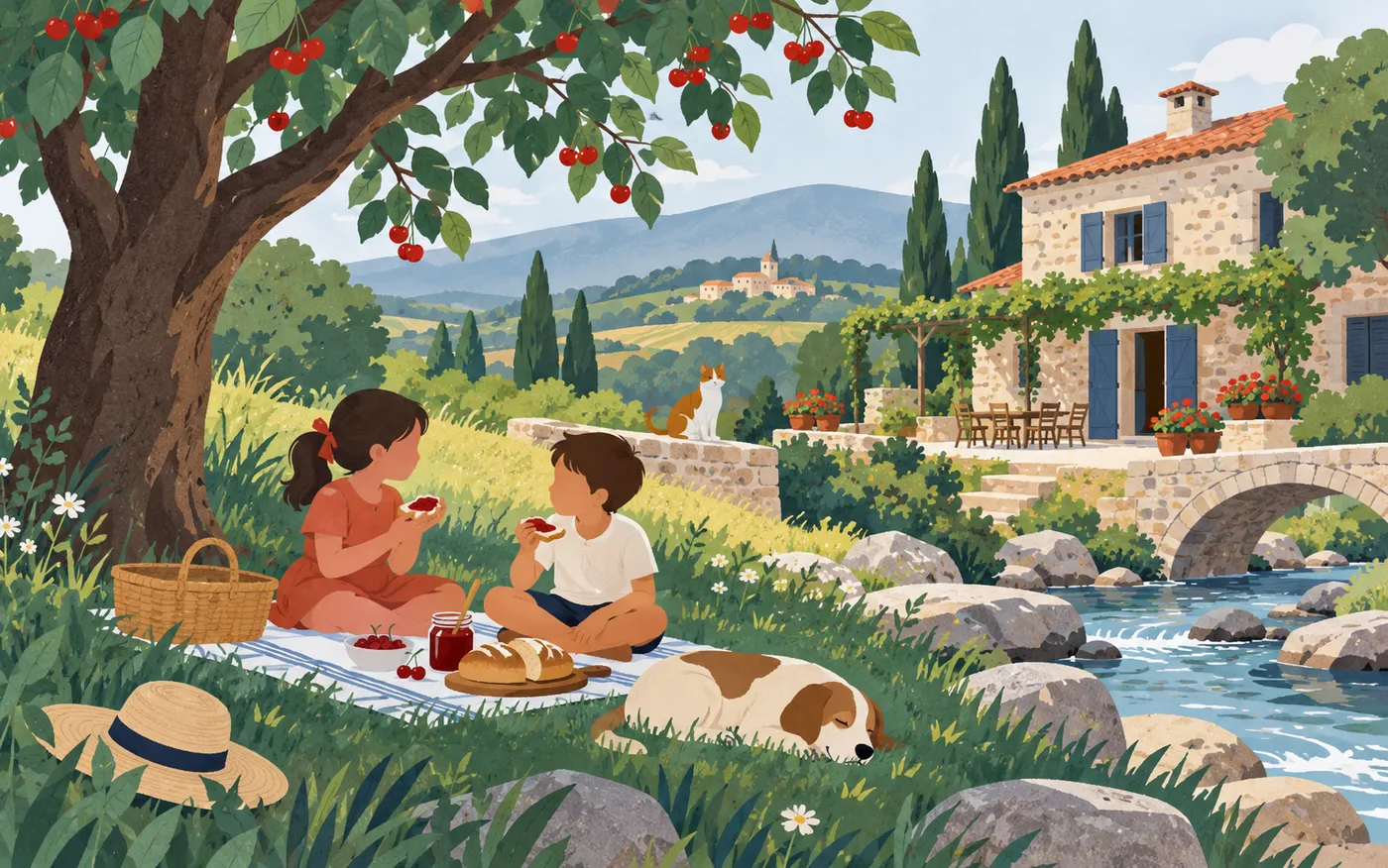
Les étés au bord de la rivière
Quand j’(avoir) huit ans, nous (habiter) chez mes grands-parents pendant les vacances d’été. Leur maison (être) au bout d’un chemin, près d’une petite rivière. Il y avait un grand jardin derrière la cuisine. Chaque matin, je (prendre) mon petit déjeuner sous le cerisier, avec du pain et de la confiture.
Mon frère (venir) me chercher après le petit déjeuner. Nous (aller) ensemble jusqu’à la rivière avec nos cousins. Nos journées (commencer) toujours par une promenade le long de l’eau. En été, nous (nager) près du vieux pont. Ensuite, nous jouions aux cartes sur une couverture à l’ombre.
À midi, ma grand-mère (préparer) une grande salade de tomates. Nous (manger) tous dehors, autour de la table en bois. Le soir, mes grands-parents (raconter) des histoires de leur enfance. Je ne (vouloir) jamais aller me coucher. Aujourd’hui, cette maison appartient à ma cousine. Quand je ferme les yeux, je revois le jardin et j’entends la voix de ma grand-mère.
Read it in English
When I was eight, we stayed at my grandparents’ house during the summer holidays. Their house was at the end of a path, near a small river. There was a large garden behind the kitchen. Every morning, I had breakfast under the cherry tree, with bread and jam.
My brother would come and get me after breakfast. We went together to the river with our cousins. Our days always began with a walk along the water. In summer, we swam near the old bridge. Afterwards, we played cards on a blanket in the shade.
At midday, my grandmother made a large tomato salad. We all ate outside, around the wooden table. In the evening, my grandparents told stories about their childhood. I never wanted to go to bed. Today, this house belongs to my cousin. When I close my eyes, I see the garden again and hear my grandmother’s voice.
Four checks to make before revealing the answers
| Look at | Example pattern | What it tells you |
|---|---|---|
| A singular person | mon frère → il | Use the third-person singular ending, -ait. |
| Several people | mes grands-parents → ils | Use the third-person plural ending, -aient. |
| The nous spelling | nous nagions / nous mangions | Before -ions, leave out the extra e. |
| The c sound | nos journées commençaient | Before a, write ç in commençaient. |
The opening quand j’avais huit ans sets a period rather than a single completed event. Chaque matin, toujours and le soir organise repeated activities within that period. The last two sentences return to the present: the narrator now remembers the house and the voices.
Nous mangions dehors quand il faisait beau.
We used to eat outside when the weather was nice.
Both verbs describe the repeated summer routine.