Gap-fill
Matin or matinée? Fill the gaps in a French morning
Choose ce matin, tous les matins and toute la matinée in a short French story. Compare a morning plan, a daily habit and a whole morning spent on an activity.
- A2
- 7 gaps
- Translation included
- Learn this in the A2 notebook →
In short
Matin places something in time: ce matin, demain matin, tous les matins. Matinée often presents the morning as a stretch of time: toute la matinée, passer la matinée à lire. Compare “every morning” with “all morning”.
Yellow the idea to rememberBlue French to learn
| French | Meaning | Example |
|---|---|---|
| ce matin | this morning | Ce matin, je me lève tôt. |
| demain matin | tomorrow morning | Demain matin, je prends le train. |
| tous les matins | every morning | Je lis tous les matins. |
| toute la matinée | all morning | Je travaille toute la matinée. |
| dans la matinée | at some point during the morning | Je passerai dans la matinée. |
| passer la matinée à… | spend the morning doing… | Je passe la matinée à cuisiner. |
Matin is masculine: ce matin, un beau matin. Matinée is feminine: cette matinée, une longue matinée. The contrast comes through in whole phrases. Both can be described, and you can count periods too: deux matinées de formation, two mornings of training.
Things in Nora’s morning
Find:
What is the difference between matin and matinée?
Follow Nora from waking up to planning tomorrow. The words around each gap give the clue: tous les signals a habit, while toute la gives a whole period. Enter the noun with its ending and accent; the rest of the phrase is already there.
Une matinée chez Nora
Tous les (matin ou matinée ?), Nora se lève à sept heures. Le réveil sonne et elle prépare le petit-déjeuner. Elle prend un café, puis elle pose sa tasse sur la table.
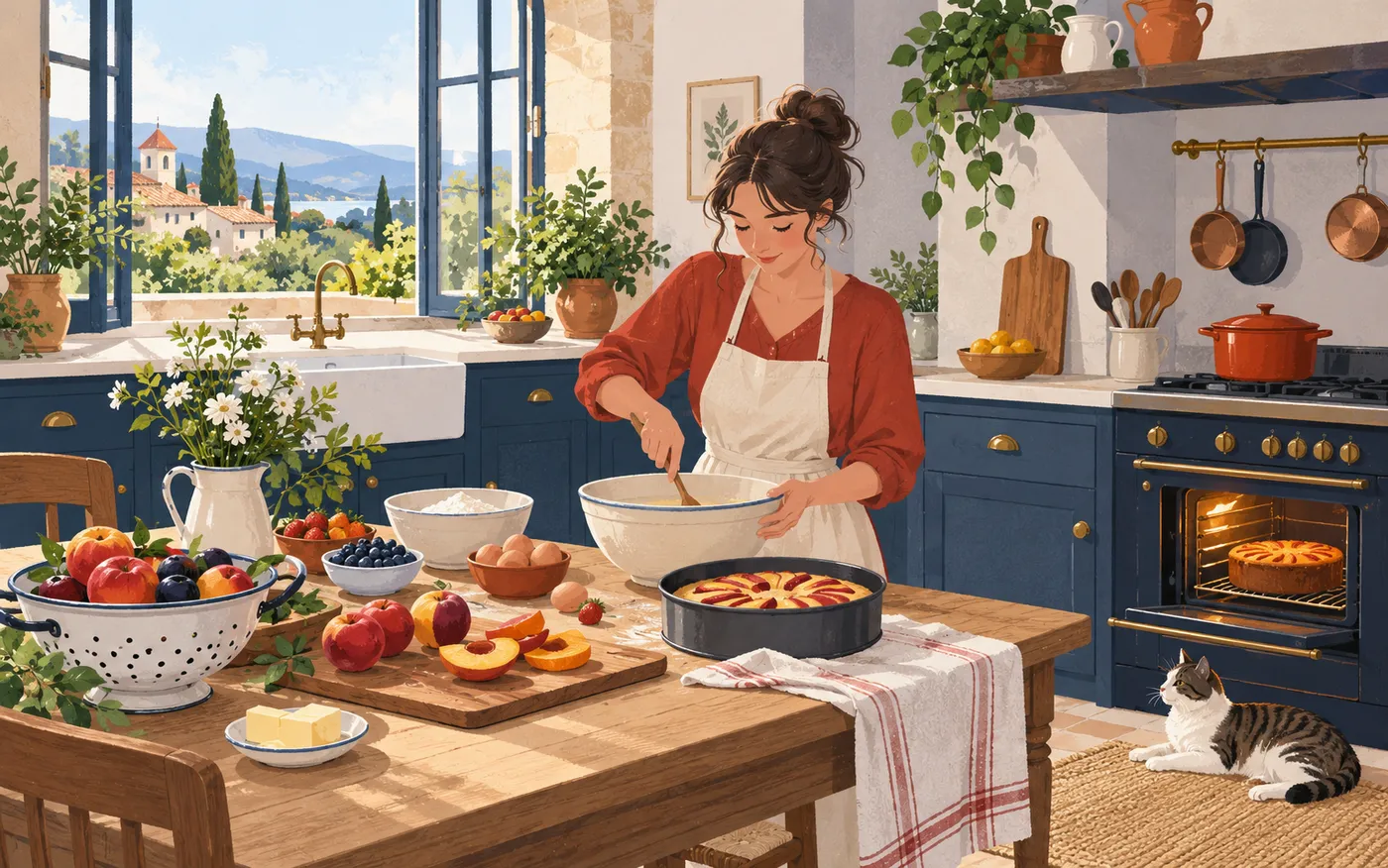
Ce (matin ou matinée ?), elle reste chez elle. Elle lit le journal et téléphone à sa sœur. Ensuite, elle prépare un gâteau. Elle passe la (matin ou matinée ?) à cuisiner : elle lave les fruits, prépare la pâte et range la cuisine.
À midi, sa sœur arrive. « Tu as travaillé toute la (matin ou matinée ?) ? » demande-t-elle. Nora sourit. « Oui, mais c’était une (matin ou matinée ?) très agréable. Regarde, le gâteau est prêt ! »
Elles déjeunent ensemble. Avant de partir, sa sœur demande : « Tu es libre demain (matin ou matinée ?) ? » Nora répond : « Oui. Appelle-moi dans la (matin ou matinée ?), et on ira se promener. »
Read it in English
Every morning, Nora gets up at seven. The alarm rings and she makes breakfast. She has a coffee, then puts her cup on the table.
This morning, she is staying at home. She reads the newspaper and phones her sister. Then she makes a cake. She spends the morning cooking: she washes the fruit, makes the batter and tidies the kitchen.
At midday, her sister arrives. “Have you been working all morning?” she asks. Nora smiles. “Yes, but it was a very pleasant morning. Look, the cake is ready!”
They have lunch together. Before leaving, her sister asks: “Are you free tomorrow morning?” Nora replies: “Yes. Call me during the morning, and we’ll go for a walk.”
One Monday or a Monday habit?
Lundi matin, je vais à la piscine.
On Monday morning, I’m going to the swimming pool.
A plan for one Monday morning.
Le lundi matin, je vais à la piscine.
On Monday mornings, I go to the swimming pool.
With le, this presents a regular Monday habit.