Myth or fact: French greetings and politeness
Do you have to say bonjour in shops? Is tu always rude? Do the French kiss everyone? Judge eight claims about greeting people in France.
- A1
- 8 claims
- Vrai ou faux ?
- Learn this in the A1 notebook →
In short
Saying bonjour when you walk into a shop is essential in France. Tu isn't rude between friends, young people and family; vous is for strangers and formal situations. La bise (cheek kisses) is for friends and family, not for everyone you meet.
Yellow the idea to rememberBlue French to learnRed watch out
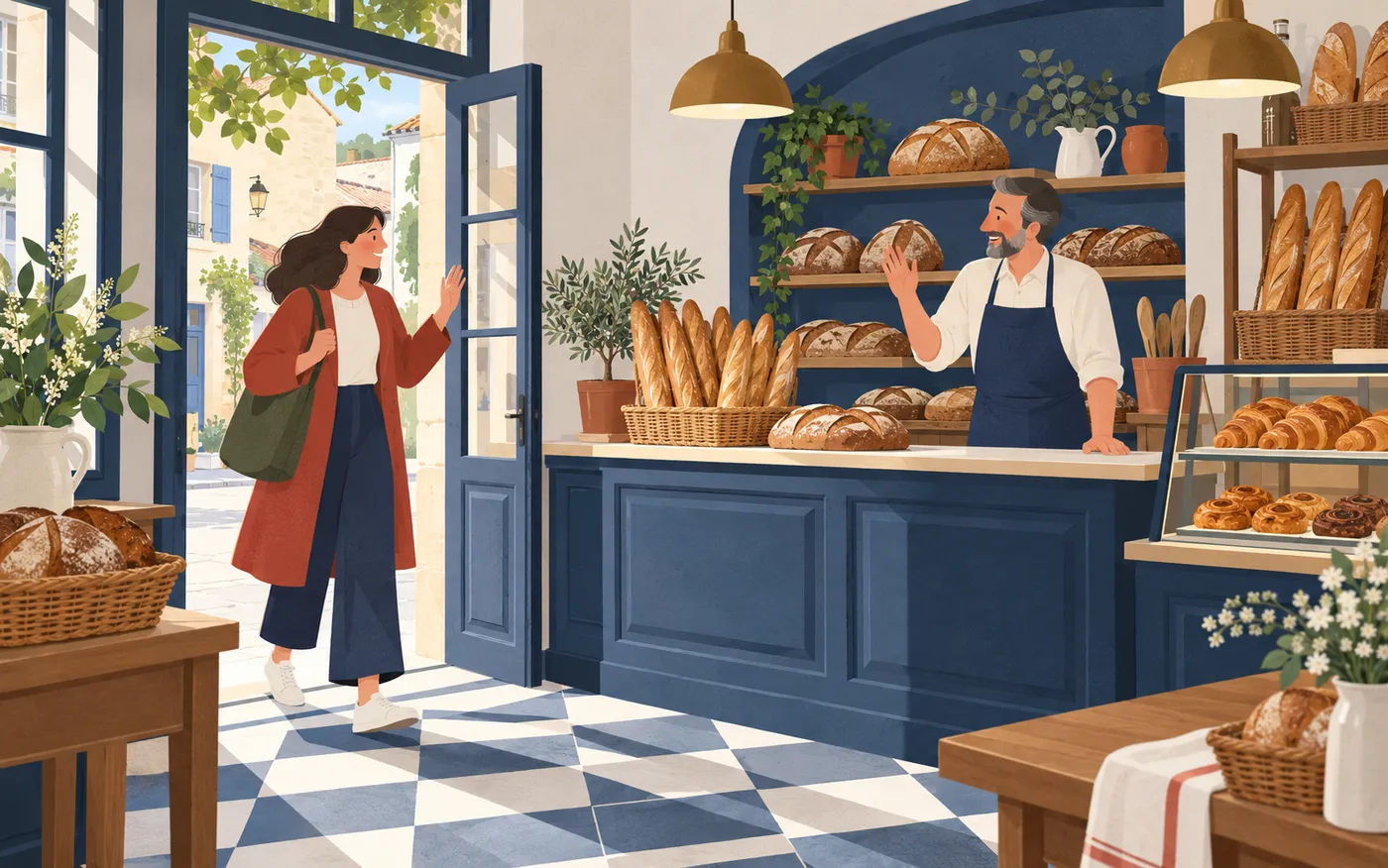
Vrai ou faux ? Decide before you see the verdict.
You should say bonjour when you enter a small shop.
Bonjour Madame !
VraiVrai. Not saying it is felt as rude. Say bonjour coming in and merci, au revoir going out.
Using tu with anyone is rude.
Salut, tu vas bien ?
FauxFaux. Tu is normal with friends, family, children and other young people. Use vous with strangers, older people and at work, until invited to switch.
French people kiss everyone on the cheek, even strangers.
On se fait la bise ?
FauxFaux. La bise is for friends, family and some colleagues. With strangers and in business, shake hands.
The number of bises depends on the region.
deux, trois ou quatre bises
VraiVrai. Two is most common, but parts of the south say three, and some areas four.
Bonsoir replaces bonjour in the evening.
Bonsoir !
VraiVrai. From late afternoon or evening, say bonsoir. Bonne nuit is only for going to bed.
Salut is fine with your bank adviser.
Salut !
FauxFaux. Salut is informal: friends, classmates, close colleagues. With an adviser, say bonjour Monsieur / Madame.
Monsieur and Madame make a greeting more polite.
Bonjour Monsieur.
VraiVrai. Bonjour alone is fine, but bonjour Madame is warmer and more polite, especially with older people.
You should ask before switching from vous to tu.
On peut se tutoyer ?
VraiVrai. Usually the older or more senior person suggests it: on peut se tutoyer ? Saying yes is normal.
What to take away
French politeness is about acknowledging people before asking for anything: bonjour first, then your question. A tourist who says bonjour before asking for directions usually gets a much warmer answer.
| Situation | Say |
|---|---|
| entering a shop | Bonjour Madame / Monsieur |
| meeting a friend | Salut ! Ça va ? |
| evening | Bonsoir |
| leaving | Au revoir, bonne journée |
- Bonne nuit ! (arriving at a dinner party)Bonsoir !
Bonne nuit = sleep well.
- Salut Monsieur.Bonjour Monsieur.
Don't mix salut with Monsieur.