Common mistakes
Nana or femme: casual labels, women and partners in French
Understand une nana, une femme, ma nana and ma femme through short scenes. Check the register, the relationship and the feminine agreements.
- B1
- 3 corrections
- Examples and fixes
- Learn this in the B1 notebook →
In short
Une nana is a familiar way to refer to a woman. Une femme is neutral; ma femme usually means “my wife”, while ma nana can mean “my girlfriend”. For a straightforward introduction, use the person’s name or role.
Yellow the idea to rememberBlue French to learnRed watch out
- une nanaalways a young girla woman, in familiar language
Cette nana connaît très bien le sujet.That woman knows the subject very well.
For a neutral description, say cette femme. The familiar word adds a casual tone; the sentence supplies the praise.
- une femmealways somebody’s wifea woman
Une femme attend devant la porte.A woman is waiting outside the door.
Look for the relationship phrase: sa femme usually means “his wife” or “her wife”.
- ma nanamy wife in every contextmy girlfriend, in a casual relationship reference
Je viens avec ma nana. On est ensemble depuis un an.I’m coming with my girlfriend. We’ve been together for a year.
For a neutral girlfriend introduction, use ma petite amie. Keep ma femme for “my wife”.
Is nana rude in French?
- Léa
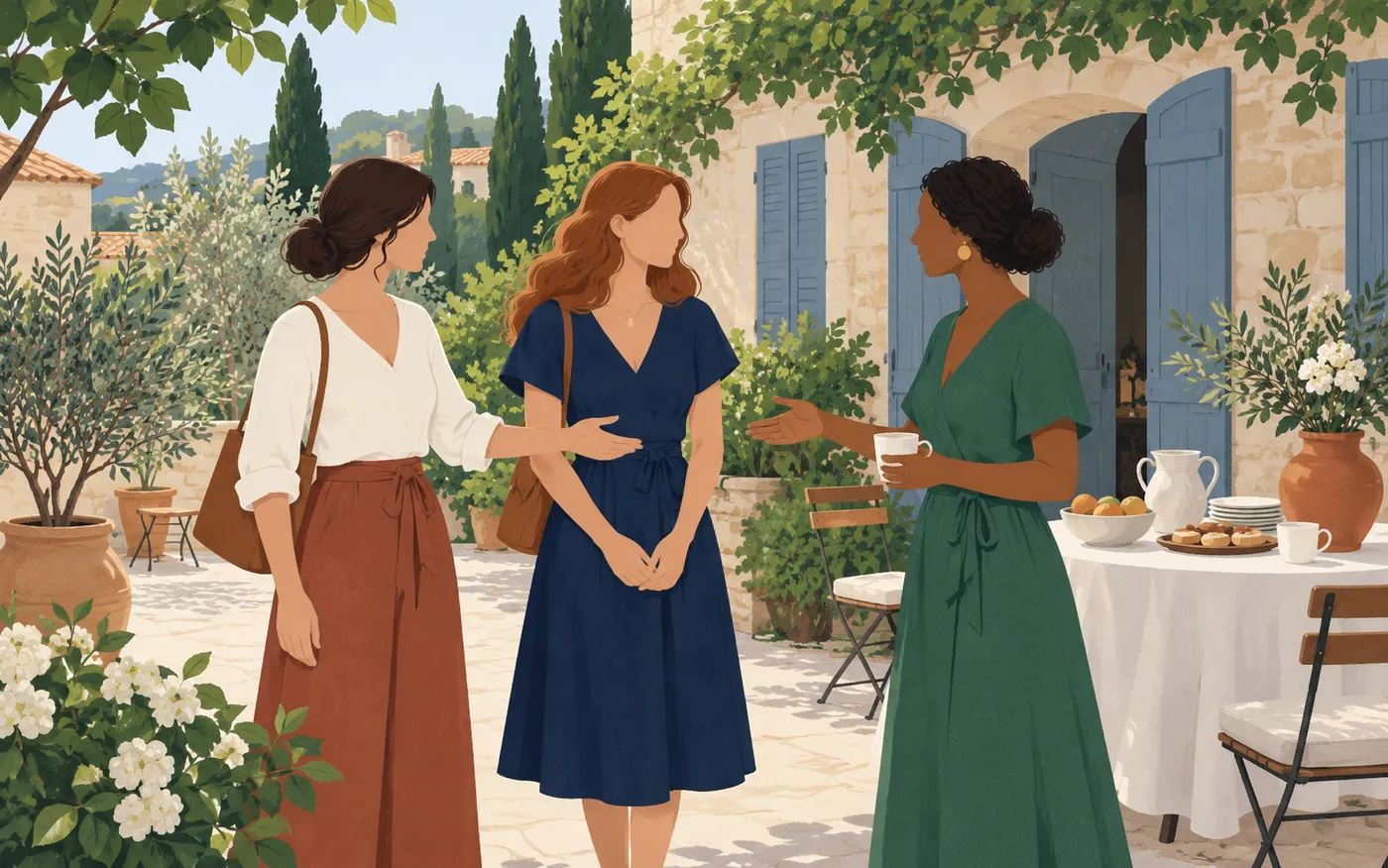
Tu connais la nana qui organise la rencontre ?
Do you know the woman who is organising the get-together?
- Nora
Oui, c’est Samia. Elle est très sympa.
Yes, that’s Samia. She’s really nice.
- Léa
Tu peux me la présenter ?
Can you introduce me to her?
- Nora
Bien sûr. Samia, voici Léa.
Of course. Samia, this is Léa.
La femme qui organise la rencontre s’appelle Samia.
The woman organising the get-together is called Samia.
This neutral version keeps her name and role.
Nana can sound affectionate, dismissive or simply casual. In the scene, très sympa gives the positive judgement. When introducing Samia, Nora uses her name. That is also a useful choice when you are meeting someone for the first time.
| French | Meaning in this context |
|---|---|
| C’est une femme très patiente. | She is a very patient woman. |
| C’est ma femme. Nous sommes mariées. | She is my wife. We are married. |
| C’est ma petite amie. | She is my girlfriend. |
| Ce sont deux femmes très patientes. | They are two very patient women. |
Both nouns are feminine: une nana, une femme. In the plural, write des nanas and des femmes. A familiar-to-neutral rewrite can change cette nana to cette femme while keeping the same action and description.