Sembler or paraître: seems clear, looks tired, comes out on Friday
Both sembler and paraître express impressions. Compare adjective patterns, il me semble que, il paraît que and paraître for publication.
In short
Sembler and paraître both mean “seem” before an adjective: Cette idée semble claire / Cette idée paraît claire. Paraître also means “come out” or “be published”: Le livre paraît vendredi. That publication meaning belongs to paraître.
Yellow the idea to rememberBlue French to learn
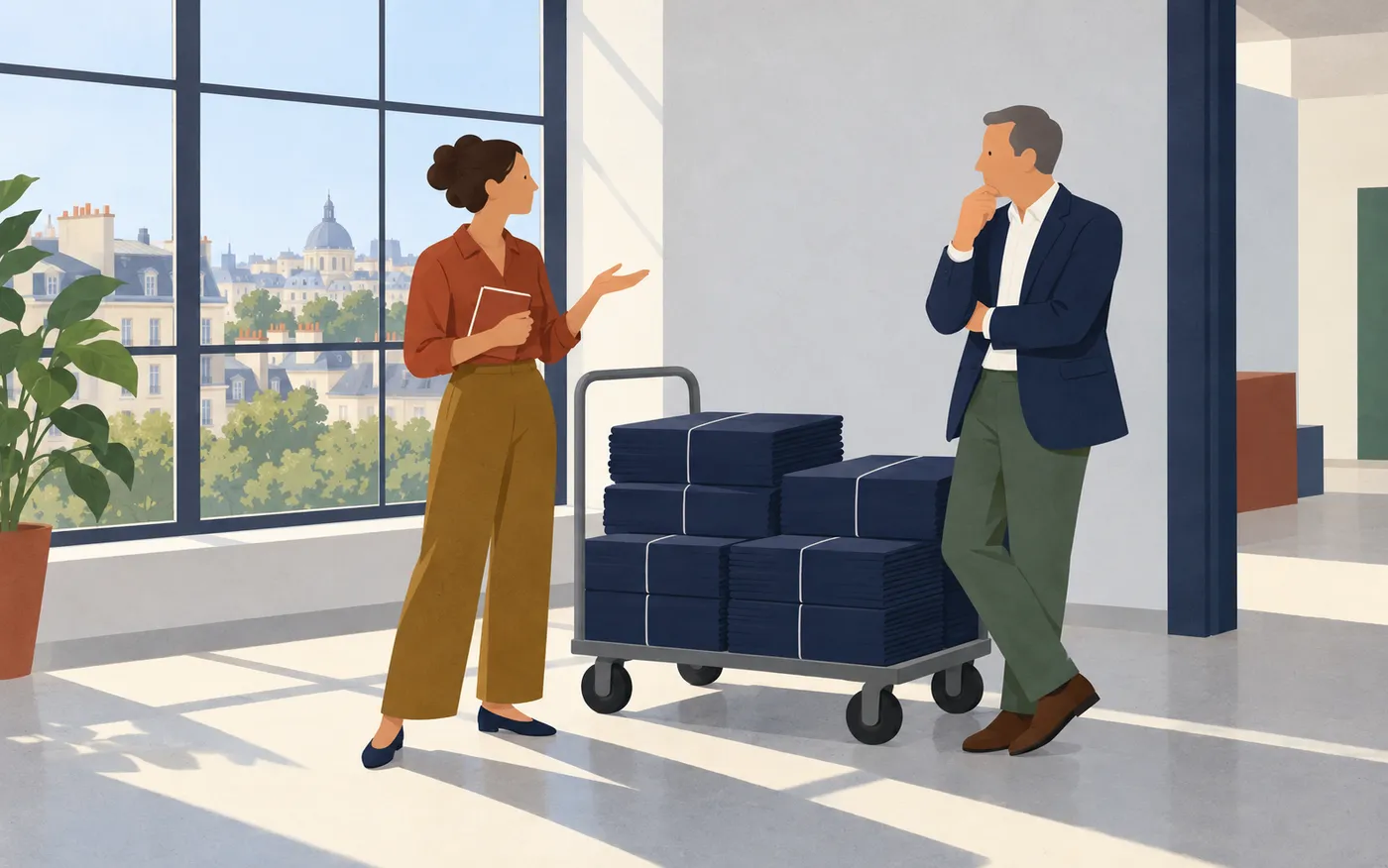
What does paraître mean for a newspaper?
- Éditeur
Ton article me semble clair. Il reste une date à vérifier.
Your article seems clear to me. There is still a date to check.
- Journaliste
Il paraît que la salle ouvre samedi. Je vais appeler la mairie.
Apparently the hall opens on Saturday. I’ll call the town hall.
- Éditeur
Très bien. Le journal paraît vendredi.
Very good. The newspaper comes out on Friday.
- Journaliste
Alors, je te confirme la date cet après-midi.
Then I’ll confirm the date with you this afternoon.
| French | English | Focus |
|---|---|---|
| Il me semble que la date est correcte. | I think the date is correct. | My assessment. |
| Il paraît que la salle ouvre samedi. | Apparently the hall opens on Saturday. | Information heard or reported. |
| Le journal paraît vendredi. | The newspaper comes out on Friday. | Publication. |
In il paraît que, English “apparently” is often a useful translation. In le journal paraît, the subject is a publication and the verb tells you when it comes out. Add clair, intéressant or another adjective, and you return to an assessment: Ce journal paraît intéressant.
| Subject | sembler | paraître |
|---|---|---|
| je | semble | parais |
| tu | sembles | parais |
| il / elle / on | semble | paraît |
| nous | semblons | paraissons |
| vous | semblez | paraissez |
| ils / elles | semblent | paraissent |