French crêpes: the batter, the pan and the first one that fails
Thin French crêpes for four: the proportions to remember, why the batter rests, how hot the pan should be, and the fillings people actually use.
250 g of flour, 4 eggs, half a litre of milk, an hour of rest. A hot pan, a thin film of batter, one minute a side. The first crêpe always fails: it is how the pan tells you it is ready.
Yellow the idea to rememberBlue French to learnRed watch out
Le carnet de Mamie Jo
Pâte à crêpes
- farineflour250 g
- œufseggs4
- laitmilk50 cl
- beurre fondubutter50 g
- sucre (cuillères à soupe)sugar2
- selsalt1
- rhum ou fleur d’oranger (cuillères à soupe)flavouring1
- Mettre la farine, le sucre et le sel dans un saladier. Creuser un puits.Put the flour, sugar and salt in a bowl and make a well in the middle.
- Casser les œufs dans le puits. Mélanger en ajoutant le lait petit à petit.Break in the eggs. Whisk from the centre, adding the milk a little at a time: that is what prevents lumps.
- Ajouter le beurre fondu. Laisser reposer une heure.Stir in the melted butter. Rest the batter for an hour at room temperature.
- Chauffer une poêle légèrement beurrée. Verser une petite louche de pâte et l’étaler en inclinant la poêle.Heat a lightly buttered pan. Pour in a small ladle of batter and tilt the pan so it runs to the edges.
- Cuire une minute, retourner, cuire encore trente secondes.Cook for a minute until the edge lifts, turn, and give it thirty seconds more.
La première est pour le chien.
Shopping list
Pâte à crêpes, for 4
- 50 clthe milk: half a litre, about 2 cups
- 25 clhalf the recipe, for two
- 10 clone more splash if the batter is thick
French recipes give liquids in centilitres. A French cuillère à soupe is a tablespoon.
Ten minutes of work, an hour of rest
Ten minutes to mix, an hour to rest, twenty-five minutes at the stove for twelve crêpes. The rest lets the flour swell and the batter relax: the crêpes come out supple instead of rubbery. Two hours is better still.
Lumps, a torn first crêpe, a thick one: the fixes
- Lumps
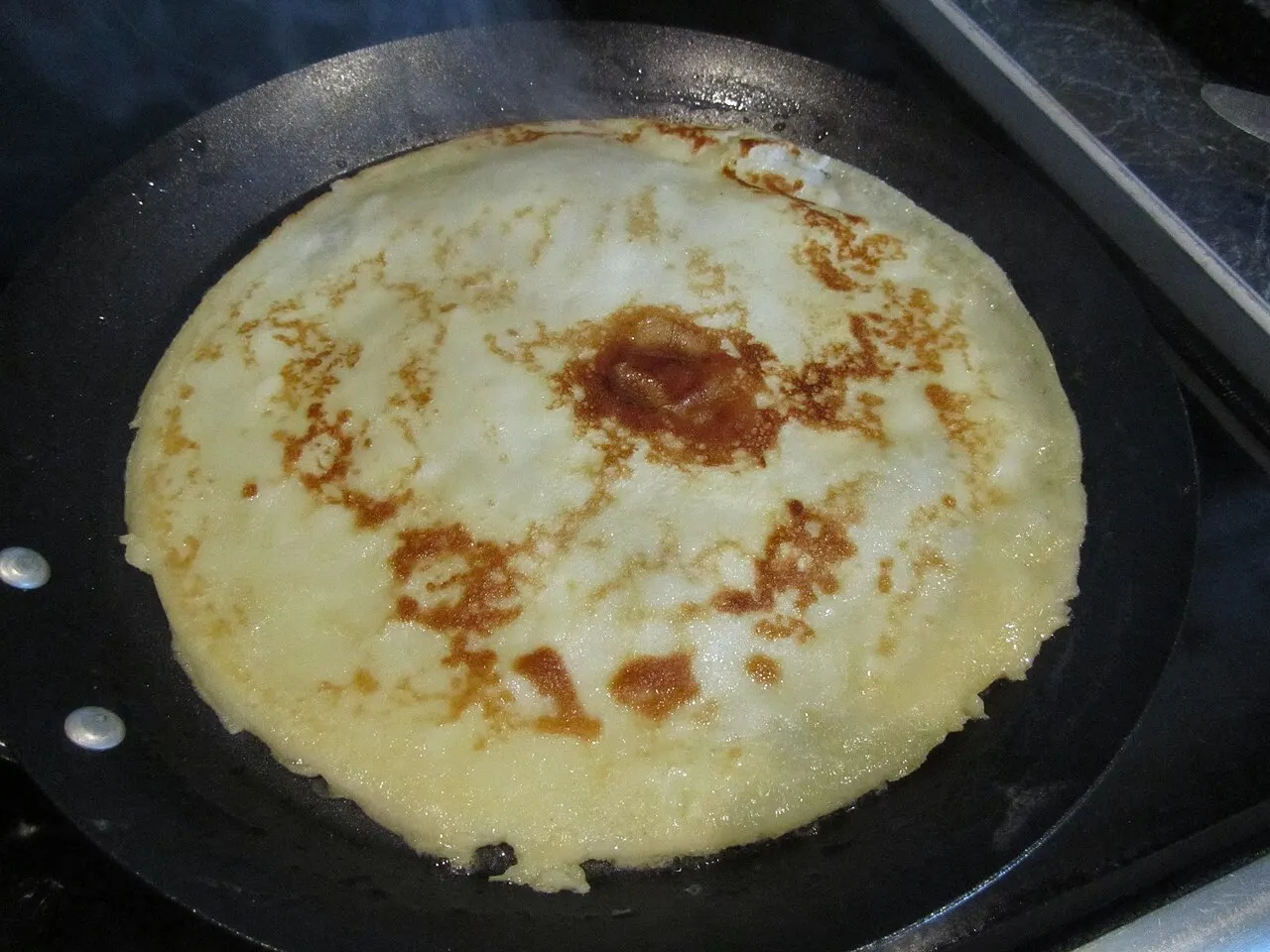
The milk went in too fast: des grumeaux. Strain the batter, or give it ten seconds with a stick blender.
- The first one sticks and tears
The pan was not hot enough. It is always the first one. Eat it and carry on.
- Thick and bready
Too much batter in the pan, or batter too thick. It should pour like single cream: thin it with a little milk.
- They are dry at the edges
The heat is too high. Medium-high, and re-butter the pan every two or three crêpes with a piece of kitchen paper.
What goes on them
Fillings, from the most usual
- beurre-sucre butter and sugarclassic
The plainest and the favourite.
- sucre-citron sugar and lemonclassic
A squeeze of juice over the sugar.
- à la confiture with jamhome
Apricot or strawberry.
- à la pâte à tartiner with chocolate spreadchildren
What every child asks for.
- au caramel au beurre salé salted butter caramelBrittany
The Breton answer.
- Suzette orange butter, flambéedrestaurant
A restaurant dessert, not a home one.
A crêpe is not a galette
Une crêpe is made with wheat flour and is usually sweet. Une galette is made with buckwheat, le sarrasin, and is savoury: ham, egg and cheese make une complète. In a crêperie you eat a galette first and a crêpe for dessert, with cider served in a bowl.
Batter and crêpes the next day, and 2 February
- The batter
Keeps a day in the fridge. Whisk it again before use and thin it if needed.
- Cooked crêpes
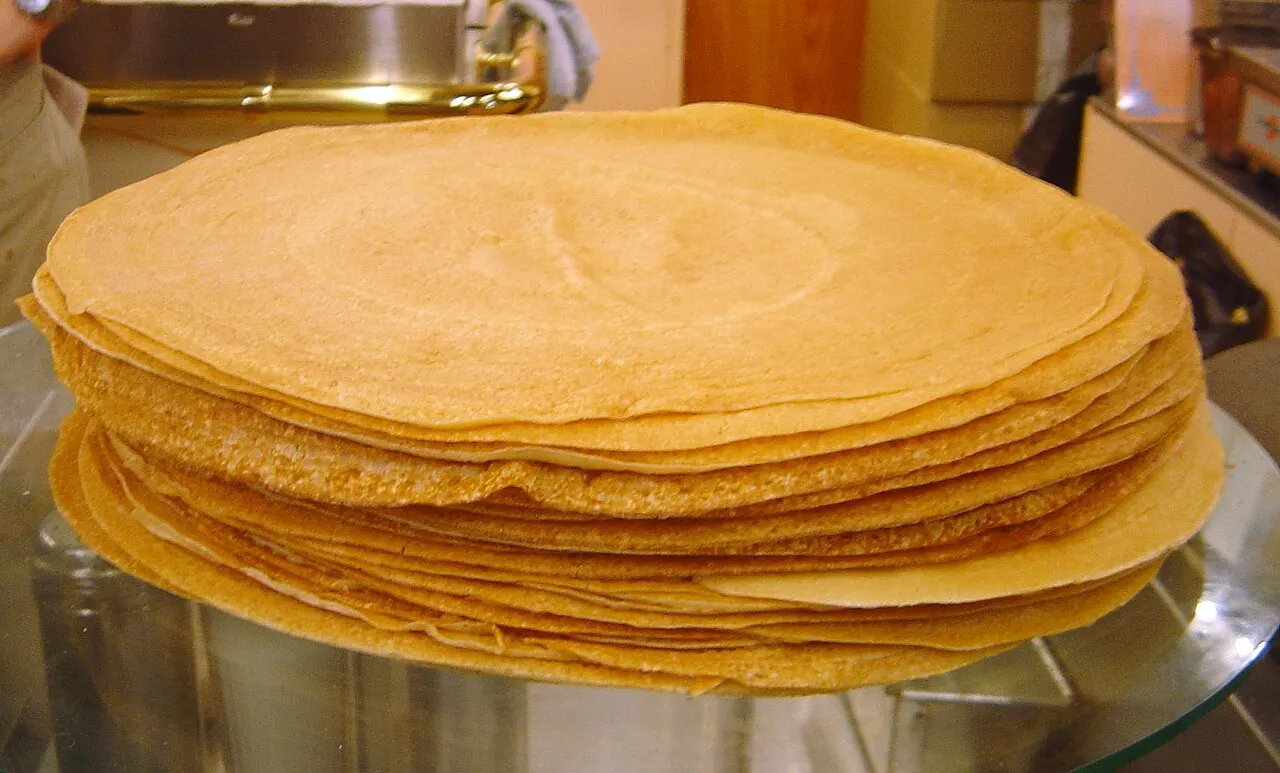
Stack them under a plate. Two days in the fridge, wrapped. They freeze, with baking paper between them.
- Reheating
Thirty seconds a side in a dry pan.
- 2 February
La Chandeleur: the day France makes crêpes. Toss one (faire sauter une crêpe) with a coin in the other hand for luck in the year.
Checked 19 November 2026. Proportions compared with the Paul Bocuse batter published by Zwilling: the same 250 g of flour, 50 cl of milk, 50 g of melted butter and one hour of rest, with three eggs where this page uses four. Both work; four gives a slightly richer crêpe.