Picture scene
Beaucoup de, assez de, un kilo de: French quantities at the market
Explore a French market and order amounts with de and d’. Compare a little with little, practise measures, and recognise quantities from a known set.
- A2
- 6 things to find
- Tap to explore
- Find-it game
- Learn this in the A2 notebook →
In short
Use de after common quantities: beaucoup de pommes, assez de pain, un kilo de tomates. Before a vowel or mute h, use d’: une bouteille d’eau. The quantity tells you how much; the noun tells you what.
Yellow the idea to rememberBlue French to learn
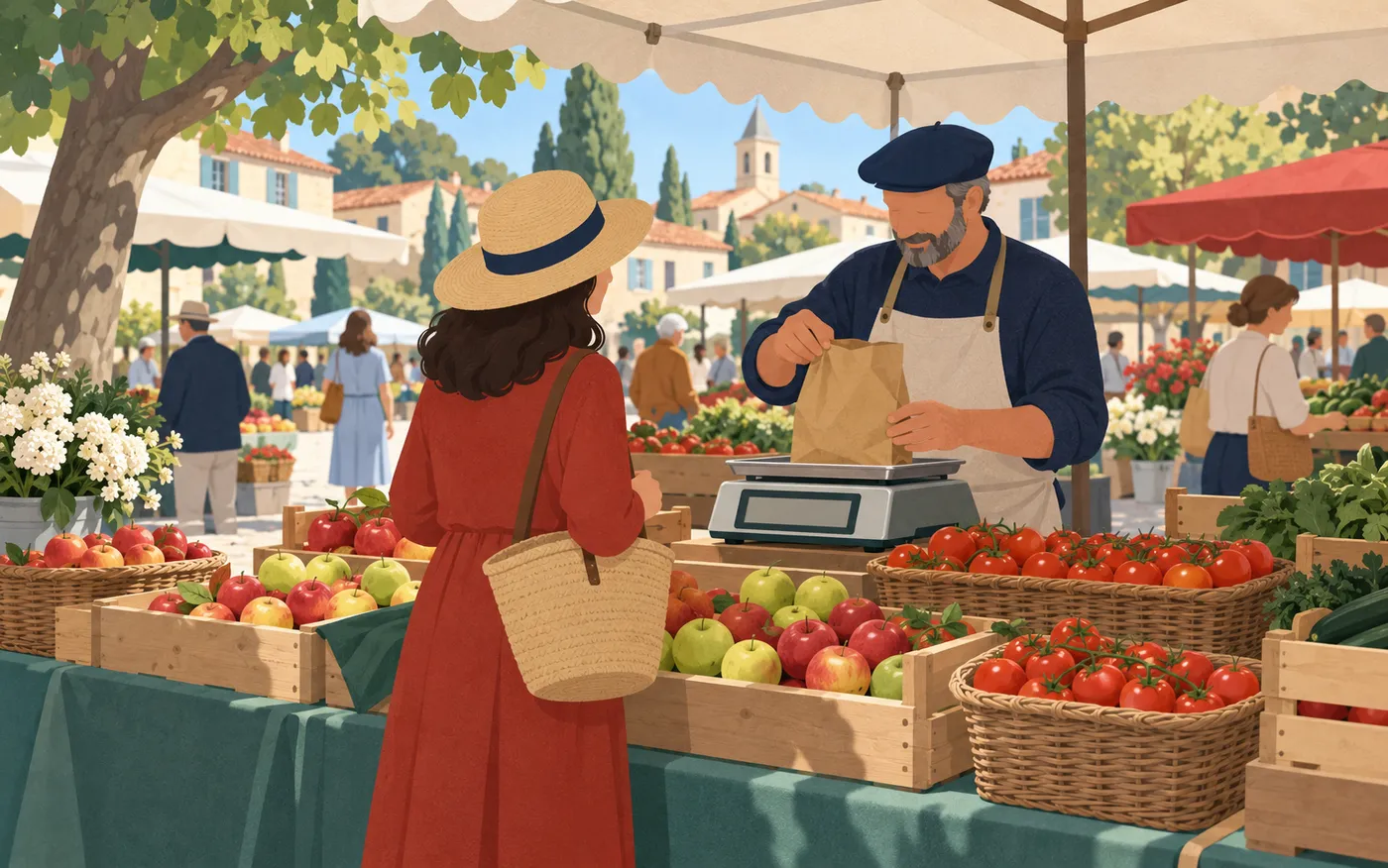
Find six things on the shopping list
Find:
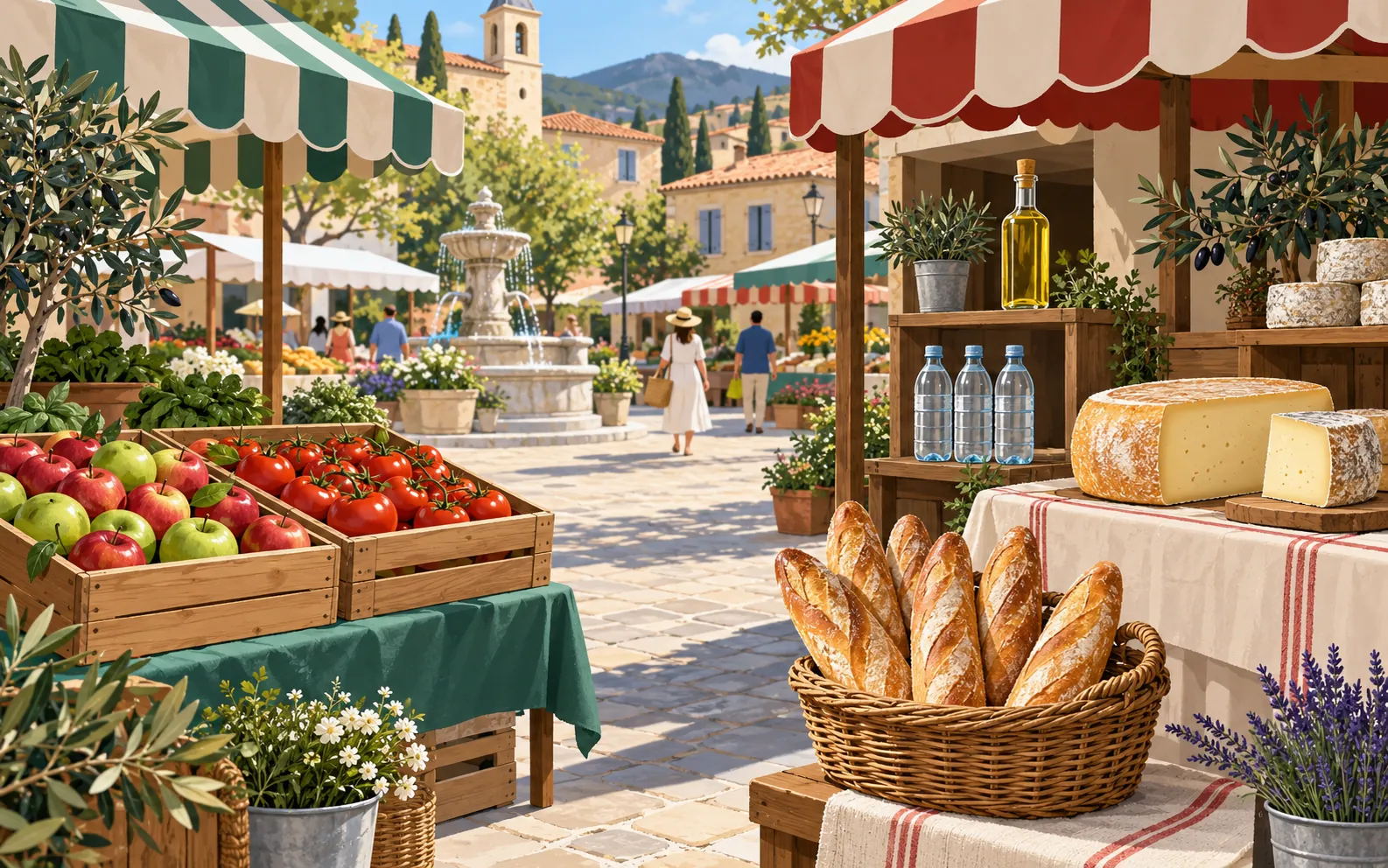
Why is it beaucoup de, not beaucoup des?
| French phrase | English | Meaning |
|---|---|---|
| beaucoup de tomates | a lot of tomatoes | A large amount. |
| assez de pain | enough bread | As much as needed. |
| trop de sel | too much salt | More than wanted. |
| peu de fromage | little cheese | The amount is small. |
| un peu de fromage | a little cheese | Some cheese, a small amount. |
Peu de often highlights a shortage: Il reste peu de pain means there is little bread left. Un peu de presents a small amount that is available: Il reste un peu de pain. The extra un changes the emphasis.
How do you say quantities at a French market?
| One | More than one |
|---|---|
| un litre de lait | deux litres de lait |
| un kilo de pommes | trois kilos de pommes |
| une bouteille d’eau | deux bouteilles d’eau |
| un morceau de fromage | quatre morceaux de fromage |
The measure takes the plural ending: deux litres, trois kilos. The linking de stays the same with masculine lait and feminine viande. Before eau or huile, it becomes d’.
- Vous
Je voudrais un kilo de pommes, s’il vous plaît.
I’d like a kilo of apples, please.
- Marchand
Et avec ça ?
Anything else?
- Vous
Deux kilos de tomates. Vous avez assez de sacs ?
Two kilos of tomatoes. Do you have enough bags?
- Marchand
Oui, j’en ai assez.
Yes, I have enough.
Many apples, or many of those apples?
Beaucoup de pommes sont abîmées. Beaucoup des pommes de ce panier sont abîmées.
Many apples are damaged. Many of the apples in this basket are damaged.
In the second sentence, des is de + les: the basket identifies the set. For an unspecified amount, use the basic beaucoup de pattern. Compare quelques pommes and plusieurs pommes: these go straight before the noun, with no de.