What does a short French reply mean? Read the whole exchange
Understand avec plaisir, je vous en prie and bien reçu through short exchanges. Practise spotting acceptance, thanks, permission and a polite refusal.
In short
Read the line before a short reply and the words after it. Avec plaisir can mean “I’d love to” after an invitation or “my pleasure” after thanks. A positive opening followed by mais can still introduce a refusal.
Yellow the idea to rememberBlue French to learnRed watch out
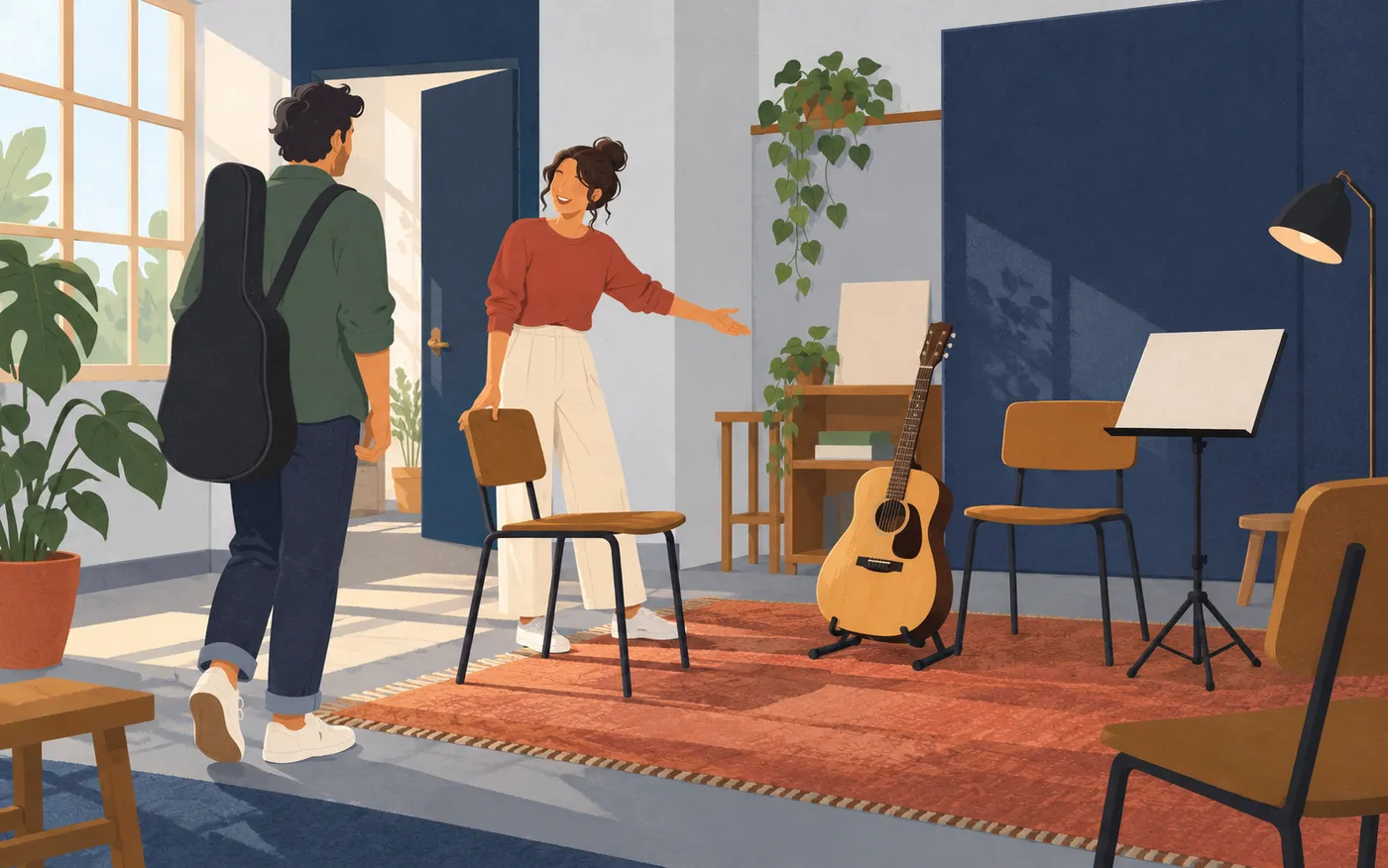
How do you understand a short French reply?
- Nora
Tu veux participer à la répétition ?
Would you like to take part in the rehearsal?
- Samir
Avec plaisir ! À quelle heure ?
I’d love to! At what time?
- Nora
Merci pour ton aide pendant la répétition.
Thanks for your help during the rehearsal.
- Samir
Avec plaisir !
My pleasure!
In the first exchange, the rehearsal is still ahead: Samir accepts and asks for a time. In the second, the help has already happened: Samir answers thanks. Translating both replies as “you’re welcome” would lose the acceptance in the first scene.
| Previous turn | Short reply | Meaning here |
|---|---|---|
| Merci pour votre explication. | Je vous en prie. | You’re welcome. |
| Puis-je continuer ? | Je vous en prie. | Please do. |
| Je peux vous poser une question ? | Allez-y. | Go ahead. |
| Tu peux venir demain ? | Volontiers. | I’d be happy to. |
Keep the second half of the reply
Bien reçu. Je le lirai demain.Received. I’ll read it tomorrow.
Focus: Receipt is confirmed; reading is still ahead.
Merci pour votre message. Bien reçu, je le lirai demain.
Thank you for your message. Received; I’ll read it tomorrow.
C’est gentil, mais je ne peux pas venir.That’s kind of you, but I can’t come.
Focus: The speaker appreciates the invitation and declines it.
C’est gentil, mais je ne peux pas venir vendredi.
That’s kind of you, but I can’t come on Friday.
Avec plaisir, mais seulement après quinze heures.I’d be happy to, but only after three o’clock.
Focus: Willingness comes with a time limit.
Je peux t’aider, mais seulement après quinze heures.
I can help you, but only after three o’clock.