Verb drill
Protéger or préserver: meanings and present-tense practice
Compare protecting a garden with preserving its character, then practise protège, protégeons and préserver forms in a French present-tense drill.
- B1
- 18 answers
- Checked all at once
- Accents count
- Learn this in the B1 notebook →
In short
Protéger highlights keeping someone or something safe from harm; préserver highlights keeping something intact or maintaining a quality. Their meanings overlap: both protéger une forêt and préserver une forêt are natural.
Yellow the idea to rememberBlue French to learnRed watch out
protégerprotect
Focus: the thing being shielded and the threat
protéger quelque chose de / contre quelque chose
Cette housse protège le livre de la poussière.
This cover protects the book from dust.
Une clôture protège les jeunes arbres.
A fence protects the young trees.
préserverpreserve, safeguard
Focus: what is kept intact or maintained
préserver + place / quality / resource
Nous voulons préserver le caractère du jardin.
We want to preserve the garden’s character.
Ce projet vise à préserver la qualité de l’eau.
This project aims to preserve water quality.
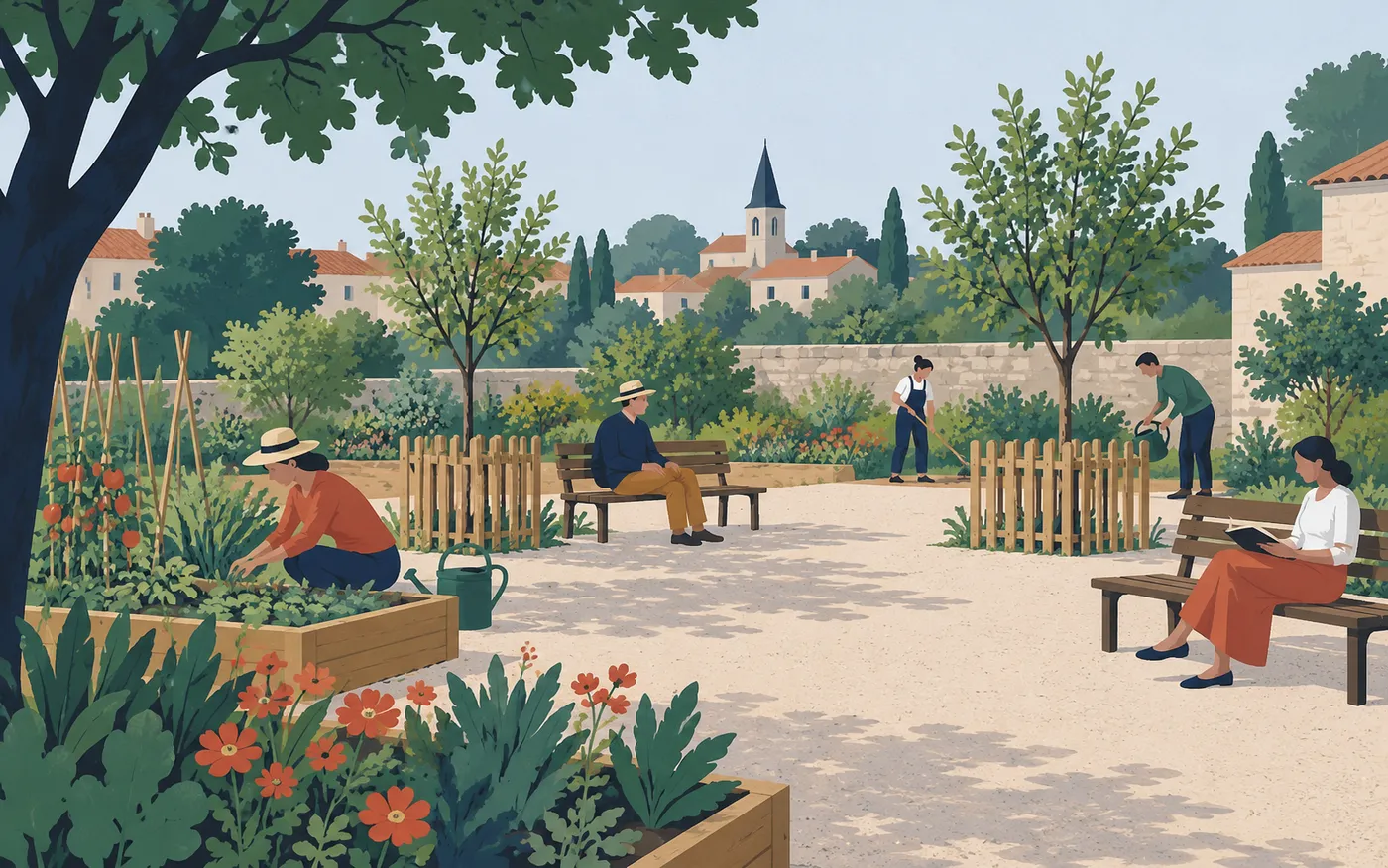
In the shared garden
Find:
Study first: the spelling changes
| Verb | je | nous |
|---|---|---|
| protéger | protège | protégeons |
| préserver | préserve | préservons |
In je protège, the stem has è. In nous protégeons, the accent is é, and the extra e keeps the soft g before -ons. Préserver keeps its initial é throughout: je préserve, nous préservons.
- Lina
Nous protégeons les arbres avec une clôture.
We protect the trees with a fence.
- Hugo
Et nous préservons l’espace ouvert au centre.
And we preserve the open space in the middle.
- Lina
Oui. On garde aussi les vieux bancs.
Yes. We’re keeping the old benches too.
Both verbs fit a garden. The fence sentence names a protective measure; the open-space sentence names a feature to keep. For food kept for later, conserver les aliments is a useful phrase.
What is the difference between protéger and préserver?
1 · Protéger · present
- je
- tu
- il / elle / on
- nous
- vous
- ils / elles
2 · Préserver · present
- je
- tu
- il / elle / on
- nous
- vous
- ils / elles
3 · Keep the subject and accent
- Nous ce jardin du vent. (protéger)
- Cette housse mon livre. (protéger)
- Vous le caractère du lieu. (préserver)
- Elles les jeunes arbres. (protéger)
- Tu cet espace ouvert. (préserver)
- Nous la qualité de l’eau. (préserver)