Gap-fill
Une fois que: once one step is complete
Follow a French baking plan with une fois que. Compare present, past and future stages, then fill eight gaps in a short text with tense hints.
- B1
- 8 gaps
- Translation included
- Learn this in the B1 notebook →
In short
Une fois que means once: one stage is reached, then the next step follows. It takes the indicative: Une fois que tout est prêt, nous commençons. For a completed action viewed from the future, use the future perfect: Une fois que tu auras fini, appelle-moi.
Yellow the idea to rememberBlue French to learn
| Context | First stage → next action |
|---|---|
| Routine | Une fois qu’elle a fini, elle range ses affaires. |
| Past event | Une fois qu’elle a fini, elle a rangé ses affaires. |
| Future completed action | Une fois qu’elle aura fini, elle rangera ses affaires. |
| Future ready state | Une fois qu’elle sera prête, nous partirons. |
The connector sets the order; the verb tense places the events in time. A state can use a simple tense: sera prête. An action completed before a future step often uses aura or auras plus a past participle. Both are indicative patterns.
Four things for tomorrow’s tart
Find:
What does une fois que mean?
Complete each verb using the tense in the hint. Futur antérieur is the future perfect. The whole plan looks ahead to tomorrow; the completed stages prepare the next actions.
Demain, une tarte aux pommes
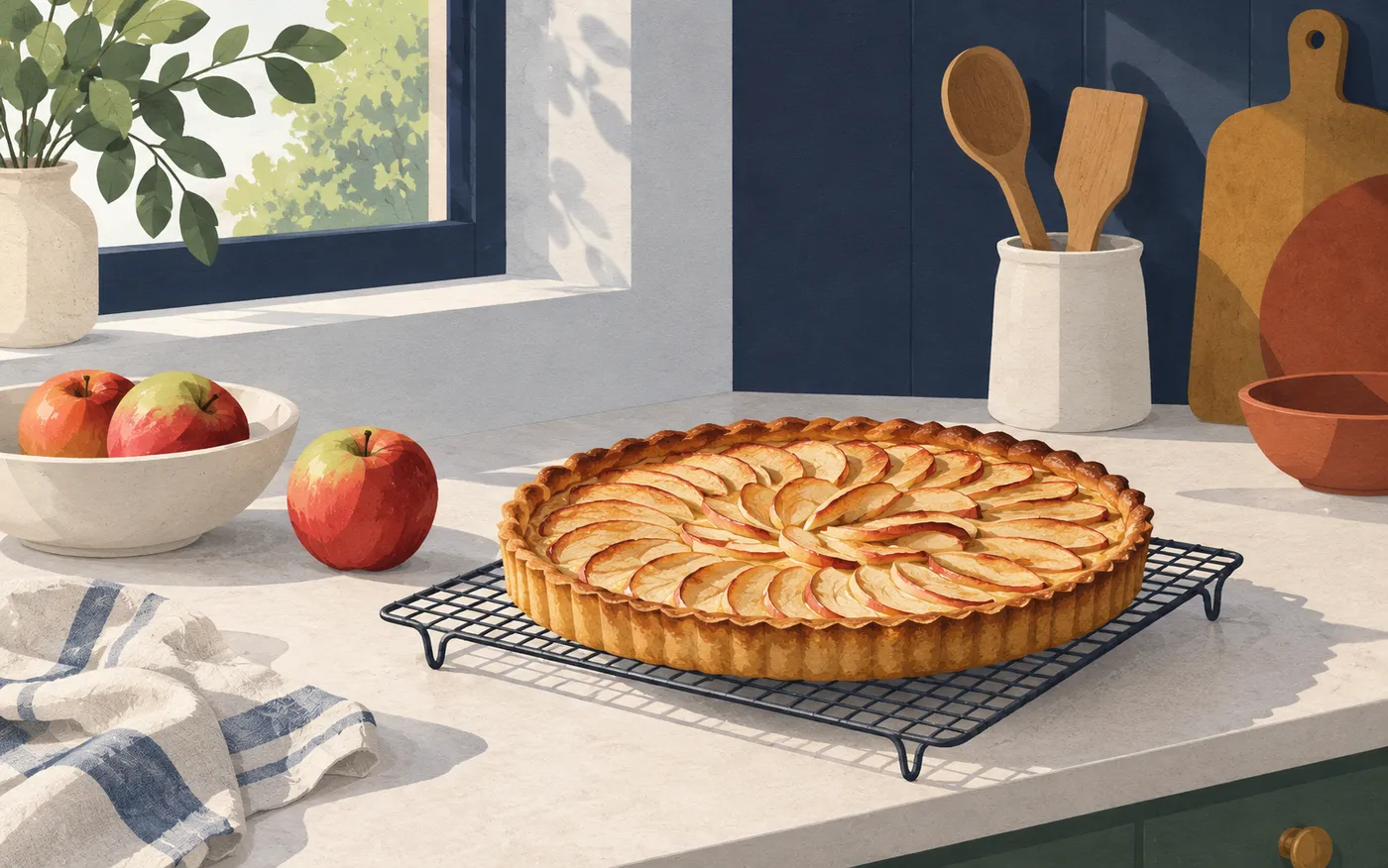
Demain matin, nous préparerons une tarte pour le déjeuner. Tu t’occuperas des pommes et je préparerai la pâte. Une fois que tu (laver · futur antérieur) les pommes, tu les couperas en fines tranches. Une fois que la pâte (être · futur simple) prête, je la mettrai dans le moule.
Nous ferons chauffer le four pendant dix minutes. Une fois que le four (être · futur simple) chaud, nous pourrons commencer la cuisson. Mais d’abord, une fois que tu (couper · futur antérieur) toutes les pommes, tu les disposeras sur la pâte. Tu ajouteras un peu de sucre.
Une fois que nous (terminer · futur antérieur) la préparation, nous mettrons la tarte au four. Pendant la cuisson, nous préparerons le reste du repas. Une fois que la tarte (être · futur simple) cuite, je la sortirai du four. Nous attendrons un peu : une fois qu’elle (refroidir · futur antérieur), nous la (servir · futur simple).
Read it in English
Tomorrow morning, we will make a tart for lunch. You will take care of the apples and I will prepare the pastry. Once you have washed the apples, you will cut them into thin slices. Once the pastry is ready, I will put it in the tin.
We will heat the oven for ten minutes. Once the oven is hot, we will be able to start baking. But first, once you have cut all the apples, you will arrange them on the pastry. You will add a little sugar.
Once we have finished preparing it, we will put the tart in the oven. While it bakes, we will prepare the rest of the meal. Once the tart is cooked, I will take it out of the oven. We will wait a little: once it has cooled, we will serve it.
Can une fois mean “once” as in one time?
J’ai préparé cette recette une fois.
I have made this recipe once.
Here, une fois counts one occasion. There is no following que clause. In une fois que, look for a subject and a conjugated verb describing the stage. The shorter une fois la tarte cuite is another useful pattern: once the tart is cooked.