French passive without par: focus on what happened
Build French passive sentences without naming the actor. Compare present, past and future forms, check agreements and practise with a short notice.
In short
A French passive can end after the event: La fenêtre a été remplacée. The window receives the action, and the sentence leaves the actor unnamed. Form it with être in the right tense plus a past participle that agrees with the subject.
Yellow the idea to rememberBlue French to learnRed watch out
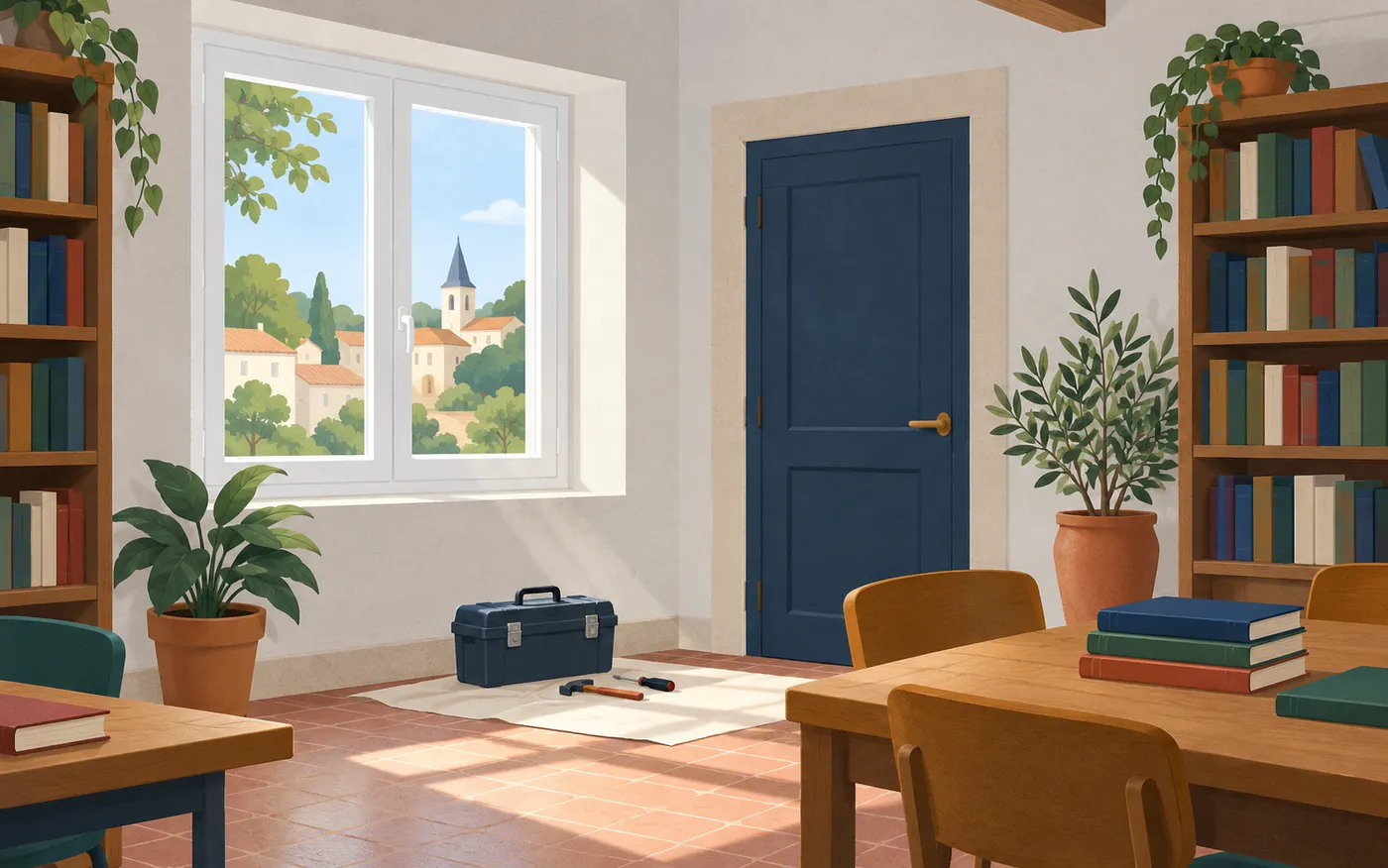
Can a French passive have no agent?
| Version | Sentence | Focus |
|---|---|---|
| Active | Une entreprise a remplacé la fenêtre. | The company doing the work. |
| Passive with an agent | La fenêtre a été remplacée par une entreprise. | The window, then the company. |
| Passive with an unnamed agent | La fenêtre a été remplacée. | The completed replacement. |
The short passive works well in an update about repairs. Someone asks about the window, and the answer reports the repair. To ask for the missing actor, use Qui a remplacé la fenêtre ? Add a phrase with par when the actor matters: par une entreprise locale.
Keep the tense and the agreement
| Time | Passive sentence | English |
|---|---|---|
| Regular action | Les affiches sont imprimées chaque lundi. | The posters are printed every Monday. |
| Completed past action | Les affiches ont été imprimées hier. | The posters were printed yesterday. |
| Future action | Les affiches seront imprimées demain. | The posters will be printed tomorrow. |
The ending -ées follows les affiches in all three sentences. In the past, the full verb group is ont été imprimées: ont été is the past tense of être. Été stays unchanged, while imprimées agrees with the posters.
- La fenêtre a été remplacé.La fenêtre a été remplacée.
Fenêtre is feminine singular, so the participle takes -e.
- Les affiches ont imprimées hier.Les affiches ont été imprimées hier.
A completed past passive ^^needs ont été^^ before imprimées.
Read the notice, then rebuild each sentence
La réparation est terminée. La fenêtre a été remplacée hier. Les nouvelles affiches seront installées demain.
The repair is finished. The window was replaced yesterday. The new posters will be put up tomorrow.
The notice gives repair progress and timing. The workers’ names are left out.
| Start | Complete sentence |
|---|---|
| La fenêtre + remplacer + hier | La fenêtre a été remplacée hier. |
| Les affiches + imprimer + ce matin | Les affiches ont été imprimées ce matin. |
| Les affiches + installer + demain | Les affiches seront installées demain. |
An action or a current state?
La porte a été fermée à 18 h.The door was closed at 6 pm.
Focus: the completed closing action
Elle a été fermée après le départ des visiteurs.
It was closed after the visitors left.
La porte est fermée.The door is closed.
Focus: the door’s current state
Nous devons passer par l’autre entrée.
We need to use the other entrance.