Common mistakes
Propre or sale: clean, dirty and your own things in French
Compare clean and dirty objects, then see how sa propre chambre means her own room. Four picture cards, adjective agreements and a short French quiz.
- A2
- 3 corrections
- Examples and fixes
- Learn this in the A2 notebook →
In short
Propre means clean and sale means dirty: une assiette propre, une assiette sale. Before the noun, after a possessive, propre can mean own: sa propre chambre is her own room.
Yellow the idea to rememberBlue French to learn
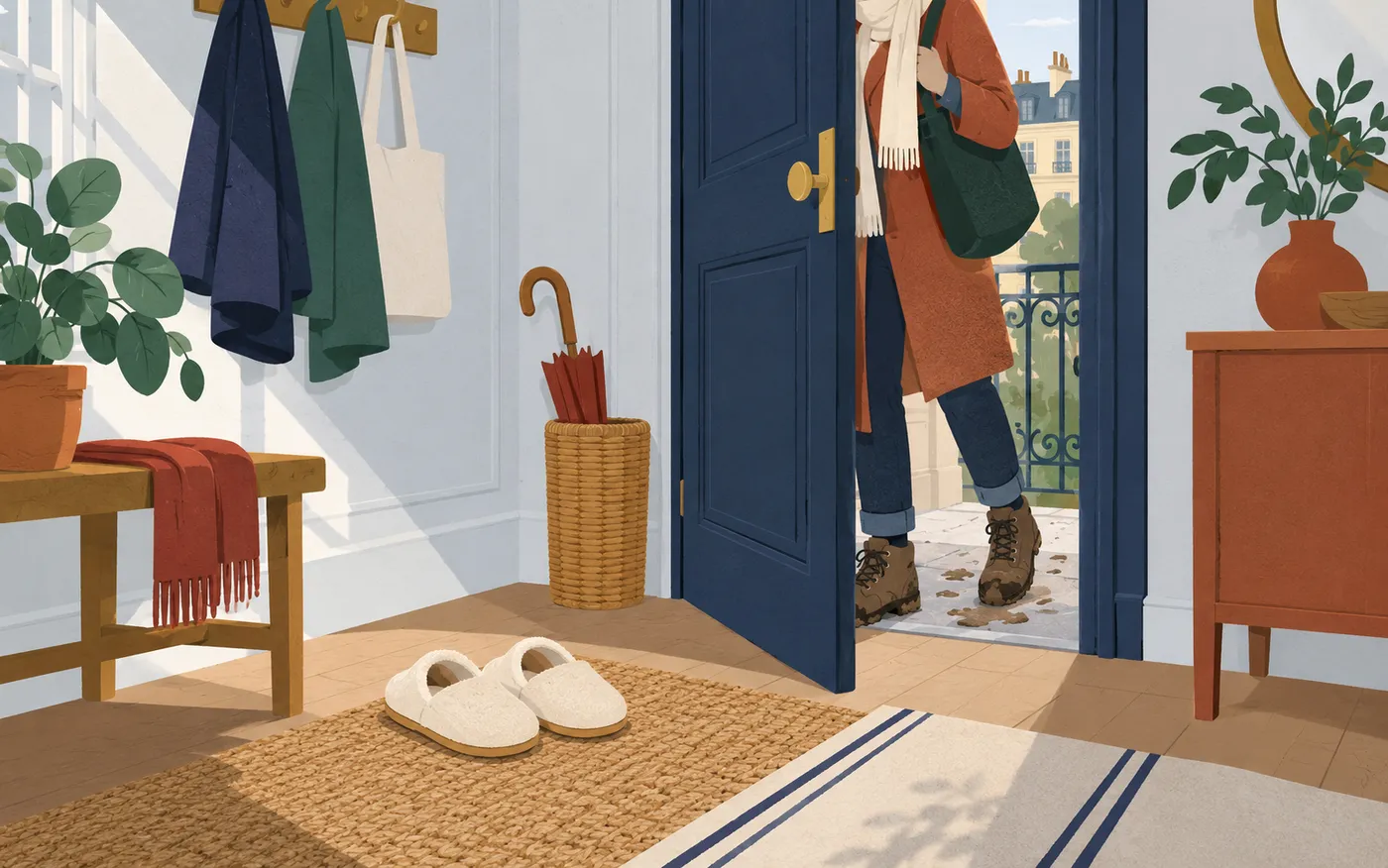
Look at the condition
Find:
- sa propre chambreher clean roomher own room
Lina veut sa propre chambre.Lina wants a room of her own.
For a clean room, put the adjective after the noun: une chambre propre.
- salea shop saledirty
Cette chemise est sale.This shirt is dirty.
For a sale in a shop, use les soldes or une promotion, depending on the offer.
- une salledirtya room, a hall
La salle est sale.The room is dirty.
The room has two ls: salle. The adjective has one: sale.
What is the difference between ma propre chambre and ma chambre propre?
| French | English | Meaning |
|---|---|---|
| sa chambre propre | her clean room | condition |
| sa propre chambre | her own room | ownership / personal use |
| ses vêtements propres | his/her clean clothes | condition |
| ses propres vêtements | his/her own clothes | ownership |
| ses propres mots | his/her own words | personal expression |
In both meanings, propre agrees with the noun. The singular form is the same for masculine and feminine: un verre propre, une tasse propre. Add -s for a plural: des verres propres, des tasses propres. Sale follows the same agreement pattern.
- Lina
Tes chaussures sont sales !
Your shoes are dirty!
- Hugo
Oui, il y avait de la boue sur le chemin.
Yes, there was mud on the path.
- Lina
Laisse-les près de la porte. Le sol est propre.
Leave them near the door. The floor is clean.
- Hugo
D’accord. Je prends mes propres chaussons.
All right. I’ll get my own slippers.
La table est propre, mais elle est encore mouillée.
The table is clean, but it is still wet.
Clean describes the condition; nettoyer names the action of cleaning. Something can be clean and wet, or old and clean: Ces vieilles chaussures sont propres.