The Alsace wine route by train and bike, without a car
The Alsace wine route runs 170 km under the Vosges, and a railway runs beside it. Which villages have a station, which need a bike or a bus, a three-day plan from Strasbourg to Colmar.
Yes. The Strasbourg–Colmar railway and its branch through Obernai and Barr put half the route within a short walk of a station; a signed cycle route, the Véloroute du vignoble, links the rest. The famous villages near Colmar are reached by bus or by 15 km of easy cycling. The driver should not be the taster: another reason to leave the car.
Yellow the idea to rememberBlue French to learnRed watch out
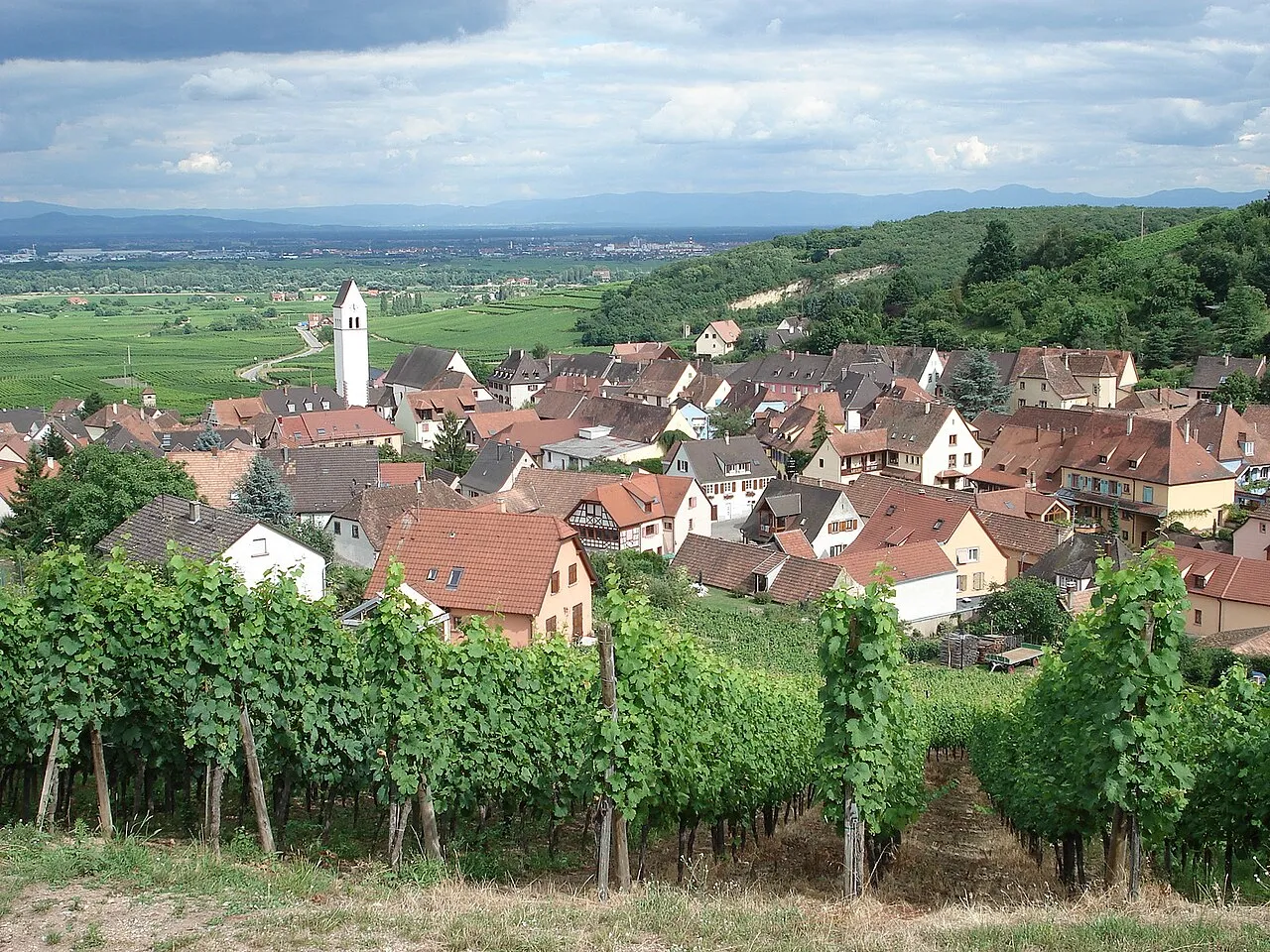
- 170 kmfrom Marlenheim to ThannLaid out in 1953: the oldest wine route in France.
- about 70wine villagesMost of them a few kilometres apart.
- 30 minStrasbourg to Colmar by trainTwice an hour.
The route and the railway
From Strasbourg to Colmar under the Vosges
- Strasbourg start Train
Trains south every half hour. Bikes travel free on most TER outside rush hours.
- Obernai Train
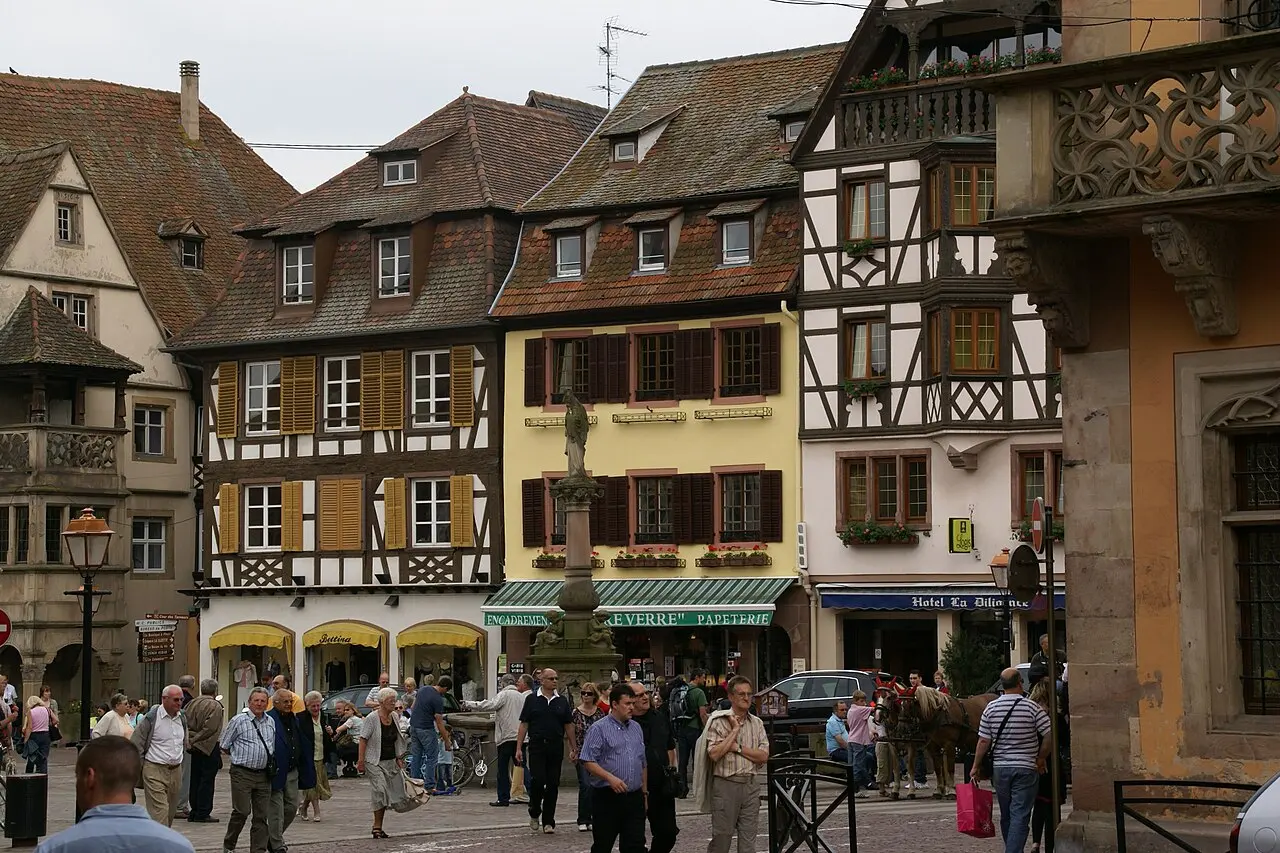
A walled town with a market square. 30 minutes from Strasbourg on the branch line.
- Barr Train
A wine town under the forest, on the same branch. A signed vineyard walk starts in the centre.
- Dambach-la-Ville Train
Three gates, a ring of walls, more growers than any village in Alsace. Its own station.
- Château du Haut-Kœnigsbourg
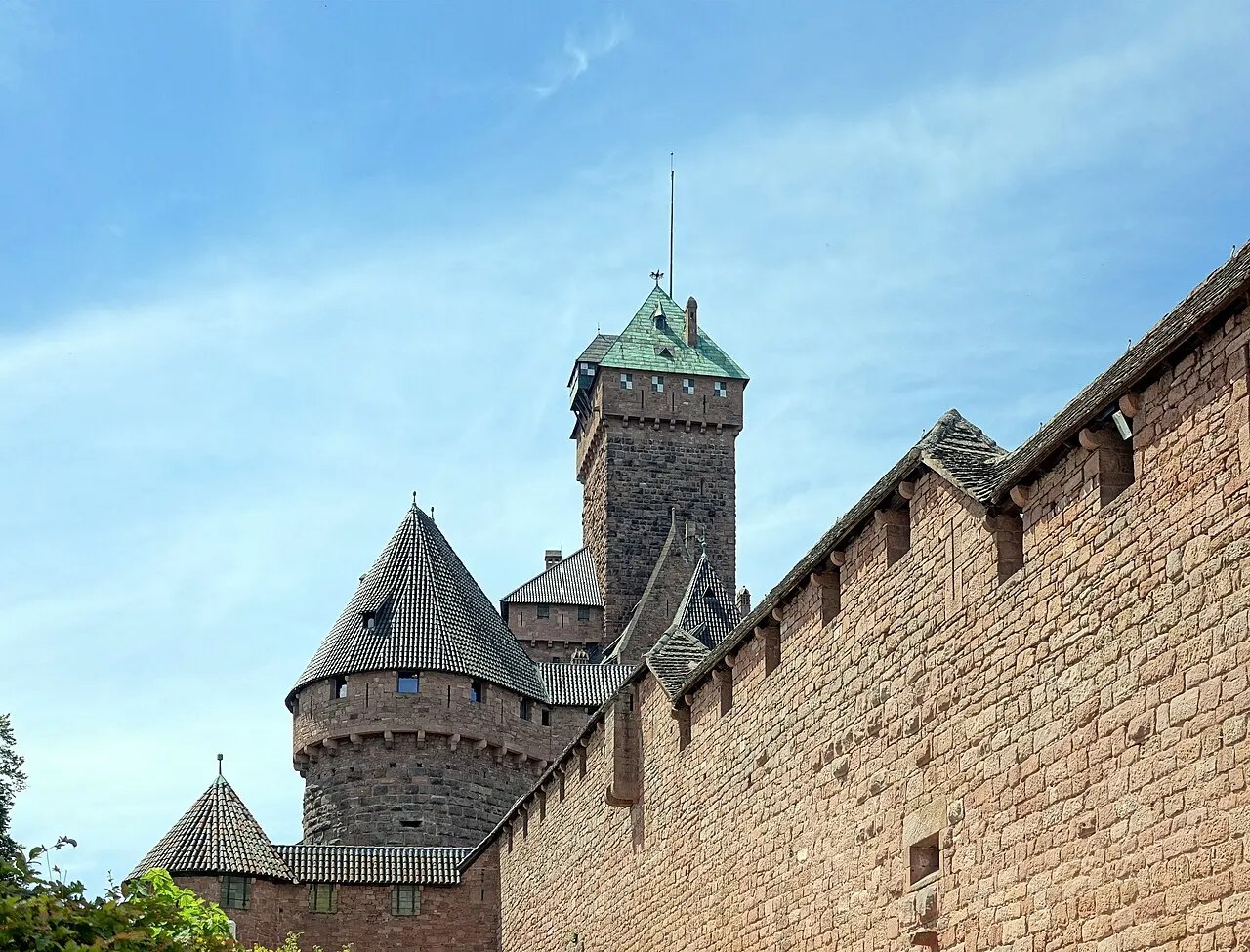
A red castle at 757 m, rebuilt for the German emperor. Shuttle bus from Sélestat station in season.
- Ribeauvillé
A long main street under three ruined castles. Bus from Colmar; 4 km from its station.
- Riquewihr
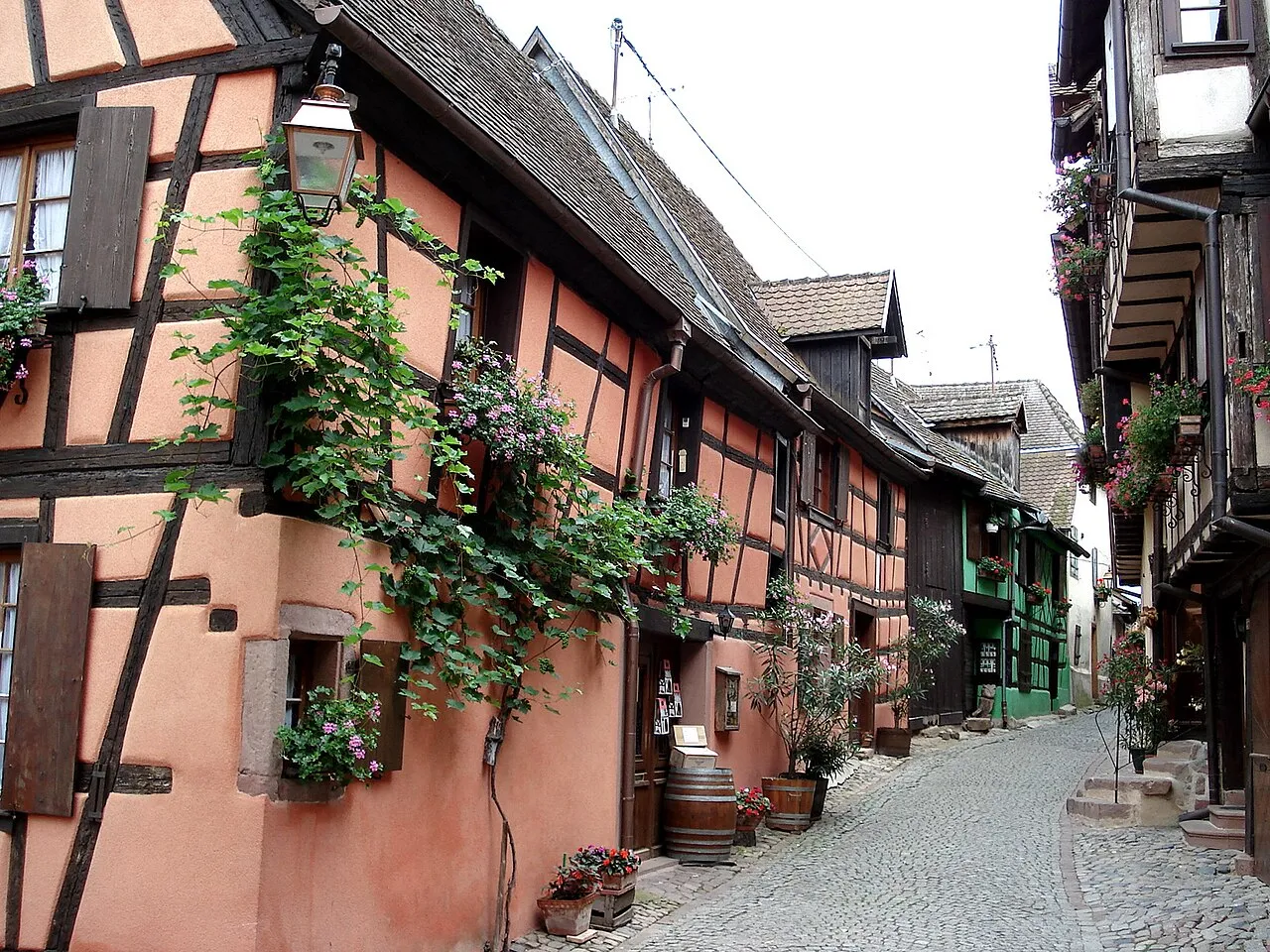
The most visited: a walled street of painted houses in the middle of the vines. Bus from Colmar.
- Kaysersberg
A fortified bridge, a ruined keep, a river. Bus from Colmar in about 30 minutes.
- Colmar base Train
The wine capital, with canals and the Isenheim altarpiece. Bike hire by the station.
- Eguisheim
Two streets coiled in rings round a castle. 7 km from Colmar by cycle path.
The coloured line is the railway. Map data © OpenStreetMap contributors.
How to get about
Three tools
- The backbonele TER
Strasbourg, Sélestat and Colmar on the main line; Molsheim, Obernai, Barr and Dambach on the branch that follows the vines. Flat fares, no booking.
every 30 to 60 min - Village to villagele vélo
The Véloroute du vignoble d’Alsace is signed for 135 km on farm tracks and quiet roads. Rolling, not flat: take an electric bike. Hire in Strasbourg, Obernai, Colmar and several villages.
15 to 40 km a day - From Colmarles cars
Regional buses and a summer tourist shuttle to Eguisheim, Kaysersberg, Riquewihr and Ribeauvillé. See our guide to the villages by bus.
a few a day
Three days, Strasbourg to Colmar
Obernai et Barr
- 9 hTrain to Obernai, 30 min
- 9 h 30The old town and the ramparts walk
- 12 hLunch; a tarte flambée
- 14 hBike or train to Barr, 8 km
- 15 hThe vineyard walk and a first tasting
- NightBarr or Obernai
Dambach et le château
- 9 h 30Train to Dambach-la-Ville
- 10 hThe walls, the vines, a grower’s cellar
- 13 hTrain to Sélestat
- 14 hShuttle to Haut-Kœnigsbourg
- 18 hTrain to Colmar
- NightColmar
les villages
- 9 hBike to Eguisheim, 7 km
- 11 hOn to Turckheim and Kaysersberg, 12 km
- 13 hLunch in Kaysersberg
- 15 hRiquewihr, 8 km over the vines
- 17 hBack to Colmar, 14 km, or bus
Short on time? Base yourself in Colmar and do day three alone. It is the densest stretch of the whole route.
Tasting, and what is in the glass
| On the label | In the glass | With |
|---|---|---|
| Riesling | Dry, mineral, sharp: the great one | Choucroute, fish |
| Gewurztraminer | Rose and lychee, rich | Munster, spicy food |
| Pinot gris | Full, smoky, often a little sweet | Foie gras, white meat |
| Muscat | Dry, tastes of the grape itself | Asparagus; as an aperitif |
| Pinot blanc | Soft and easy | Tarte flambée, quiche |
| Sylvaner | Light and fresh | Charcuterie |
| Pinot noir | The only red: light, cherry | Poultry, baeckeoffe |
- By grape, not by place
Unlike most French wine, Alsace bottles name the grape. The tall thin bottle is called a flûte.
- Grand cru
One of 51 named slopes, always from a single grape.
- Vendanges tardives
Late-harvest: sweet. Sélection de grains nobles: sweeter and rarer.
- Crémant d’Alsace
The local sparkling wine, a quarter of all production.
- Tasting
Push the door marked dégustation. It is usually free and unhurried; buying a bottle or two is the courteous end. Growers post parcels home.
- Spitting is normal
A bucket, un crachoir, is on the counter. On a bike, use it.
When to go
The wine route through the year
idealgoodpossibleclosed in parts
Januaryclosed in partsMany cellars and hotels close after the markets.
Februaryclosed in partsThe quietest month.
MarchpossibleVines bare; storks return.
AprilgoodBlossom, Easter markets.
MayidealGreen vines, long days.
JuneidealWarm, before the crowds.
JulygoodHot. Village wine festivals every weekend.
AugustgoodBusy; the big fairs in Colmar and Ribeauvillé.
SeptemberidealThe harvest: tractors, pickers, new wine.
OctoberidealGold and red vines. The best light of the year.
NovemberpossibleGrey until the last week.
DecembergoodChristmas markets in every village: beautiful and packed.
| French | English |
|---|---|
| la route des vins | the wine route |
| un vigneron | a grower who makes wine |
| une cave | a cellar |
| une dégustation | a tasting |
| un cépage | a grape variety |
| les vendanges | the grape harvest |
| un sentier viticole | a signed vineyard walk |
| une piste cyclable | a cycle path |
Checked 20 November 2026. Nothing on this page was re-read on an official site on this date. Train times are the usual ones; the Sélestat shuttle to Haut-Kœnigsbourg, the Colmar buses and the rules for taking a bike on a regional train change with the season, so check with Fluo Grand Est before you set out. Distances by bike are rounded from the signed route.
- Alsace wine routeVillages, cellars open to visitors, events.wineroute.alsacesite officiel
- Alsace à véloThe vineyard cycle route, stage by stage, and hirers.alsaceavelo.frsite officiel
- Fluo Grand EstRegional trains and buses.fluo.eusite officiel
- Château du Haut-KœnigsbourgHours, tickets and the shuttle.haut-koenigsbourg.frsite officiel