Getting a parcel delivered in France: addresses, pickup points and missed deliveries
How to write a French address so a parcel arrives, why door codes matter, the carriers and what each does, pickup points and lockers, what to do with a missed-delivery slip.
Put your name on the letterbox, give the door code and floor in the address, and choose a pickup point if nobody is home in the day. A missed parcel waits at the post office or a relay shop: ten to fifteen days, then it goes back to the sender.
Yellow the idea to rememberBlue French to learnRed watch out
An address that works
Line by line
- Title, first name, surname. Exactly as on the letterbox. Add chez M. Dupont if you are staying with someone.
- Building, floor, door. French flats rarely have numbers: say left or right, or the name on the bell.
- Door code and entry-phone name. In the address-complement or delivery-instructions field.
- Number, then street. bis and ter are 12a and 12b.
- Five-digit postcode, then town. In Paris, Lyon and Marseille the last two digits are the district.
- A French mobile number. The driver calls or texts it. A foreign number is often not dialled.
Your name must be on the letterbox and the bell, or the parcel goes back.
The door code is the commonest reason a parcel fails. Paris buildings have one or two locked doors before the letterboxes. Without the code, the driver leaves a slip, or nothing.
Who delivers
| Carrier | What it is | If you are out |
|---|---|---|
| Colissimo | La Poste’s parcel service. The postman, with a key to most buildings. | A slip; the parcel waits at your post office. |
| Chronopost | La Poste’s express arm. | A second attempt, or a relay point of your choice. |
| Mondial Relay | Delivery to relay shops and lockers. Cheap; used by second-hand sites. | You collect, always. |
| Relais Colis | The same idea, another network. | You collect. |
| DPD, GLS, UPS, DHL | Private couriers. | A text with choices: another day, a neighbour, a pickup shop. |
| Amazon | Its own drivers, lockers and counters. | A locker or a photo of where it was left. |
Pickup points and lockers
Three ways to collect
- A shop near youun point relais
A florist, a tobacconist, a dry cleaner with a carrier’s sticker. Open late and on Saturday. Bring ID and the code from the email.
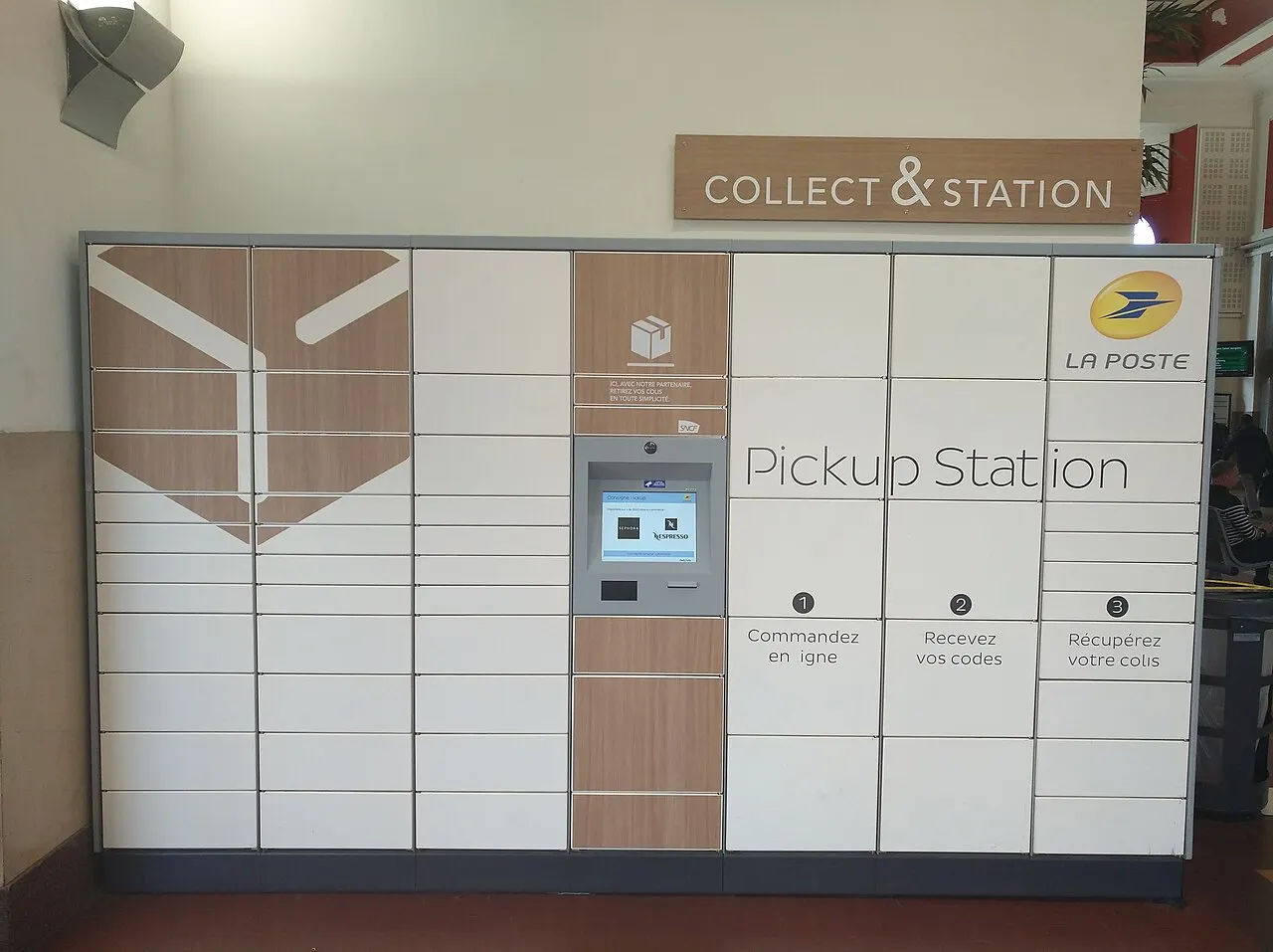
most used - A wall of lockersune consigne, un locker
In stations, supermarkets and car parks. Scan the code; a door opens. Day and night.
24 h - The post officele bureau de poste
For Colissimo and registered items. Queue at the retrait counter with ID.
office hours
When you order, the checkout usually offers livraison à domicile or en point relais. The relay is cheaper and, in a city flat, more reliable. You have about eight days in a relay shop, three in a locker, fifteen at a post office; the email gives the date.
A slip in the letterbox
What to do with an avis de passage
- 1Read where and from when à retirer à partir du…
The address of the post office or relay, and the first day. Often not before the next afternoon.
- 2Or ask for a new delivery une nouvelle livraison
On the carrier’s site, with the number on the slip: another day, a neighbour, a relay.
- 3Go with ID
Passport or residence card. The name must match the parcel.
- 4Sending someone else une procuration
Sign the back of the slip and give them your ID or a copy, plus theirs.
- 5No slip, but “delivered”
Check with the caretaker and the neighbours, then contact the seller, not the carrier: the seller is responsible until you have the parcel in hand.
The caretaker and the neighbours
- *Le gardien, la gardienne*
In buildings that have one, the caretaker takes in parcels. A thank-you and New Year tip, les étrennes, are customary.
- A neighbour
Drivers leave parcels with a neighbour and note the name on the slip.
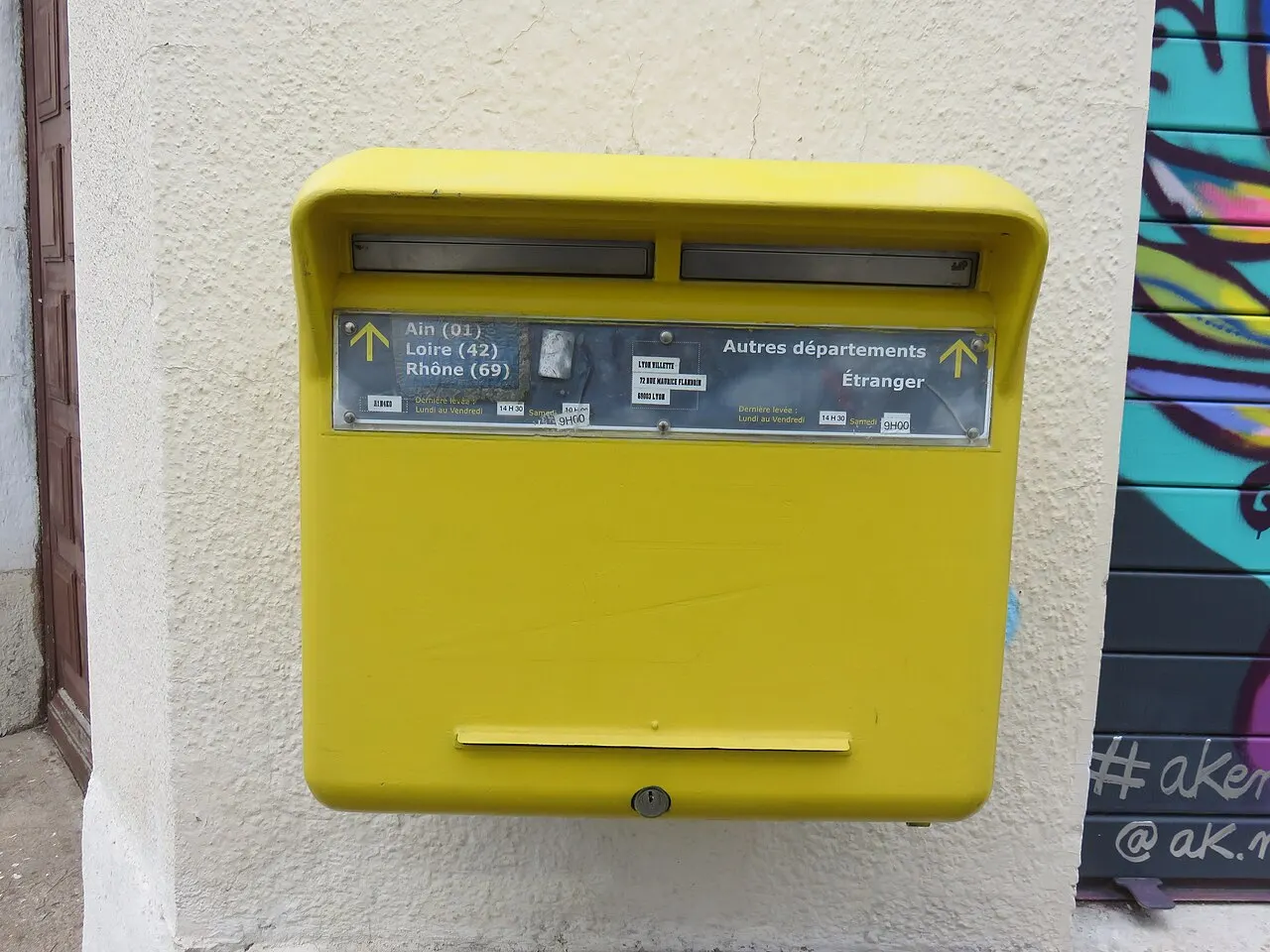
- Normalised letterboxes
Modern boxes take a small parcel; the postman has a pass key.
- Signature
For valuable items, choose delivery contre signature.
Parcels from outside the European Union
Everything bought from outside the EU is subject to French VAT, from the first euro. Since 1 July 2026 there is also a flat customs duty of 3 € for each kind of article in an order worth 150 € or less, and since 1 November 2026 a handling fee of 2 € for each kind of article, whatever the value: a T-shirt and a toy in one parcel are two kinds, so 10 €. The platform owes both and usually adds them, with the VAT, at checkout. Otherwise the carrier asks you to pay it, plus a handling fee, before delivery: a genuine request comes with the tracking number and links to the carrier’s own site. Gifts between private people under 45 € are exempt. From the United Kingdom, the same rules have applied since 2021.
- Scam texts
“Your parcel is waiting, pay 1,99 €” is the commonest fraud in France. Open the carrier’s site yourself and type the tracking number.
- Sending a parcel
At a post office counter or machine, at a relay shop with a label printed at home, or from your own letterbox with La Poste’s pickup service.
- Moving
La Poste forwards letters for six or twelve months for a fee: la réexpédition.
| French | English |
|---|---|
| un colis | a parcel |
| un avis de passage | a missed-delivery slip |
| le numéro de suivi | the tracking number |
| en cours de livraison | out for delivery |
| mis à disposition en point de retrait | ready at the pickup point |
| le destinataire, l’expéditeur | the addressee, the sender |
| une pièce d’identité | proof of identity |
| retour à l’expéditeur | returned to sender |
Checked 20 November 2026. The 3 € duty per kind of article on orders of 150 € or less (since 1 July 2026) and the 2 € handling fee (since 1 November 2026), both owed by the selling platform, were read on the customs office’s page, which adds that customs never writes to a private person to ask for payment. Carriers’ pickup delays and the 45 € exemption for gifts were not re-read: the days you have to collect a parcel are printed on the slip, and that is the figure that counts.