Cherry clafoutis: the recipe, and why the stones stay in
A clafoutis for six: cherries baked in a thick pancake batter. Ten minutes of work, the short cherry season, the stone question, and what to call it with other fruit.
A thick crêpe batter poured over whole cherries and baked for thirty-five minutes. Ten minutes of work. The tradition leaves the stones in, so warn your guests. The season is short: late May to mid-July.
Yellow the idea to rememberBlue French to learnRed watch out
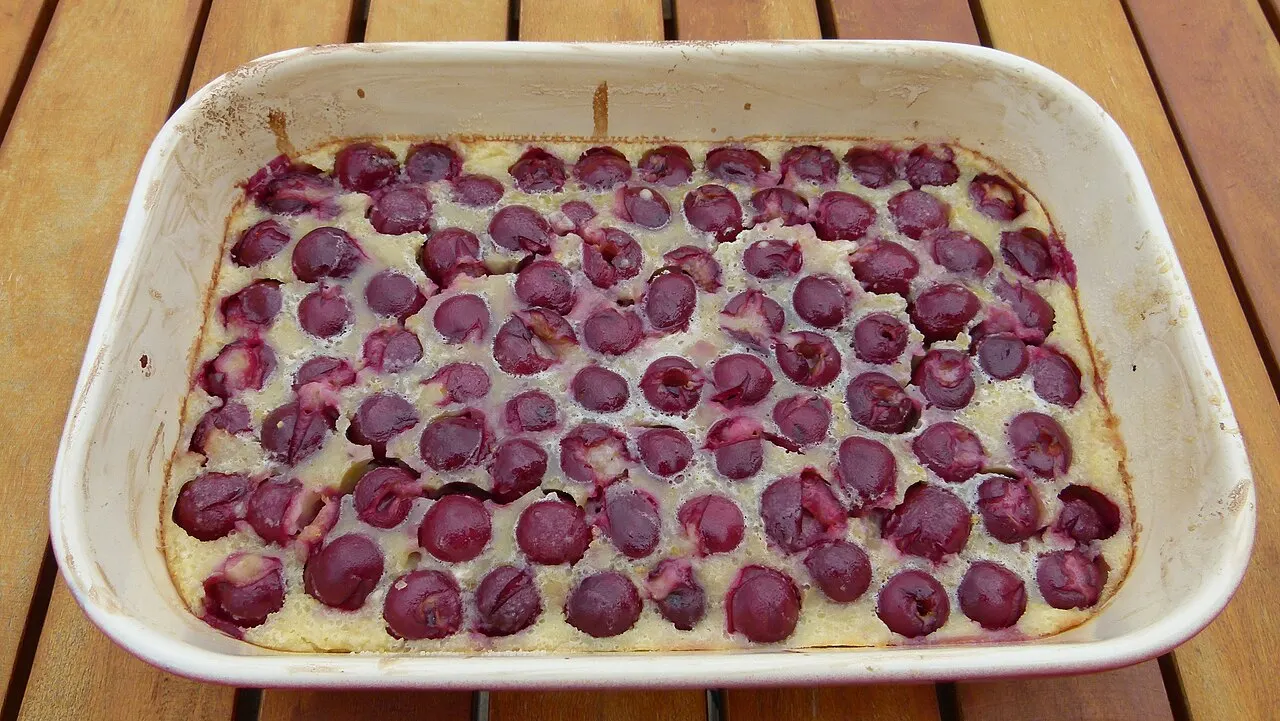
Stones in or out
In the Limousin, where the dish comes from, the stones, les noyaux, stay. The reasons given are that they keep the juice inside the fruit and lend a faint taste of almond as they heat. It is also less work. If you are feeding small children, or guests who do not know, take the stones out (dénoyauter) and accept a wetter result. Either way, say which you did before anyone bites.
Le carnet de Mamie Jo
Clafoutis aux cerises
- cerises noirescherries500 g
- œufseggs3
- sucresugar100 g
- farineflour80 g
- lait entiermilk25 cl
- beurre fondubutter30 g
- selsalt1
- sucre vanillévanilla sugar1
- Laver et équeuter les cerises. Les ranger dans un plat beurré.Wash the cherries and pull off the stalks. Spread them in a buttered dish.
- Fouetter les œufs avec le sucre, puis ajouter la farine et le sel.Whisk the eggs with the sugar, then add the flour and salt.
- Verser le lait peu à peu, puis le beurre fondu.Pour in the milk a little at a time, then the melted butter.
- Verser la pâte sur les cerises.Pour the batter over the cherries. They should just show through.
- Enfourner 35 minutes à 180 °C. Saupoudrer de sucre vanillé à la sortie du four.Bake for 35 minutes at 180 °C until puffed and golden. Sprinkle with vanilla sugar as it comes out.
Four 180 °C · 35 min
Tiède ou froid, dans le plat.
Shopping list
Clafoutis aux cerises, for 6
Forty-five minutes, ten of them yours
Five minutes to put the cherries in the dish, five for the batter, thirty-five in the oven, then a quarter of an hour to cool: it is eaten warm or cold, never hot.
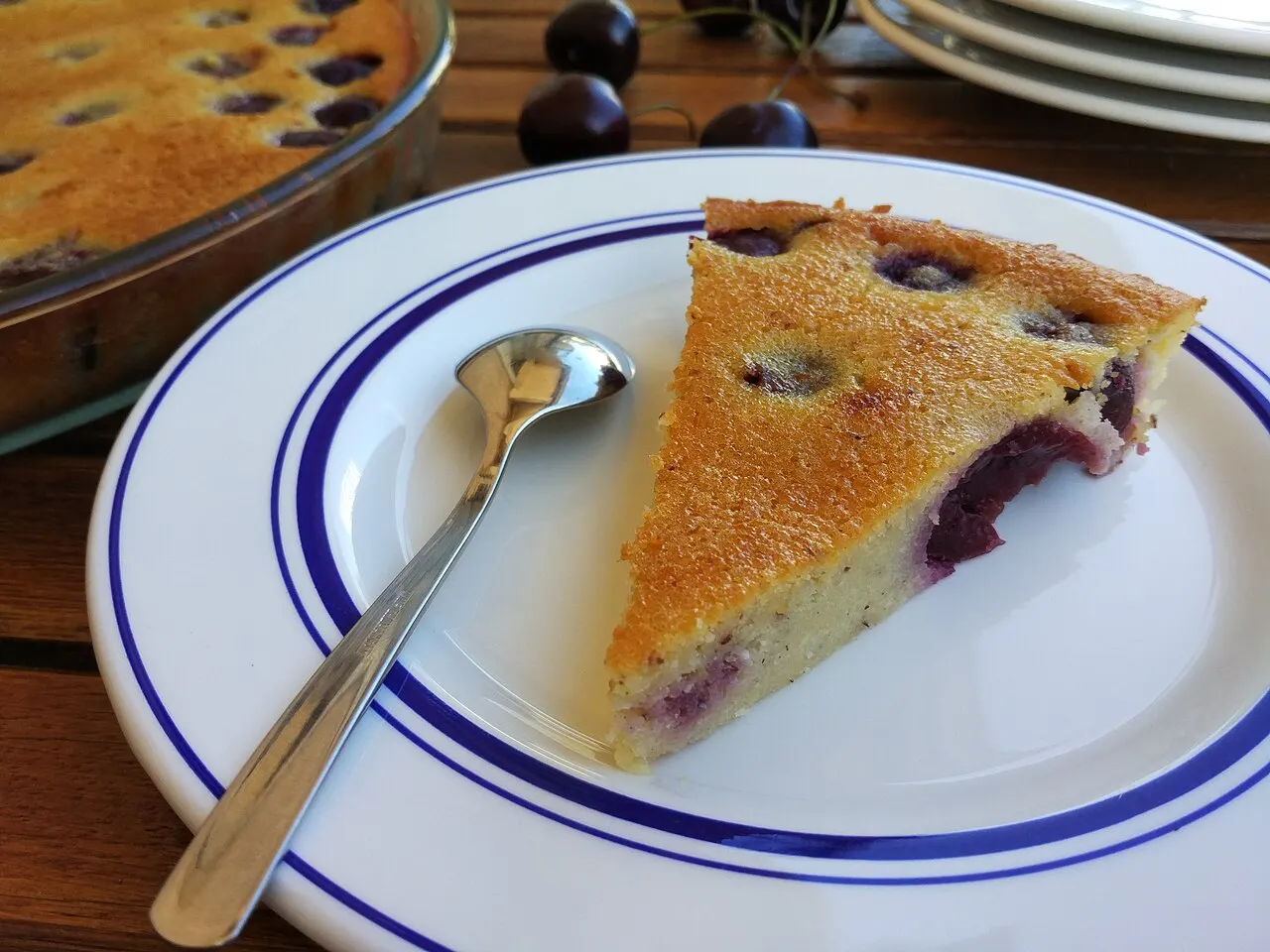
Rubbery, purple, sunk or stuck
- Rubbery
Too much flour or too long in the oven. It should be a set custard, not a cake.
- Purple juice everywhere
The cherries were stoned and bled. Another reason to leave the stones in.
- It sank
It always does. A clafoutis is served flat.
- Stuck to the dish
Butter the dish, then dust it with sugar before the cherries go in.
A short season
French cherries run from late May to mid-July, as the trade body’s season calendar shows. The first, burlat, arrive in May; firmer bigarreaux follow in June.
With other fruit it has another name
The same batter, through the year
- le clafoutis with cherriesMay to July
The only one entitled to the name, purists say.
- la flognarde with apples or pearsautumn
The Limousin and Auvergne word for the same thing with any other fruit.
- le far breton with prunesall year
Brittany’s denser cousin, made with more flour.
- aux abricots, aux mirabelles apricots, small yellow plumssummer
Menus say clafoutis anyway.
Made in the morning, and out of season
- In the morning for the evening
It is good cold. Keep it in its dish, covered, out of the fridge if the day is cool.
- Keeping it
Two days in the fridge.
- Out of season
Frozen cherries work: use them still frozen and add five minutes. Tinned ones are too wet.
Checked 20 November 2026. The cherry season was read on Interfel’s calendar: May, June and July, with a few still on sale in August. Leaving the stones in is the Limousin habit as it is usually explained; the reasons given for it are tradition, not science.