Ratatouille: the Provençal summer stew, done properly
A ratatouille for six: why each vegetable is fried on its own, the months when it is worth making, and the difference between ratatouille, tian and the sliced version from the film.
Fry each vegetable separately in olive oil, then stew them together for forty minutes. It takes more pans and it is the whole secret. Make it from July to September, when the vegetables have some taste.
Yellow the idea to rememberBlue French to learnRed watch out
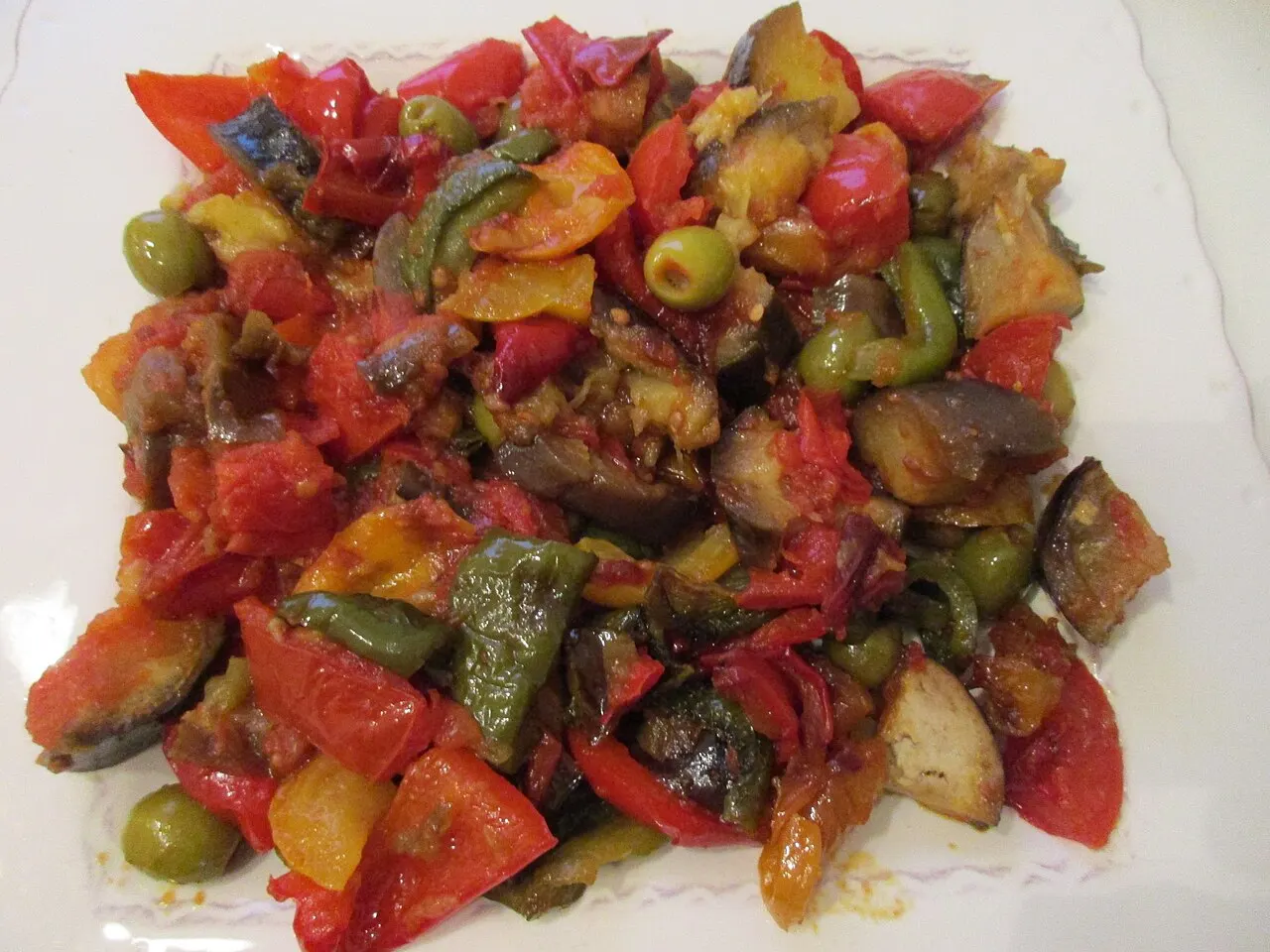
Le carnet de Mamie Jo
Ratatouille
- auberginesaubergines2
- courgettescourgettes3
- poivrons rouges et jaunespeppers2
- tomates bien mûrestomatoes800 g
- oignonsonions2
- gousses d’ailgarlic3
- huile d’oliveolive oil10 cl
- thym et laurierthyme, bay1
- basilicbasil1
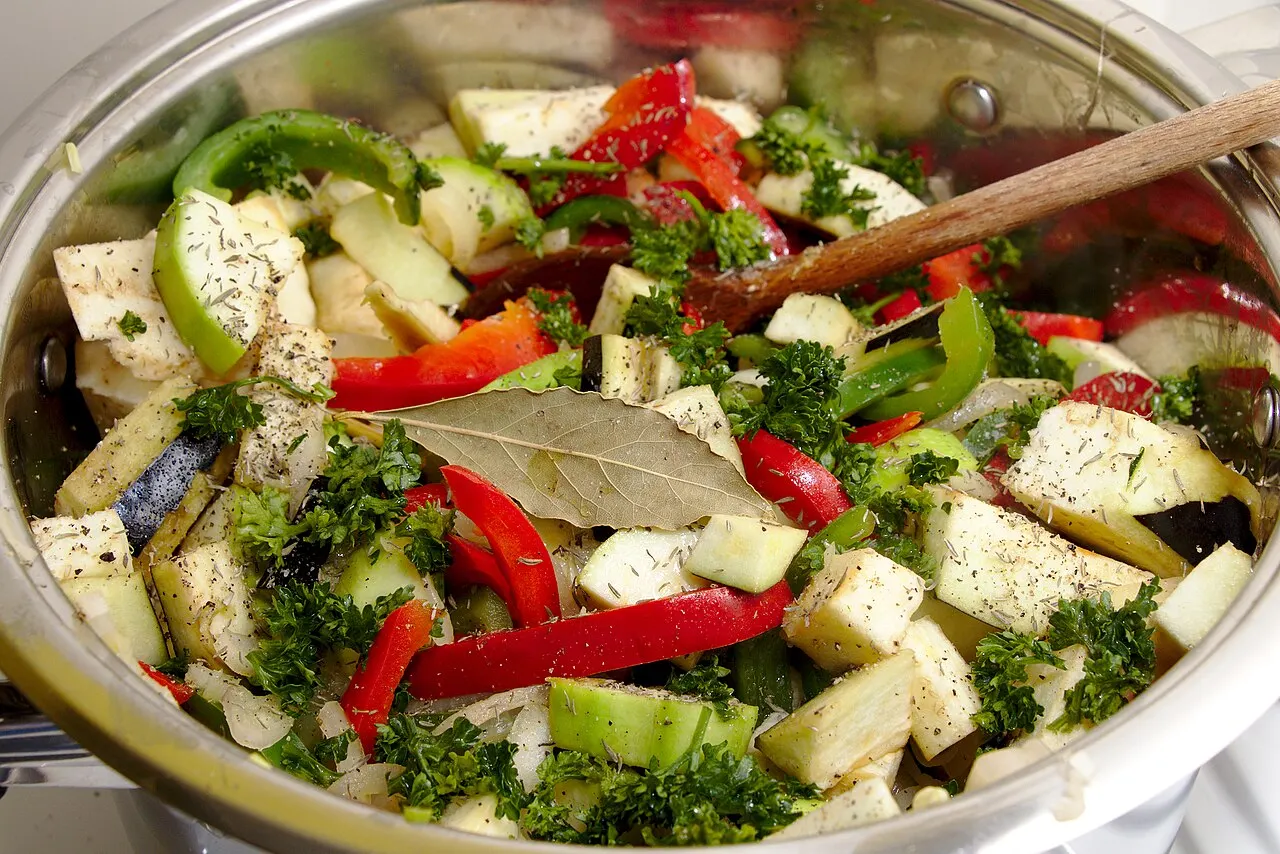
- Couper tous les légumes en dés de 2 cm.Cut all the vegetables into 2 cm chunks. Keep each one apart.
- Faire revenir les aubergines à l’huile d’olive, puis les réserver.Fry the aubergines in olive oil until golden. Set them aside.
- Faire de même avec les courgettes, puis les poivrons.Do the same with the courgettes, then the peppers, adding oil as needed.
- Faire fondre les oignons, ajouter l’ail et les tomates. Cuire 10 minutes.Soften the onions, add the garlic and tomatoes, and cook for ten minutes into a sauce.
- Réunir tous les légumes, ajouter le thym et le laurier. Laisser mijoter 40 minutes à découvert.Put everything together with the thyme and bay. Simmer uncovered for forty minutes, stirring now and then.
- Ajouter le basilic hors du feu.Tear the basil over the top once it is off the heat.
Chaude, tiède ou froide.
Shopping list
Ratatouille, for 6
An hour and a half, mostly simmering
- Chop15 min
- Fry each vegetable20 min
- Tomato sauce10 min
- Simmer together40 min
- Rest10 min
hands onwaiting95 min in all
Watery, a brown mush, or flat
- It is watery
Everything went into the pot raw. Frying first drives the water off. Simmer without a lid.
- It is a brown mush
The chunks were too small, or it was stirred too much. Two centimetres, and stir gently.
- The aubergine drank all the oil
It always does at first, then gives it back. Do not keep adding more.
- It tastes flat
Winter vegetables. Salt each vegetable as you fry it, and add a splash of vinegar at the end.
When to make it
Worth making from July to September, when aubergines, courgettes, peppers and tomatoes are all grown outdoors in France.
The trade body’s season calendar puts all four vegetables at the heart of their season from May to August; cooks in Provence wait for July, when they come from open fields. In June and October you will find them, at a price. From November to May they come from heated greenhouses or from Spain and Morocco and the dish is a shadow of itself: make something else.
Ratatouille and its cousins
Four dishes that get confused
- Nice and Provencela ratatouille
Chunks, fried apart, stewed together. This recipe.
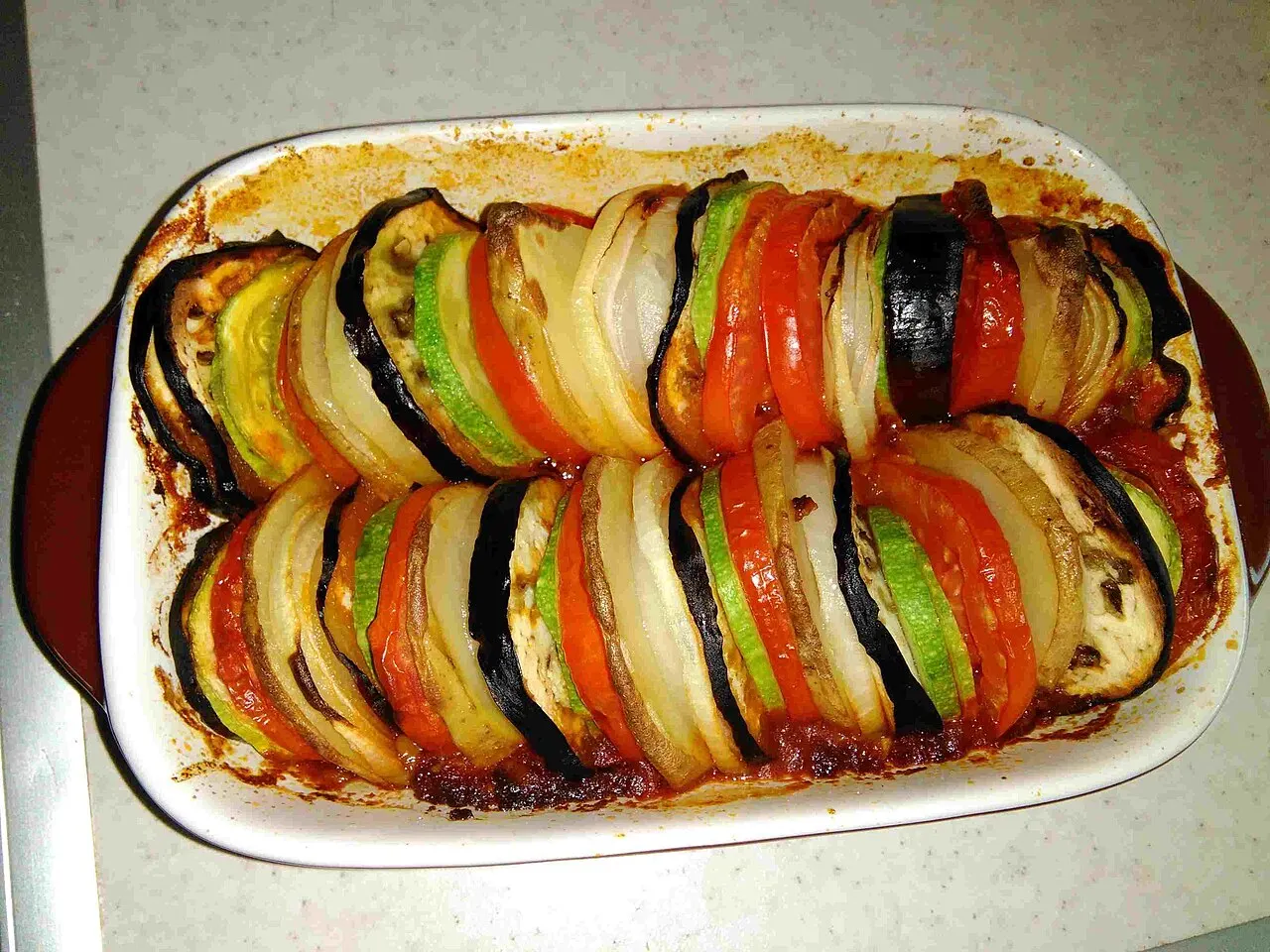
a stew - Provencele tian
Thin slices standing in rows in an earthenware dish, baked for an hour.
baked - A chef’s versionle confit byaldi
Paper-thin slices in a spiral over a pepper sauce. The one drawn in the animated film.
restaurant - The Basque countryla piperade
Peppers, tomatoes and onions with Espelette pepper, often with eggs.
no aubergine
Better the next day, and what to do with the rest
- The day before
Better the next day, like most stews. Reheat gently or serve at room temperature.
- Keeping it
Four days in the fridge. It freezes well for three months.
- Leftovers
Cold on toast, under a fried egg, stirred into pasta, or folded into an omelette.
Checked 19 November 2026. Seasons read on Interfel’s calendars for aubergine, courgette, pepper and tomato: all four are at the heart of their season from May to August, aubergine until September. "July to September" is this page’s own advice, for vegetables grown outdoors. Frying each vegetable separately is the method cooks in Nice and Provence defend; it is a habit, not a rule.