Enrolling a child in a French school: the steps, the documents and the dates
School is compulsory from three in France and enrolment starts at the town hall, not the school. Which school for which age, the two-step sign-up and the papers to bring.
School is compulsory from age three to sixteen, and free. For nursery and primary you register first at the mairie, which assigns a school by address, then at the school itself. A child who speaks no French is still enrolled at once.
Yellow the idea to rememberBlue French to learn
Which school for which age
My child is…
3 to 5
Nursery school
l’école maternelle
Compulsory from the September of the year a child turns three. Three classes: petite, moyenne and grande section. Play, language, drawing, and a nap after lunch for the youngest.
- Enrol at
- The mairie, then the school.
- Day
- About 8.30 to 4.30, four days a week in most towns.
- No French yet
- Children this age pick it up in months. No test, no delay.
💬« Mon fils entre en petite section. » My son is starting the first nursery class.
6 to 10
Primary school
l’école élémentaire
Five years: CP, CE1, CE2, CM1, CM2. Reading starts in CP. One teacher for everything, called le maître or la maîtresse.
- Enrol at
- The mairie, then the school.
- Support
- A newly arrived child joins an ordinary class and gets extra French in a unit called UPE2A.
- Lunch
- The canteen is run by the town and priced by income.
💬« Ma fille est en CE1. » My daughter is in the second year of primary.
11 to 14
Lower secondary
le collège
Four years, counted downwards: sixième, cinquième, quatrième, troisième. A different teacher for each subject, and a first national exam at the end, le brevet.
- Enrol through
- The département’s education office, the DSDEN, which tests level and assigns a school.
- Languages
- A second foreign language starts in cinquième.
💬« Il passe en sixième à la rentrée. » He starts secondary school in September.
15 to 17
Upper secondary
le lycée
Three years: seconde, première, terminale, ending with le baccalauréat. Students choose a general, technological or vocational route after the first year.
- Enrol through
- The DSDEN or the information centre, the CIO.
- After 16
- School is no longer compulsory, but training of some kind is, until 18.
💬« Elle est en première, elle passe le bac de français. » She is in the second-last year and takes the French exam.
Under 3
Not school yet
la crèche, l’assistante maternelle
Before three there is no right to a place. Options are a nursery, une crèche, with long waiting lists, or a registered childminder, une assistante maternelle.
- Ask at
- The mairie’s early-years desk, le relais petite enfance.
- Help
- The CAF pays part of the cost.
💬« Je cherche une place en crèche. » I am looking for a nursery place.
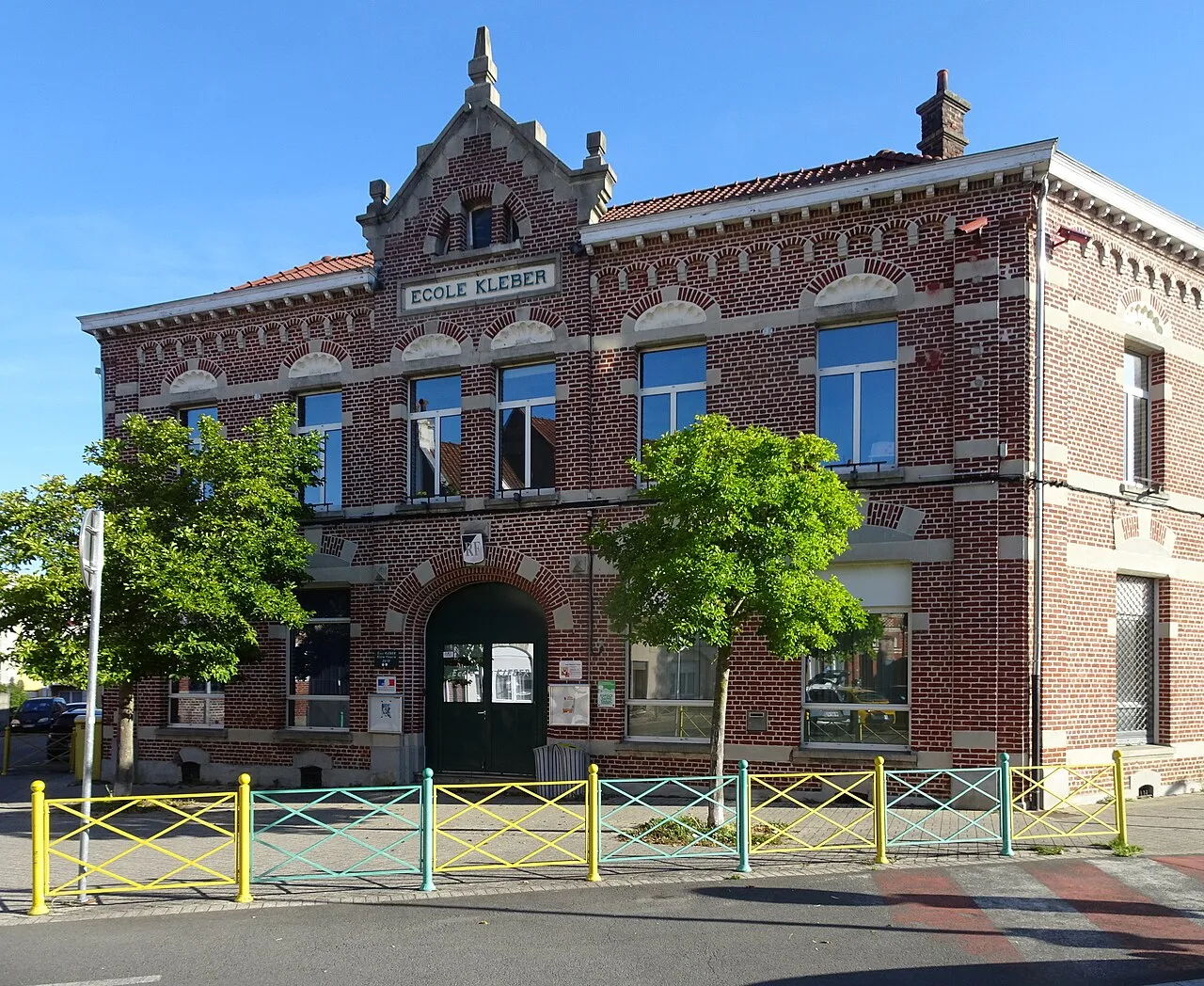
The steps
Inscription à l’école
Step one: the town hallas soon as you have an address
Step two: the schoolwith the certificate
For collège and lycéeage 11 and over
A week at a French primary school
- Four days in most towns
Monday, Tuesday, Thursday and Friday. Wednesday is free, or a morning only where the town has kept the four-and-a-half-day week.
- Long days
About 8.30 to 4.30, with a lunch break of an hour and a half to two hours. Twenty-four hours of lessons a week.
- La cantine
A hot three-course lunch, priced by family income from under a euro to several. You sign up at the town hall, not the school.
- Before and after
La garderie in the morning, l’étude or le périscolaire after 4.30, until about 6.30. Run by the town and paid for separately.
- Wednesday
The day for sport, music and the centre de loisirs. Clubs enrol in early September and fill within days.
Who is who
| French | Role |
|---|---|
| le directeur, la directrice | The head of a nursery or primary school, who usually also teaches a class. |
| le maître, la maîtresse | What children call their teacher. Officially professeur des écoles. |
| l’ATSEM | The classroom assistant in nursery school, employed by the town. |
| l’AESH | A support assistant for a pupil with a disability. |
| le principal, le proviseur | The head of a collège; the head of a lycée. |
| le CPE | In secondary school, the person in charge of attendance and discipline: your first contact. |
| les parents délégués | Parents elected each October to sit on the school council. |
If your child does not speak French yet
Schools are used to this and there is a set route. Your child is assessed, in their own language where possible, by the education authority’s service for newly arrived pupils, le CASNAV. They then join an ordinary class of their age and leave it for several hours a week of intensive French in a small group, called UPE2A. Most children follow lessons unaided within a year. Keep speaking your own language at home: teachers will tell you the same.
The paperwork that comes home
- Le cahier de liaison
A notebook that travels in the school bag. Every note from the teacher must be signed by a parent, the same evening.
- Pronote and the ENT
From collège on, marks, homework and absences appear in an app. Log in weekly.
- Les réunions
A class meeting for all parents in September, then individual appointments. Go to the first: it is where the year is explained.
- The two exams
Le brevet at the end of troisième, at about fifteen; le baccalauréat at the end of terminale.

Good to know
- The year starts in September
La rentrée is in the first days of September. Enrolment for it opens at the mairie between January and spring.
- The school day
About 8.30 to 4.30, with a long lunch. Many primaries have no class on Wednesday.
- The supplies list
Each class sends une liste de fournitures in June. Supermarkets sell them all in August.
- School insurance
L’assurance scolaire is needed for outings and the canteen. A few euros a year, often already in your home insurance.
Which class is which
Which class will my child be in?
| France | Age in September | England | United States |
|---|---|---|---|
| l’école élémentaire primary | |||
| CP | 6 | Year 2 | 1st grade |
| CE1 | 7 | Year 3 | 2nd grade |
| CE2 | 8 | Year 4 | 3rd grade |
| CM1 | 9 | Year 5 | 4th grade |
| CM2 | 10 | Year 6 | 5th grade |
| le collège lower secondary | |||
| sixième (6e) | 11 | Year 7 | 6th grade |
| cinquième (5e) | 12 | Year 8 | 7th grade |
| quatrième (4e) | 13 | Year 9 | 8th grade |
| troisième (3e) | 14 | Year 10 | 9th grade |
French classes go by calendar year of birth, so a child born late in the year may sit one class higher than at home.
Marks out of twenty
Reading a French school report
- 0 – 10insuffisantbelow the pass mark
- 10 – 12passablea pass
- 12 – 14assez bienfairly good
- 14 – 16biengood
- 16 – 20très bienvery good
Ten is the pass mark. Marks above 16 are rare, and 20 almost unknown in essay subjects.
Reading the school report
A first-term report in collège
| Matière | Élève | Classe | Appréciation |
|---|---|---|---|
| FrançaisFrench | 11,5 | 12,1 | Des progrès. Poursuivez vos efforts.Improving; keep going. Neutral to warm. |
| Mathématiquesmaths | 15 | 11,8 | Très bon trimestre.High praise: teachers rarely gush. |
| Histoire-géographiehistory and geography | 9 | 11 | Peut mieux faire.“Could do better”: capable, not working. |
Marks are out of 20; ten is the pass mark and the class average usually sits near 11 or 12.
The canteen menu
A primary-school week
Carottes râpées
Poulet rôti, haricots verts
Yaourt
Pomme
Betteraves
Gratin de pâtes
Fromage
Compote
Salade verte
Poisson pané, riz
Fromage
Clémentine
Potage
Omelette, ratatouille
Yaourt
Gâteau maison
- entrée, plat, laitage, dessert Four courses, every day: starter, main, dairy, pudding.
- menu végétarien At least one meatless day a week, by law.
A typical week. Many primaries have no school on Wednesday.
Official
- Service-Public: enrolling at primary schoolThe procedure and the documents.service-public.gouv.frsite officiel
- Education ministry: newly arrived pupilsSupport for children who do not yet speak French.education.gouv.frsite officiel
- School holidays by zoneThe official calendar.education.gouv.frsite officiel