Épiphanie, Chandeleur and Mardi gras: three winter feasts and what to eat at each
January to March in France is marked by three feasts and three foods: the galette des rois, crêpes on 2 February and doughnuts for Mardi gras. The dates for 2027, the customs, the carnivals.
A cake with a charm in January, crêpes on 2 February, and fried doughnuts and carnival for Mardi gras. None is a public holiday. In 2027: Epiphany is kept on Sunday 3 January, Chandeleur falls on Tuesday 2 February, and Mardi gras on Tuesday 9 February.
Yellow the idea to rememberRed watch out
The three dates
| Feast | In 2027 | Rule | On the table |
|---|---|---|---|
| l’Épiphanie | Sunday 3 January | 6 January; kept in France on the first Sunday of the year after 1 January | la galette des rois |
| la Chandeleur | Tuesday 2 February | Always 2 February, forty days after Christmas | les crêpes |
| Mardi gras | Tuesday 9 February | 47 days before Easter, so it moves | les beignets, les bugnes, les gaufres |
| le mercredi des Cendres | Wednesday 10 February | The next day: Lent begins | — |
| Pâques | Sunday 28 March | Easter | l’agneau, le chocolat |
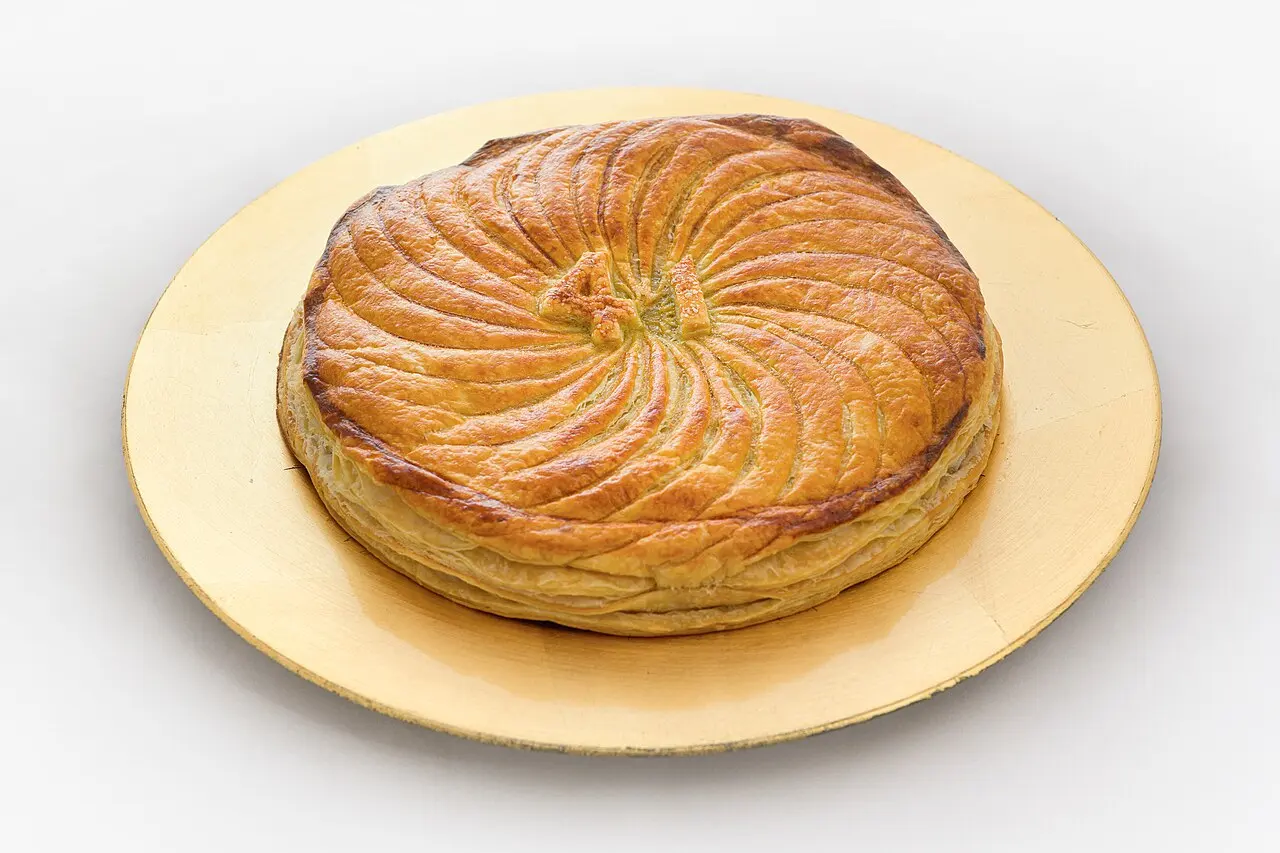
Épiphanie: the galette
- 1The youngest hides under the table
- 2A slice is cut for each guest
- 3The child calls out who gets it
- 4Whoever finds la fève is crowned
The feast marks the visit of the three kings. The cake is sold from late December to the end of January and is eaten again and again: at home, at school, at the office, where whoever finds the charm buys the next one. North of the Loire it is puff pastry filled with almond cream; in the south, a crown of brioche with candied fruit. The recipe and the rules of the game are in our galette guide.
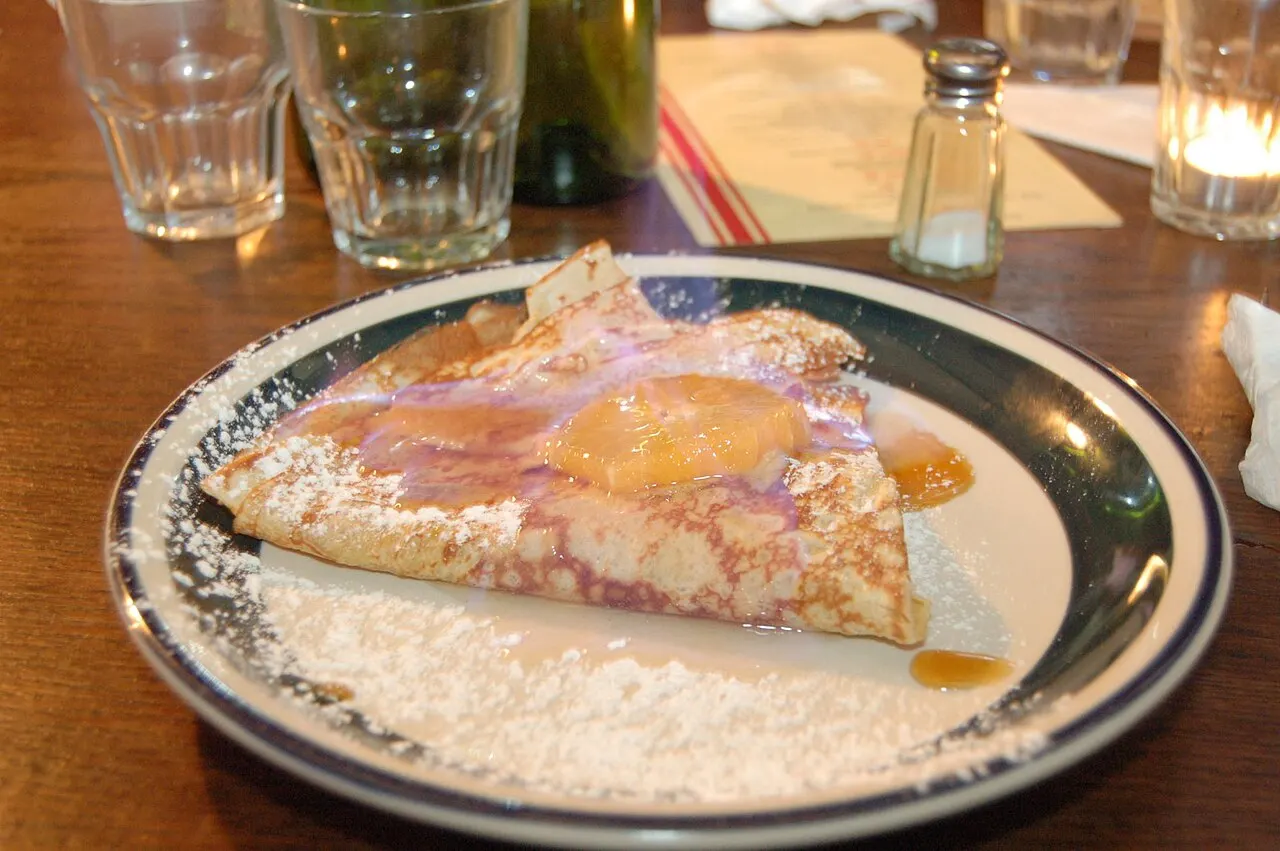
La Chandeleur: crêpes
La Chandeleur, 2 February
Candlemas: candles blessed in church forty days after Christmas.
Before that, a Roman festival of light at the end of winter.
Round golden pancakes stood for the returning sun, and used up the last of the old flour.
Crêpes for dinner, savoury then sweet.
Flip the first one with a coin in your other hand, for luck with money in the year.
Supermarkets pile up flour, eggs, cider and chocolate spread from mid-January.
What goes on them
- beurre-sucre butter and sugarclassic
The plainest and the favourite.
- sucre-citron sugar and lemonclassic
A squeeze of juice.
- confiture, miel jam, honeyhome
Whatever is in the cupboard.
- pâte à tartiner chocolate spreadchildren
What children ask for.
- jambon-fromage ham and cheesesavoury
To start, on a buckwheat galette in Brittany.
With cider served in bowls. The batter and the method are in our crêpe recipe.
Mardi gras: doughnuts and carnival
“Fat Tuesday” is the last day before the forty lean days of Lent, when butter, eggs and fat were used up. Hence the fried pastries, different in every region, and the carnivals. Children go to school in fancy dress, and bakeries fill with doughnuts for a fortnight.
The same idea, by region
- Lyon and the Rhôneles bugnes
Thin, crisp ribbons of fried dough under icing sugar.
Lyon - Provenceles oreillettes
Paper-thin, flavoured with orange-flower water.
south - The south-westles merveilles
Twisted and fried.
south-west - The northles gaufres, les crêpes
Waffles, and in Dunkirk, herrings thrown from the town hall.
north - Alsaceles beignets de carnaval
Round doughnuts filled with jam.
east - Everywhereles beignets
Plain or filled doughnuts, at any bakery.
bakeries
Carnivals worth the journey
- le carnaval de Nice NiceFebruary
Two weeks of parades of giant floats and battles of flowers on the seafront. Ticketed stands; book ahead.
- le carnaval de Dunkerque DunkirkJanuary to March
Weeks of bands in fancy dress singing through the streets. Free, loud and friendly.
- la fête du citron, Menton MentonFebruary
Sculptures built from tonnes of lemons and oranges.
- le carnaval d’Annecy Annecylate winter
Silent Venetian masks by the lake.
- le carnaval de Limoux LimouxJanuary to March
The longest in the world: every weekend from January to March.
And the rest of the winter
January to April by what people do
- Januaryla galette des rois
A charm hidden in a cake; the finder is crowned. Greetings all month.
- Februaryla Chandeleur
Crêpes on the 2nd.
- Februaryla Saint-Valentin
The 14th: a dinner for two. Not for friends or children.
- February or MarchMardi gras
Doughnuts and fancy dress.
- Marchla fête des grands-mères
Grandmothers’ day, the first Sunday.
- Aprille poisson d’avril
On the 1st, a paper fish stuck on someone’s back.
- March or AprilPâques
Chocolate eggs hidden in the garden, brought by the church bells. Easter Monday is a holiday.
- Not public holidays
Shops, schools and offices are open on all three days.
- School holidays
The winter break falls in February or early March, by zone, and often covers Mardi gras.
- At work
Expect a galette in January and someone bringing crêpes in February. Taking your turn is appreciated.
- Say
Bonne année ! until 31 January. Nothing special for the other two.
| French | English |
|---|---|
| tirer les rois | to share the galette |
| la fève | the charm in the cake |
| faire sauter les crêpes | to toss pancakes |
| se déguiser, un déguisement | to dress up, a costume |
| un char | a carnival float |
| des confettis | confetti |
| le Carême | Lent |
| faire gras | to eat richly before the fast |
Checked 20 November 2026. The 2027 dates were worked out from the calendar: Epiphany is kept on the first Sunday of January, Chandeleur is always 2 February, and Mardi gras falls 47 days before Easter, which is 28 March in 2027. Recipes and names for the fritters change from one region to the next.