Which French office do I need? Préfecture, mairie, CAF and CPAM, sorted by task
French paperwork is split between offices with similar names. Pick what you need to do and see which office handles it, its website, and the document to have ready.
Each French office does one thing. The mairie is your town, the préfecture is the state, CPAM is health cover, CAF is family and housing benefits. Most steps now start online, and one desk, France Services, helps with all of them.
Yellow the idea to rememberBlue French to learn
What do you need to do?
I need to…
Get or renew a residence permit
The préfecture, online first
la préfecture
Applications go through the ANEF portal; the préfecture then calls you in for fingerprints and to collect the card.
- When
- Two to four months before your current permit runs out. Late applications cost a fine.
- What you get first
- Une attestation de prolongation, a document that keeps your rights while you wait.
- Cost
- A tax stamp, un timbre fiscal, bought online.
- Have ready: passport, proof of address, photos with an e-photo code.
💬« Je viens pour le renouvellement de mon titre de séjour. » I am here to renew my residence permit.
Get a health card
CPAM, through ameli
la CPAM, l’Assurance Maladie
Your local health-insurance office gives you a social security number and the carte Vitale. Start at ameli.fr.
- When
- After three months of stable residence, or from day one if you work.
- What you get first
- A temporary number and une attestation de droits, enough to be reimbursed.
- Then
- Choose a GP, un médecin traitant, or you are refunded less.
- Have ready: birth certificate, ID, bank details (RIB), proof of address.
💬« Je voudrais ouvrir mes droits à l’Assurance Maladie. » I’d like to register for health insurance.
Claim housing or family benefit
CAF
la CAF
The family benefits office pays housing aid, les APL, and child benefit. Everything is on caf.fr.
- When
- As soon as you sign a lease: housing aid is not backdated.
- First
- Use the simulator on the site to see what you could receive.
- Then
- Declare your income every three months.
- Have ready: your lease, income for the last two years, RIB.
💬« Je voudrais faire une demande d’aide au logement. » I’d like to apply for housing aid.
Register a birth, marry, enrol a child
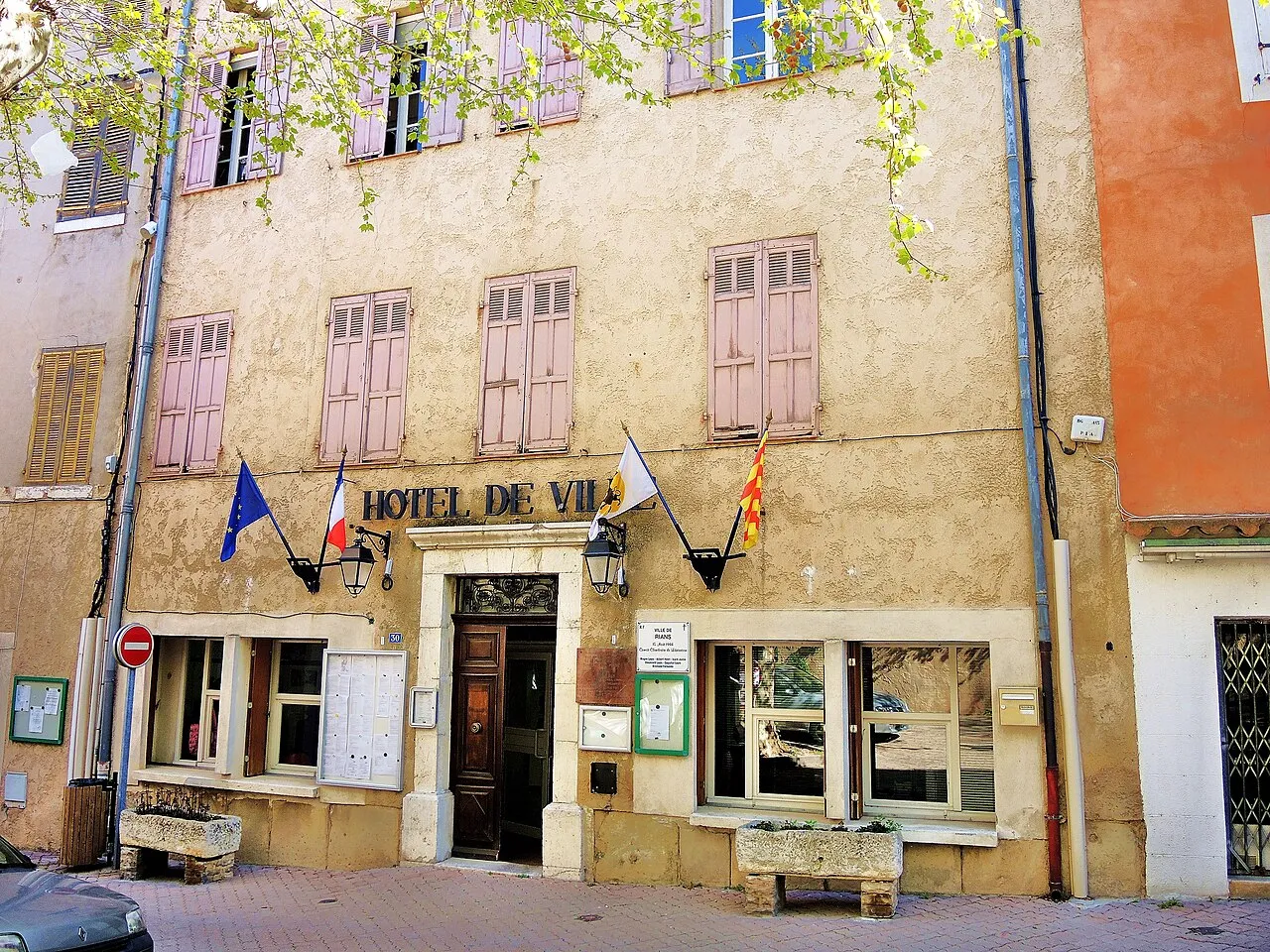
The mairie
la mairie
Your town hall keeps civil records, registers children for school and takes ID-card and passport applications for French citizens.
- When
- A birth must be declared within five days.
- Hours
- Mornings and afternoons, often closed for lunch; many take appointments online.
- Also
- School canteen, sports halls, parking permits, voting registration for citizens.
💬« C’est pour une inscription scolaire. » It is to register a child for school.
Sort out taxes
The tax office
le centre des impôts
Declare every spring, even with no income, on impots.gouv.fr. Your first return is on paper.
- When
- Declare in April to June for the previous year.
- First time
- Ask the tax office for a tax number, un numéro fiscal, to open your online account.
- You get
- Un avis d’imposition: the paper every landlord and office asks for.
💬« Je voudrais obtenir un numéro fiscal. » I’d like to get a tax number.
Exchange a licence or register a car
ANTS, online only
l’ANTS
Driving licences and registration certificates are handled by the ANTS website. No counter exists.
- Covers
- Driving licences, and the registration certificate, la carte grise.
- Beware
- Look-alike paid sites. The real one ends in .gouv.fr and charges only the official tax.
- You need
- A photo code from a booth marked agréé ANTS.
💬« J’ai fait ma demande sur le site de l’ANTS. » I applied on the ANTS website.
Look for work or claim unemployment
France Travail
France Travail
The job centre, formerly Pôle emploi. Register on francetravail.fr.
- When
- The day after your contract ends: benefit starts from registration.
- You need
- The employer’s certificate, l’attestation employeur.
- Then
- Confirm your situation every month, l’actualisation.
💬« Je voudrais m’inscrire comme demandeur d’emploi. » I’d like to register as a job seeker.
I am lost
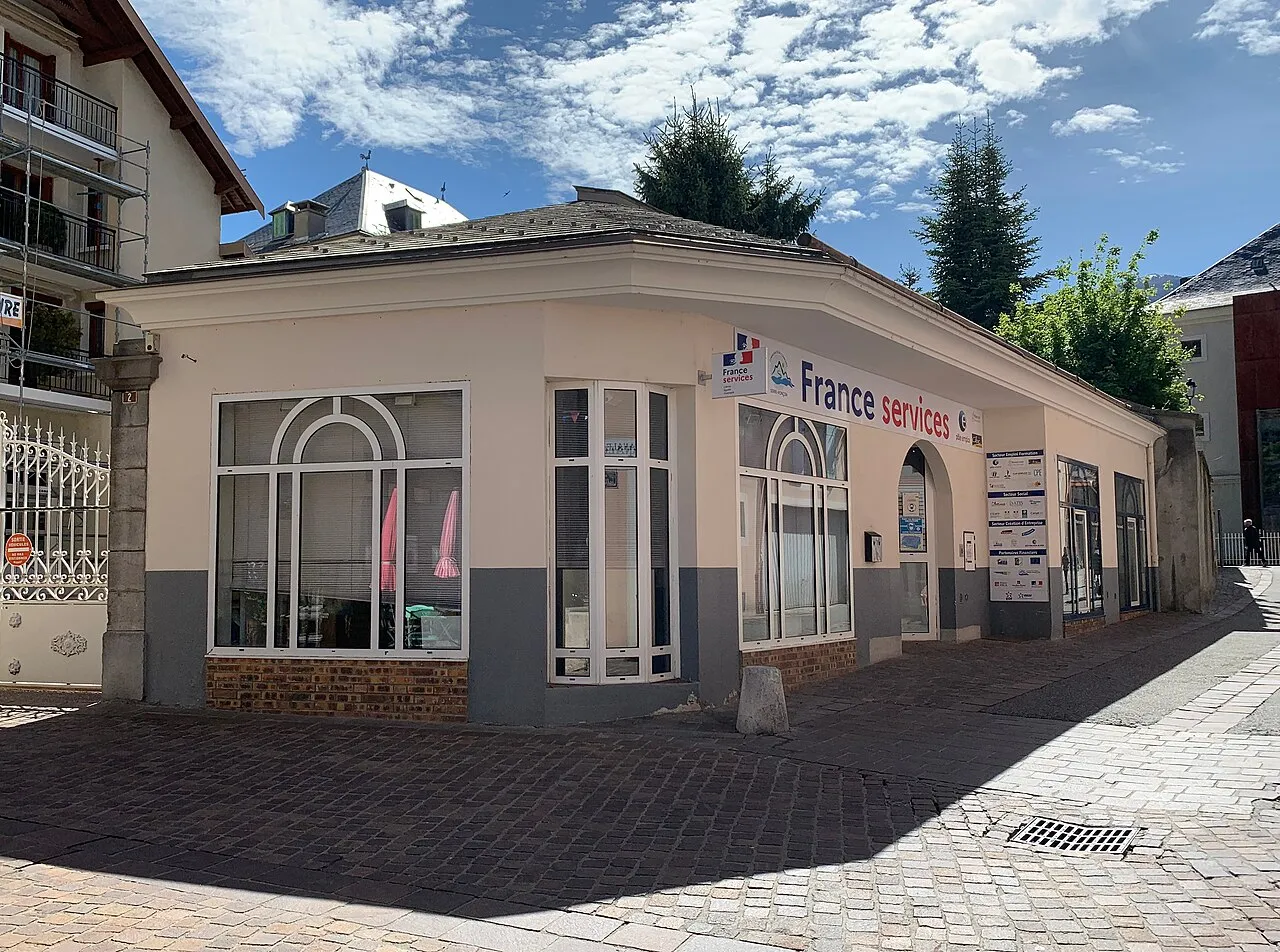
France Services
une maison France Services
A local desk where an adviser helps with any of the above, free, and lends a computer. Find the nearest.
- Cost
- Free, no appointment needed in most.
- They have
- Computers, a scanner, and advisers trained on nine public services.
- Language
- Bring a French-speaking friend if you can; advisers are patient but work in French.
💬« J’ai besoin d’aide pour une démarche en ligne. » I need help with an online procedure.
Eight more offices you will meet
| French | What it handles |
|---|---|
| France Travail | Job seekers and unemployment benefit. Called Pôle emploi until 2024. |
| l’Urssaf | Collects social contributions. Your contact if you are self-employed. |
| le centre des impôts | Income tax and local taxes, mostly through impots.gouv.fr. |
| la sous-préfecture | A local branch of the préfecture in smaller towns. |
| le conseil départemental | Social assistance, help for the elderly and disabled, and middle schools. |
| la MDPH | Disability rights and allowances. |
| le tribunal judiciaire | The court: also where some certificates and nationality files are handled. |
| La Poste | Beyond letters: identity checks for online services, and banking. |
France Services: one desk for all of them
If the websites defeat you, this is the place to go. There are more than 2,700 France Services desks, in town halls, post offices and buses that tour villages, so that almost everyone has one within half an hour. Two trained staff sit down with you, in person and for free, and help you file with the tax office, CAF, CPAM, France Travail, the pension funds and the driving-licence agency. They cannot decide your case, and they know who can.
Writing to an office
- Start and end by the book
Open with Madame, Monsieur, and close with Je vous prie d’agréer, Madame, Monsieur, l’expression de mes salutations distinguées. It reads as stiff and it is simply correct.
- Put your number at the top
Your file, benefit or social security number above the first line. Without it the letter cannot be matched to you.
- Send it recorded
En recommandé avec accusé de réception: the signed slip that comes back is your proof of the date.
- Two months of silence
As a general rule, an office that has not replied within two months is deemed to have said yes. The exceptions are many, residence permits among them, so treat it as a reason to chase, not to assume.
What every office asks for
- Un justificatif de domicile
Proof of address under three months old: an electricity bill, a rent receipt, or a letter from your host with their ID.
- Un RIB
Your bank details on one page, downloadable from your banking app.
- Photos d’identité
Booth photos to the official format. For online applications, the booth prints un code e-photo.
- FranceConnect
One login for every public website, using your tax or ameli account.
- Keep copies
Send copies, never originals, and keep a scan of everything. Files get lost.
- Recommandé avec accusé de réception
A registered letter with proof of delivery: the only way to prove you sent something.
The block every form starts with
The identity block that opens almost every form
Four numbers every office asks for
Four numbers worth keeping in your phone
numéro fiscal tax number
13
Top of any tax notice. It is your login on impots.gouv.fr.
numéro de sécurité sociale social security number
15
On your carte Vitale and every payslip.
numéro d’allocataire CAF number
7
On letters from the family benefits office.
IBAN bank account
27
On your RIB. A French IBAN starts with FR.
Press 1, press 2
Most offices answer the phone with a menu first.
Calling a public helpline
39 39 Allô Service Public, weekdays
- 1« Pour une question sur vos papiers, tapez 1 »
Identity papers, driving licence, vehicle registration.
- 2« Pour le logement, tapez 2 »
Housing and rent.
- #« Pour réécouter, tapez dièse »
To hear the menu again: dièse is the hash key, étoile the star.
An illustration of how such menus are worded; the real options change.