How to order in a French restaurant, from the door to the bill
The whole meal in order: waiting to be seated, the questions the waiter asks, how to order courses and water, how to get the bill, and the sentences for each moment.
Say bonjour, wait to be seated, order everything except dessert at once, and ask for the bill when you want it. The bill never comes unasked: bringing it would be telling you to leave.
Yellow the idea to rememberBlue French to learnRed watch out
The meal, in the order it happens
- 1l’apéritifa drink first
- 2l’entréethe starter
- 3le platthe main
- 4le fromagecheese
- 5le dessertdessert
- 6le caféafter, never with
- 7l’additiononly when you ask
What you do at each moment
- At the doorGreet, give the number, wait Bonjour, une table pour deux, s’il vous plaît.
Do not sit down unasked, except on a café terrace. With a booking: J’ai réservé au nom de…
- Sitting downThe menu, and often a question about a drink Vous désirez un apéritif ?
Yes or no are both fine. Une carafe d’eau can be asked for now.
- OrderingStarter and main together En entrée, je vais prendre… et ensuite…
Dessert is ordered later, when the plates are cleared.
- The meatSay how cooked À point, s’il vous plaît.
Bleu, saignant, à point, bien cuit. French à point is medium-rare elsewhere.
- During the mealCatch the waiter’s eye S’il vous plaît !
Never garçon. Raise a hand a little; they will come.
- After the mainThe dessert menu comes back Vous prendrez un dessert ? Un café ?
Coffee is an espresso, served after dessert.
- The endAsk for the bill L’addition, s’il vous plaît.
Pay at the table by card; the machine is brought to you. In a café, sometimes at the counter.
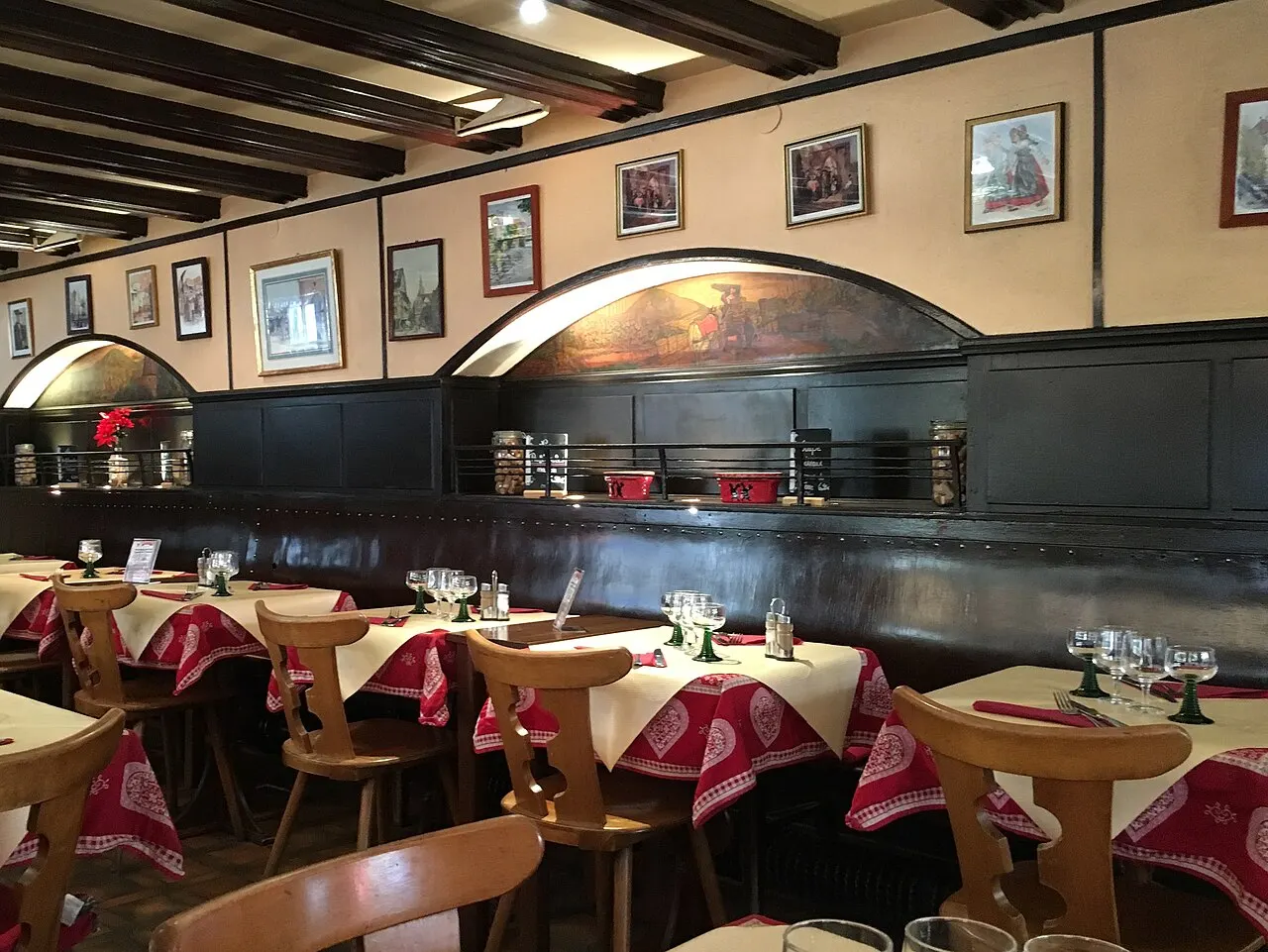
Menu, formule or à la carte
- ①Entrée + platstarter and main
- ②Plat + dessertmain and dessert
- ③Entrée + plat + dessertall three
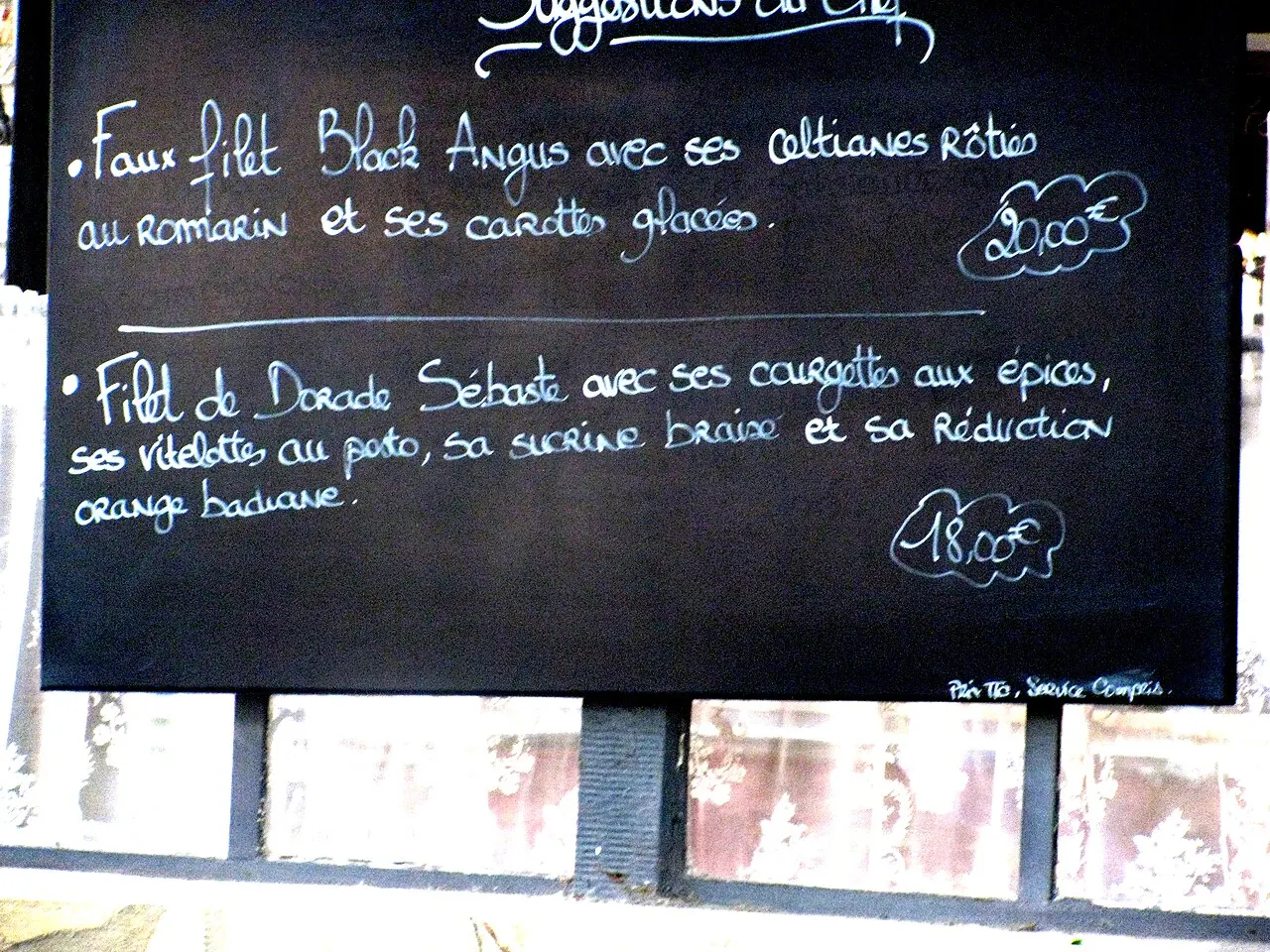
Plat du jour : blanquette de veau
- *Le menu* is not the menu
It is a fixed-price meal. The list of dishes is la carte. Ask for la carte to see everything.
- *La formule*
A shorter fixed-price deal, usually at lunch on weekdays: two courses from a short list.
- *Le plat du jour*
Today’s dish, on the chalkboard. Usually the freshest thing and the best value.
- *À la carte*
Any dish, each at its own price. Always dearer than the menu.
Steak, duck or lamb: how cooked
The waiter will ask: Quelle cuisson ?
You sayBleu, s’il vous plaît.
- What arrives
- Seared for under a minute a side. Warm outside, raw and cool in the middle.
- Good to know
- Common in France and never a strange thing to ask for. One step rarer than anything most English menus offer.
You saySaignant, s’il vous plaît.
- What arrives
- Red and juicy through the middle, warm all the way. The word means “bleeding”.
- Good to know
- What most French diners order, and what a cook assumes for a good cut. If you like medium rare at home, this is the closest.
You sayÀ point, s’il vous plaît.
- What arrives
- Pink in the centre. Usually pinker than an English or American “medium”.
- Good to know
- If you want no red at all, à point will disappoint: ask for bien cuit.
You sayBien cuit, s’il vous plaît.
- What arrives
- Cooked through, brown to the middle.
- Good to know
- Perfectly normal to ask for. For no pink whatsoever, say très bien cuit.
The same four words work for duck breast (magret), lamb and a burger (steak haché).
Water and bread
Both are part of the meal
- une carafe d’eau a jug of tap waterfree
Free, by law, with a meal. Ask for it by name.
- de l’eau plate, de l’eau gazeuse still or sparkling bottled waterpaid
What you get, and pay for, if you say only de l’eau.
- le pain breadfree
Free, refilled on request. It sits on the tablecloth, and there is no butter except with seafood or at breakfast.
Sentences for the awkward moments
- You need more time
« Vous avez choisi ? »
Have you chosen?
« Pas encore, encore deux minutes. »
Not yet, two more minutes.
- You do not know a dish
« Je vous écoute. »
I’m listening.
« C’est quoi exactement, l’andouillette ? »
What exactly is andouillette?
- An allergy
« Tout va bien ? »
Is everything all right?
« Je suis allergique aux fruits à coque. Il y en a dans ce plat ? »
I am allergic to nuts. Are there any in this dish?
- Sharing
« Et pour vous ? »
And for you?
« On va partager une entrée. »
We’ll share a starter.
- Something is wrong
« Ça a été ? »
Was everything all right?
« Excusez-moi, j’avais demandé bien cuit. »
Excuse me, I had asked for well done.
- Separate bills
« Vous réglez ensemble ? »
Are you paying together?
« Séparément, si c’est possible. »
Separately, if possible.
Ça a été ? is a ritual question, asked as the plates go. The expected answer is Très bien, merci. Splitting a bill is easy with cards: each person tells the waiter an amount.
The bill and the tip
- 2 formules midi
- — , —
- 1 carafe d’eau
- 0,00
- 2 cafés
- — , —
Total TTC— , — €
Prix nets · service comprisService compris: the service charge is already in every price. A few coins left on the table are a thank-you, not a duty.
| French | English |
|---|---|
| une réservation | a booking |
| en terrasse, en salle | outside, inside |
| la carte | the list of dishes |
| le plat du jour | today’s dish |
| saignant, à point, bien cuit | rare, medium, well done |
| un supplément | an extra charge |
| l’addition | the bill |
| par carte, en espèces | by card, in cash |
Checked 20 November 2026. Free drinking water on request, prices shown with tax and service included, the menu displayed outside and a bill that must be handed over: all four were read on Service-Public’s page on restaurant rules. The rest of this page is custom, not regulation, and customs vary from a village café to a starred table.