357 pages
Grammar & usage
Build sentences that make sense: articles, negation, pronouns, word order and agreement.
Cheat sheetB1
French object pronoun order: a cheat sheet with y and en
Eight rules for French object pronoun order in statements, negatives and commands. Compare je le lui donne, donne-le-moi, vas-y and donne-m’en.
ArticleB1
Tandis que and alors que: while or whereas?
Read tandis que and alors que as time, contrast or both. Compare preferences and overlapping actions, then test the relationship in four examples.
Gap-fillB2
Faute de: explain what was missing, then complete the report
Faute de means for lack of. Compare noun and infinitive patterns, distinguish a past cause from a future deadline, and complete a six-gap project report.
QuizB2
Ci-joint and ci-inclus agreement quiz: ten formal French sentences
Practise ci-joint and ci-inclus in ten formal messages, distinguishing required agreement, invariable forms and sentences allowing both.
ReadingB2
Ce dont, ce sur quoi, certaines: follow unnamed French references
Read a team update and recover what ce dont, ce sur quoi and certaines refer to. Five questions test explicit information, open details and group size.
DialogueB1
French clarification questions: ask for the missing detail
Practise a French clarification dialogue: identify a person, recipient, quantity or deadline, then repeat the complete instruction to confirm it.
Common mistakesB2
En effet or donc? Four connector mistakes to fix
Use en effet to explain a claim and donc to draw a conclusion. Compare both directions, avoid the en fait trap and test four short French passages.
Practical guideA2
Which French article? Choose the meaning before le, un or du
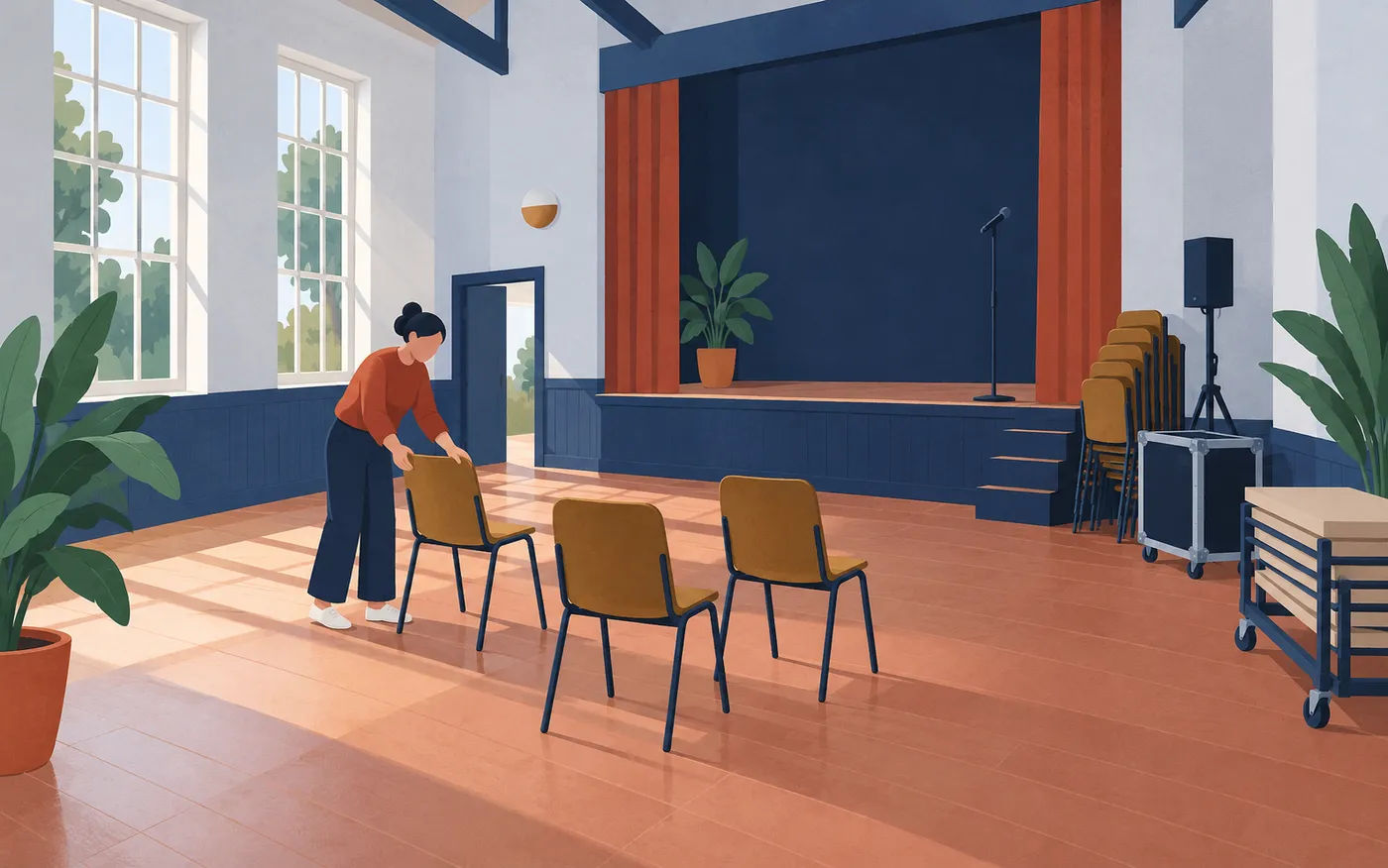
Choose French articles through a café order: a general taste, one serving, an amount or something already known. Includes pictures and four questions.
PhrasebookB1
De quoi + infinitive: ask for what you need in French
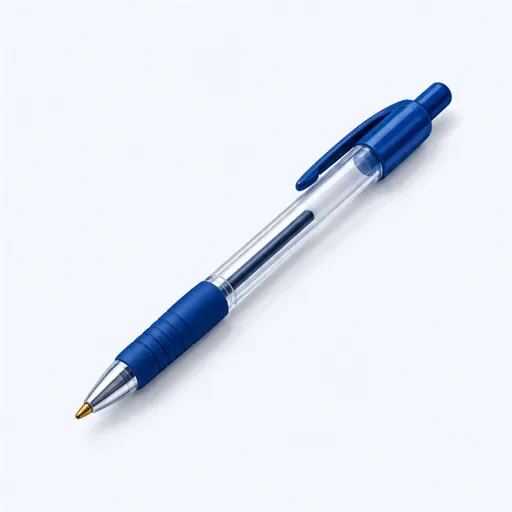
Ask for something to write with, enough to pay or something to eat. Practise avoir de quoi in three short exchanges, with pictures and a quick check.
Sentence builderA2
Build French sentences with adverbs in the right place
J'ai bien mangé, il parle souvent de toi, nous sommes déjà partis: tap the tiles to put French adverbs where they belong, before or after the participle.
Spot the mistakeA1
A flat with two desks: spot the French location error
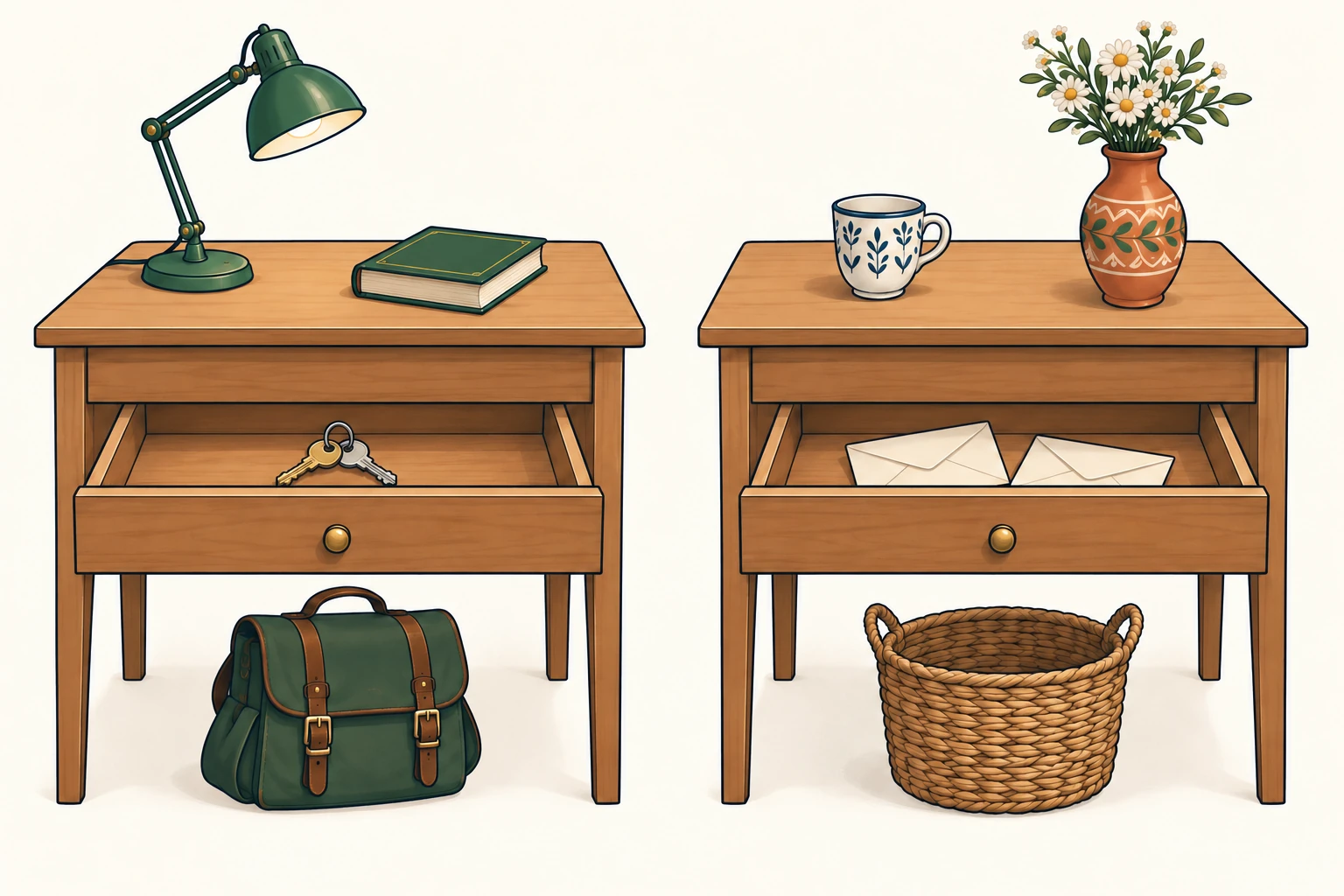
Correct eight French location words using an explicit two-desk layout. Distinguish on, under and inside, with a written key for every object.
Verb drillA2
French compound-tense negation: put pas after the auxiliary
Practise je n’ai pas compris with avoir, être and object pronouns. Then place jamais, rien, personne and aucune in complete past-tense sentences.
Cheat sheetB2
Dès lors que: “once” or “given that” in French
A compact guide to dès lors que: a starting condition, an accepted reason and the indicative. Compare dès que and dès lors, then check four examples.
ArticleA2
Entre or parmi? Compare positions, groups and choices
Explore a park to compare entre and parmi, then use them with groups, choices and pronouns. Learn why entre can connect more than two things.
Gap-fillA1
French A1 gap-fill: a desk beside the window
Practise French place prepositions in a short story about setting up a desk: à côté de, devant, sous, sur, entre, en face de. Fill the gaps and check.
QuizA2
French prepositions quiz: à, de, en, dans, chez, pour and avec
Answer 12 A2 questions on French prepositions for places, transport, time, purpose and company. Every answer includes an explanation and a full example.
ReadingC1
Il ressort de… que: read the evidence, write the conclusion
Read three French scheduling messages and draw a precise conclusion with il ressort de… que. Practise source phrases, en and the singular impersonal verb.
DialogueB1
Tu as acheté quoi ? Ask and clarify in everyday French
Practise a conversation with quoi, où, quand and avec qui. Learn when a final question word asks for a detail, repetition or a surprised confirmation.
Common mistakesB2
French purpose or result? Five mistakes that change the message
Compare pour que, pour and si bien que through five common meaning traps. Check the actors, the subjunctive and whether the text reports success.
Practical guideC1
Formal French connectors: choose the job, then the register
Compare partant, nonobstant, au regard de and il ressort que in a short report. Check their structures, then choose a clear version for an email.
PhrasebookA2
Negative French infinitives: ne pas, ne plus and ne jamais
Learn ne pas oublier, ne plus attendre and ne jamais partager. Read useful requests, compare their meaning and choose the right negative infinitive.
Sentence builderA1
Build French negative sentences: where ne and pas go
Tap the word tiles to build negative French sentences. Ne goes before the verb, pas after it, and pronouns stay inside. Eight sentences to rebuild.
Verb drillA2
French en practice: replace the noun and keep the quantity
Practise j’en ai deux, j’en veux and j’en parle. A worked reference and twelve gaps help you keep quantities and choose en rather than le, la or les.
Cheat sheetA2
Personne and rien: a French word-order cheat sheet
Say nobody and nothing in French. Compare subject and object positions, je n’ai rien vu and je n’ai vu personne, then try five questions.
ArticleB2
La porte est fermée: a state or an action in French?
Compare a closed door with a closing event. Explore a museum entrance, read two short scenes and check how French context separates state from action.
Gap-fillA2
French A2 object-pronoun gap-fill: borrowing a neighbour’s ladder
Fill twelve object-pronoun gaps as a ladder goes from Karim to his neighbour and back. Includes picture vocabulary, a full translation and three questions.
QuizC1
French impersonal conclusions: eight questions on what follows
Test il ressort que, il s’ensuit que and force est de constater que. Eight questions separate source claims, inferences, emphasis and pending results.
ReadingB2
French exception clauses: what changes after à moins que?
Read a short planning note with à moins que and sans que. Separate the default, exception and pending checks, then test your reading in four questions.
DialogueB2
Focus a French paragraph: who, when or what matters?
Follow an editor and writer as they choose a paragraph’s main point. Practise c’est…qui, c’est…que and clear references with three questions.
Common mistakesA2
Le livre or la livre? Four French nouns with two genders
Learn livre, tour, manche and mode through meaning pairs, picture cards and a short quiz. The article can change the meaning of the whole phrase.
Practical guideA1
French adjective agreement: rules, forms and examples
Learn French adjective agreement: feminine and plural endings, irregular forms, colours and position, with examples and a nine-question quiz.
PhrasebookA2
Combien de: ask how many or how much in French
Ask for quantities with combien de and combien d’. Practise shopping, time and prices through short exchanges, picture cards and a four-question check.
Verb drillB2
C’est moi qui ai: practise French pronoun agreement
Practise moi qui ai, toi qui as and nous qui avons. A reference table and two drills separate the stressed pronoun from the verb agreement.
Cheat sheetB1
French location adverbs: dedans, dehors, dessus and dessous
Choose dedans, dehors, dessus or dessous in short French replies. Compare them with dans, sur and sous, then practise locations with picture cards and a drill.
ArticleC1
Eu égard à or au regard de? Two ways to frame a formal judgement
Compare eu égard à and au regard de in short reports. Learn their à/de contractions, noun complements and everyday alternatives, then try four questions.
Gap-fillA2
French determiners in a paragraph: which flat, which objects?
Follow un, le, ce and chaque through a flat viewing, then complete a linked paragraph. Includes a room scene and questions on reference and group size.