228 pages
Articles
Articles for learners of French, from A1 to C2.
All page types 29
Learn and look up
Practise
Play with words
Read real French
Verbs & tensesArticleB1
Can French keep the present after il a dit que?
Compare elle travaille and elle travaillait after a past reporting verb. Read two short exchanges and check what each version tells you about now.
Words & expressionsArticleB1
Augmenter or accroître: describe an increase in French
Compare augmenter and accroître with clear numbers, everyday and formal wording, and the difference between increasing something and a quantity increasing.
Grammar & usageArticleB2
Passive, on or a named subject? Choose what the reader needs
Compare three French versions of the same event, keep a known actor visible, and practise passive agreement without changing who did what.
Pronunciation & listeningArticleA2
Petit ami, grand arbre: French adjective–noun liaison
Practise the linking /t/ in petit ami and grand arbre with IPA examples. Compare singular and plural phrases, h aspiré and the pronounced t in petite.
Culture & registerArticleB2
Demeurer or rester: remain, stay and live in French
Compare demeurer and rester in an unresolved question, a temporary stay and an address. See useful patterns, home vocabulary and three quiz questions.
Verbs & tensesArticleB2
Passé simple or imparfait? Read the events and the background
Read French narrative through paired examples: complete events, ongoing scenes, long durations and repeated visits, with four reading questions.
Words & expressionsArticleB1
Toucher or tâter? Contact, texture and feeling for something
Compare toucher with tâter through scarves, cushions and a coat pocket. Learn au toucher, regular present forms and two wider meanings of toucher.
Grammar & usageArticleC1
À cela près que: "except that", one difference
À cela près que means "except that", "with the one difference that": les deux plans sont identiques, à cela près que… Learn its meaning, register and alternatives.
Pronunciation & listeningArticleA1
French on: the nasal vowel in bon, pont and nom
Meet French /ɔ̃/ in bon, pont and nom. Compare bon with bonne, practise useful phrases, and see what changes in mon oncle and bon ami.
Culture & registerArticleA2
Bon courage or bonne chance? Encourage effort or wish someone luck
Choose bon courage for effort and bonne chance for a hoped-for result. Compare an exam week, useful pour phrases and four questions with feedback.
Verbs & tensesArticleA2
J’ai été or je suis allé? States, visits and French agreement
Compare j’ai été and je suis allé with clear examples of states and visits. Check été, allée and allées, then practise choosing the form the sentence needs.
Words & expressionsArticleB1
Important or grave in French? Significance, seriousness and pitch
Compare important and grave with decisions, serious errors and deep voices. Check adjective agreement and choose the meaning in four short questions.
Grammar & usageArticleB2
Se faire + infinitive: get something done or have something happen
Compare a service you arrange with an event you undergo. Practise se faire in present and past forms, and keep fait unchanged before the infinitive.
Pronunciation & listeningArticleA2
French eu pronunciation: the vowels in peu and peur
Compare rounded /ø/ in peu with /œ/ in peur, read short family examples, explore picture words and check the special pronunciation of eu.
Culture & registerArticleA2
Merci or je vous remercie: how to thank someone in French
Use merci for everyday thanks and je vous remercie for a fuller thank-you. Practise tu/vous, merci de and thanking someone for a completed action.
Verbs & tensesArticleB2
Fatiguant or fatigant? French participles and verbal adjectives
Compare fatiguant les élèves with des journées fatigantes. Check agreement, four spelling pairs and a short editorial scene before a five-question quiz.
Words & expressionsArticleB1
Jeter or se débarrasser de: throw it away or pass it on?
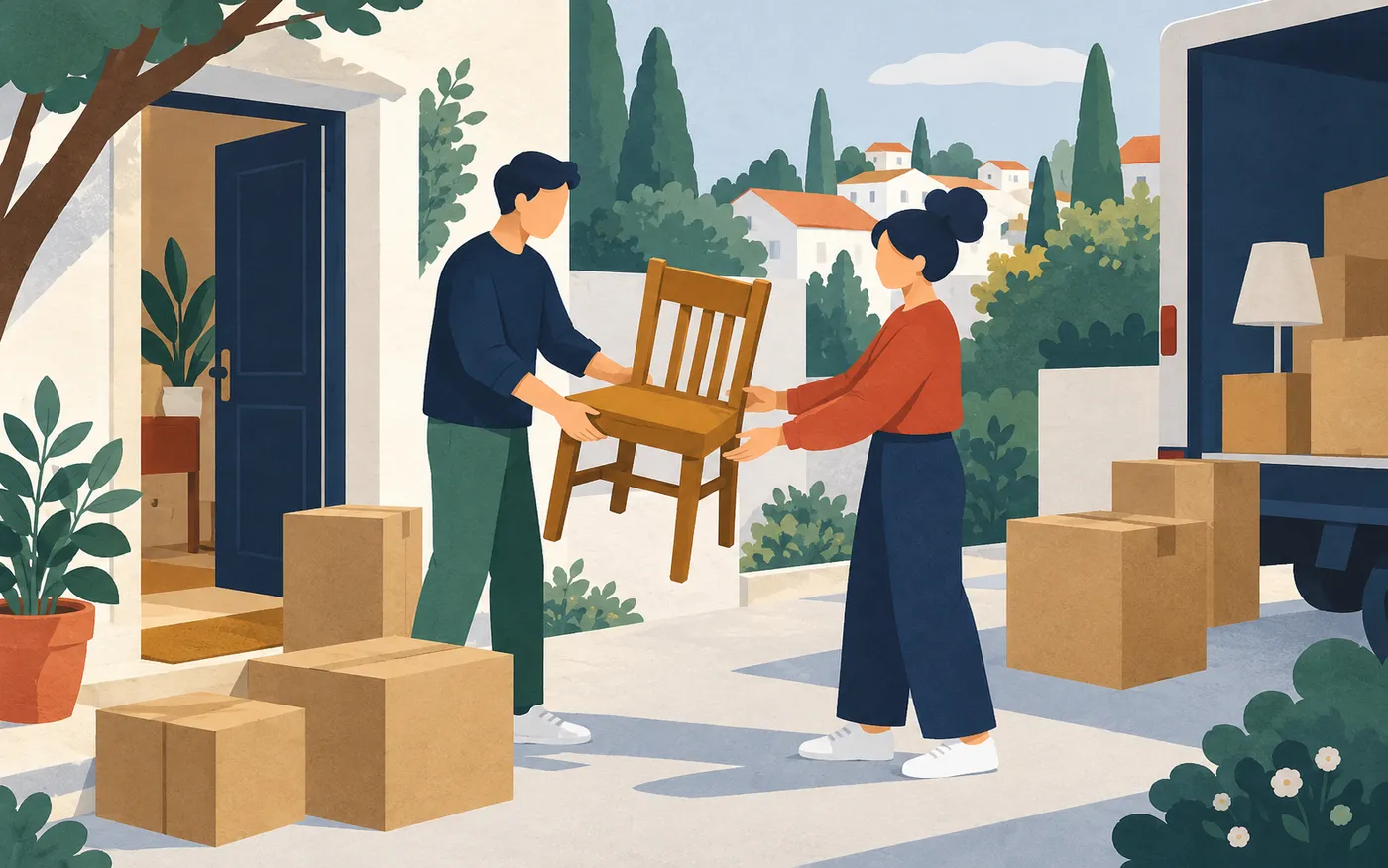
Compare throwing away with getting rid of something by giving or selling it. Practise jeter, se débarrasser de and débarrasser la table in a moving-day scene.
Grammar & usageArticleA2
Chaque or tous les? Every, each and all in French
Compare chaque jour with tous les jours, keep singular and plural agreement straight, and distinguish every day from the whole day with a routine scene.
Pronunciation & listeningArticleA2
Enchaînement or liaison? Compare elle arrive and les amis
Compare an existing /l/ in elle arrive with the linking /z/ in les amis. A short arrival scene and five questions make the difference clear.
Culture & registerArticleA2
À votre santé or à la vôtre? How to toast in French
Say cheers in French: à votre santé, à la vôtre, santé and tchin-tchin, how to answer a toast, and when to use the tu or vous form.
Verbs & tensesArticleA2
Finir de or finir par? Finish an activity or eventually do it
Finir de lire means finish reading; finir par lire means eventually read. Compare one novel, a book-club exchange and four questions on de and par.
Words & expressionsArticleB1
Accrocher or suspendre? Coats, pictures and hanging lamps
See how accrocher and suspendre work with a coat, a picture and a ceiling lamp, then recognise suspendre for a meeting pause. Picture cards and quiz.
Grammar & usageArticleA2
Quel or lequel? Ask “which” and “which one” in French
Compare quel with lequel using clothes, colours and sizes. See all eight forms, make a choice in a shop and test singular and plural agreement.
Pronunciation & listeningArticleB1
French rhythm: what syllable-timed means in real phrases
French rhythm gives syllables a relatively even flow while group endings and emphasis change their length. Compare short phrases and count sounds, not letters.
Culture & registerArticleB1
How to ask for help politely in French
Keep the request the same while changing how you address a friend, a stranger or a colleague.
Verbs & tensesArticleB1
Imparfait or conditional? Compare parlais and parlerais
Tell je parlais from je parlerais with a stem table, a conversation and five questions on past routines, polite requests and si clauses.
Words & expressionsArticleA2
Chaud or chaleureux: a hot drink and a warm welcome
Use chaud for heat and chaleureux for a friendly welcome. Compare drinks, clothing, weather and atmosphere with pictures, a café scene and four questions.
Grammar & usageArticleB1
French passive or on? Put the topic first
Compare on a adopté la proposition with la proposition a été adoptée. Practise choosing a subject, keeping the tense and retaining a named actor.
Pronunciation & listeningArticleB1
Listening to French without translating every word: follow the message
Practise following French in chunks: catch the action, track ça and notice mais. Work through a changed meeting time and a parent’s wish, with a quiz.
Culture & registerArticleB2
Omettre or oublier: leave out a detail or forget it?
Compare omettre and oublier with a missing attachment, a shortened report and a forgotten name. Practise de + infinitive and the forms omis and oublié.
Verbs & tensesArticleA2
Commencer à or se mettre à? Two ways to begin in French
Compare commencer à and se mettre à with present-tense forms, a short exchange and four questions. Keep the pronoun, à and the following infinitive in place.
Words & expressionsArticleB1
Contenir or comprendre: contents, components and understanding
Learn when comprendre means include rather than understand. Compare it with contenir through a course pack, a programme and four practice questions.
Grammar & usageArticleB1
Ce livre se vend bien: when French se has a passive meaning
This book sells well, this fabric washes easily: read the French pronominal passive, match the verb to its subject and compare it with a completed event.
Pronunciation & listeningArticleA2
French accent marks: sounds, spellings and useful examples
Read é, è, ê, ë and ç in familiar French words. Compare pronunciation clues with meaning changes in a/à and ou/où, then check your choices.
Culture & registerArticleB1
À votre avis or selon vous: asking for an opinion in French
Ask for an opinion with à votre avis or selon vous, switch between tu and vous, and report someone’s view with selon. Examples and a short quiz.
Verbs & tensesArticleB1
Se passer de and s'en passer: how to say "do without" in French
Se passer de means to do without: je ne peux pas me passer de café. Learn the pattern, the pronoun en, and the difference from se passer (to happen).